


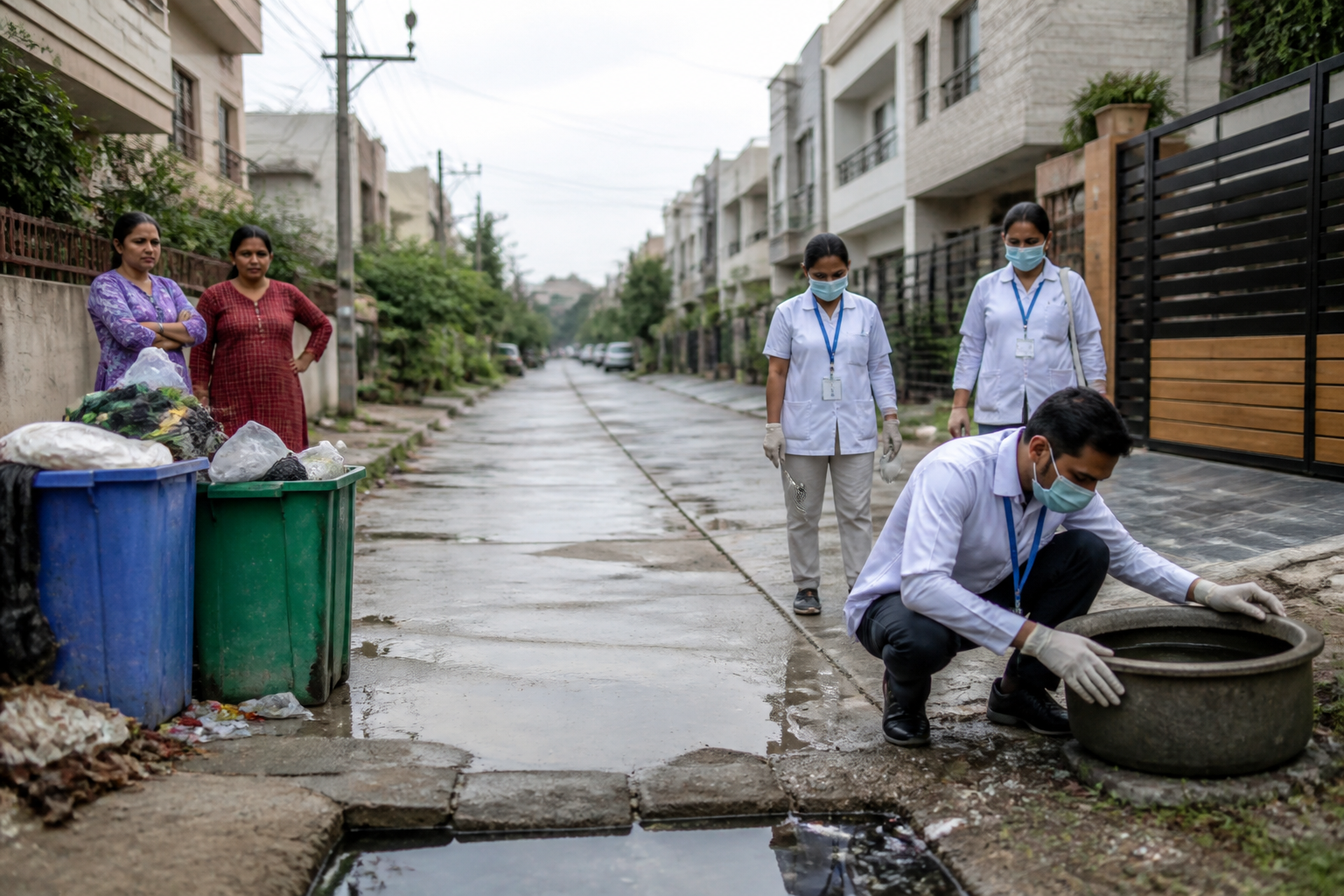
Dengue cases in Panchkula district have risen to 67 as of October 6, up from 40 recorded two weeks earlier, with urban Panchkula reporting the highest number of infections and residents alleging gaps in garbage collection, house inspections and mosquito-control measures.
Official health department data cited by the Times of India shows that urban Panchkula has recorded 23 cases, followed by Surajpur with 18, Pinjore with 13 and Kalka with five. The district’s current dengue tally is higher than the 59 cases reported during the corresponding period last year. Malaria cases stand at 10, the same as during the comparable period last year.
The rise has drawn complaints from residents about uncollected garbage dumps and what they described as ineffective vehicle-based fogging. RP Malhotra, president of the Federation of Resident Associations Panchkula and a Sector 8 resident, said delayed removal of garbage was contributing to mosquito breeding. He also called for the Panchkula Municipal Corporation to strengthen its response.
“Everywhere there are garbage dumps which are not lifted on time. So, it is bound to lead to the breeding of mosquitoes. It causes vector-borne diseases. Also, fogging was done once or twice, and it has no impact. The Panchkula municipal corporation needs to be serious about these two things,” Malhotra said.
SK Nayar, president of the Panchkula Citizens Welfare Association and a Sector 15 resident, questioned the inspection and fogging arrangements. He said fogging had been carried out three to four months earlier but had not been effective, adding that manual fogging was more impactful than vehicle-based operations. Nayar also said health department teams had not visited his area to inspect homes for mosquito larvae, unlike the previous year.
Residents in Surajpur, including Ashok Kumar, similarly claimed that medical teams and fogging drives had not reached their area. These complaints point to a gap between district-level disease surveillance and the neighbourhood-level operations needed to identify breeding sites, remove waste and inspect homes.
Health department officials disputed the allegations that vector-control activity was absent. They said anti-vector teams were conducting door-to-door inspections across households as part of an ongoing drive. Officials also said thousands of notices had been issued after mosquito larvae were detected during inspections.
The competing accounts place responsibility for dengue control across multiple civic functions. The health department is undertaking household inspections and issuing notices, while sanitation and waste removal remain central to limiting mosquito-breeding conditions. Residents’ complaints, however, concern the consistency and reach of these operations in specific neighbourhoods.
The health department’s ongoing door-to-door drive and the action taken after larvae are found are the next reported measures in Panchkula’s response as the district’s dengue tally remains above last year’s corresponding figure.
