


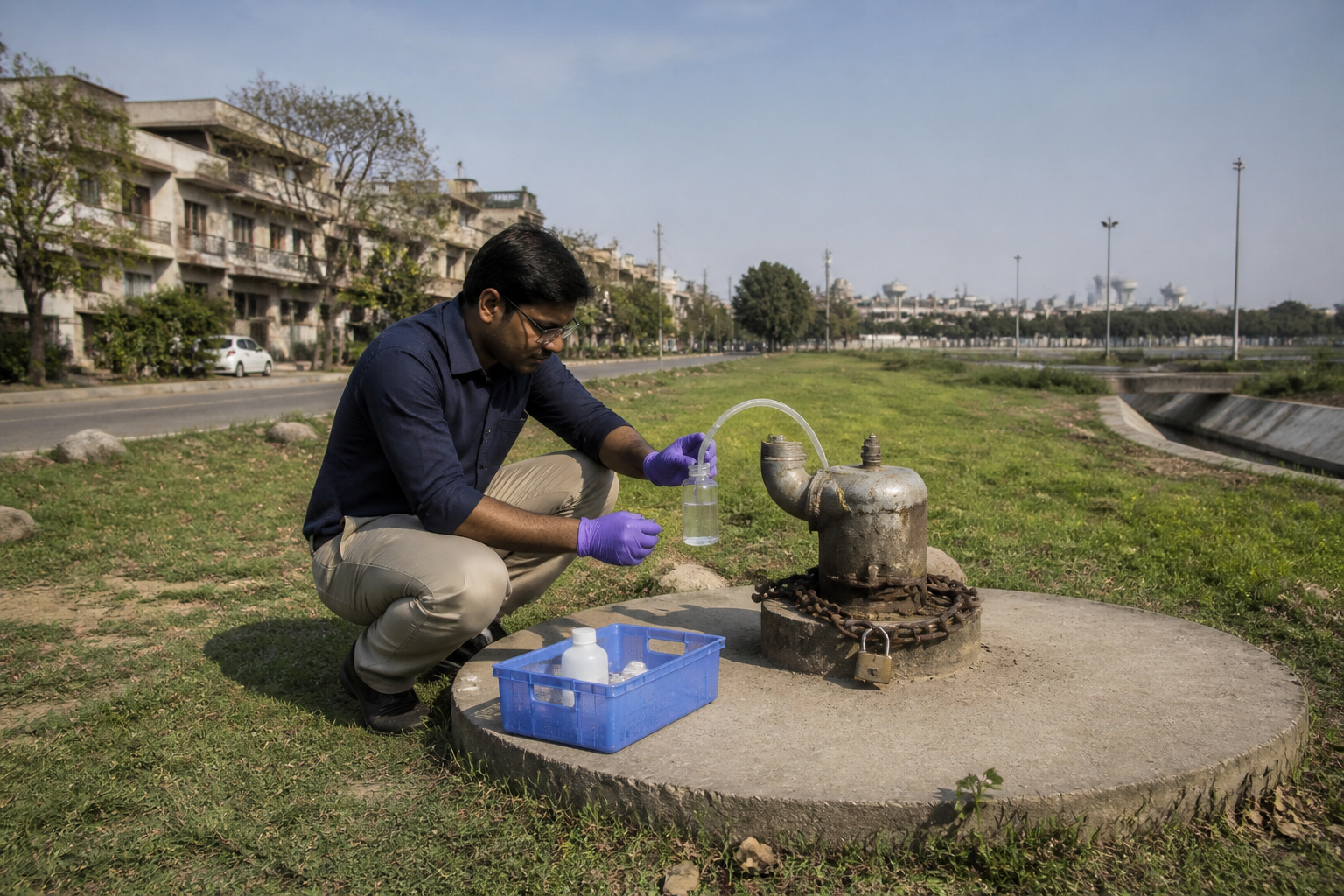
Chandigarh’s groundwater remained free of detectable sewage contamination and significant organic pollution in the latest pre-monsoon assessment by the Chandigarh Pollution Control Committee (CPCC), based on samples collected from eight monitoring stations in April 2026.
The half-yearly monitoring covered residential, industrial and peripheral areas of the city. The report recorded pH levels between 7.4 and 7.7 at all eight locations, within the generally prescribed range of 6.5 to 8.5 for drinking water.
Biological oxygen demand (BOD) and total suspended solids (TSS) were below detection limits at every monitored station. BOD is an indicator of the oxygen required to break down organic matter in water, while TSS measures suspended particles. Their absence at detectable levels indicated that the sampled groundwater had no significant organic load or suspended pollution, according to the report.
Faecal coliform levels were also below detection limits across all eight stations. The parameter is used to identify possible contamination from sewage or human and animal waste. Chemical oxygen demand (COD), which indicates the presence of oxidisable pollutants, ranged from 8 to 13 mg per litre.
The monitoring locations included an area near a dumping ground, Palsora, Dhanas, Sector 35 and Sector 20. The recorded pH values at these sites ranged from 7.4 to 7.7, while COD readings ranged from 10 to 12 mg per litre. BOD and TSS were recorded as below detection limits at each of the listed locations.
A senior UT official said groundwater was an important buffer for Chandigarh’s water security, particularly when surface-water availability was constrained. The official added that the absence of detectable faecal contamination was significant because sewage leaks and poorly maintained drainage systems can affect shallow urban aquifers.
The official said pre-monsoon monitoring was important because groundwater levels are typically at their lowest during the period and contaminant concentrations can rise. The April findings, according to the official, showed no signs of substantial contamination from organic waste or sewage at the monitored locations.
The findings apply to the eight stations covered by the CPCC assessment and represent conditions recorded during the April sampling exercise. They do not establish that all groundwater across Chandigarh has identical quality. Continued monitoring remains part of the committee’s half-yearly assessment process, particularly before and after the monsoon, when groundwater conditions can change.
The latest report therefore provides a positive snapshot of Chandigarh’s monitored aquifers while leaving ongoing sampling as the next step for tracking sewage leakage, industrial runoff and other risks to the city’s groundwater supply.

