


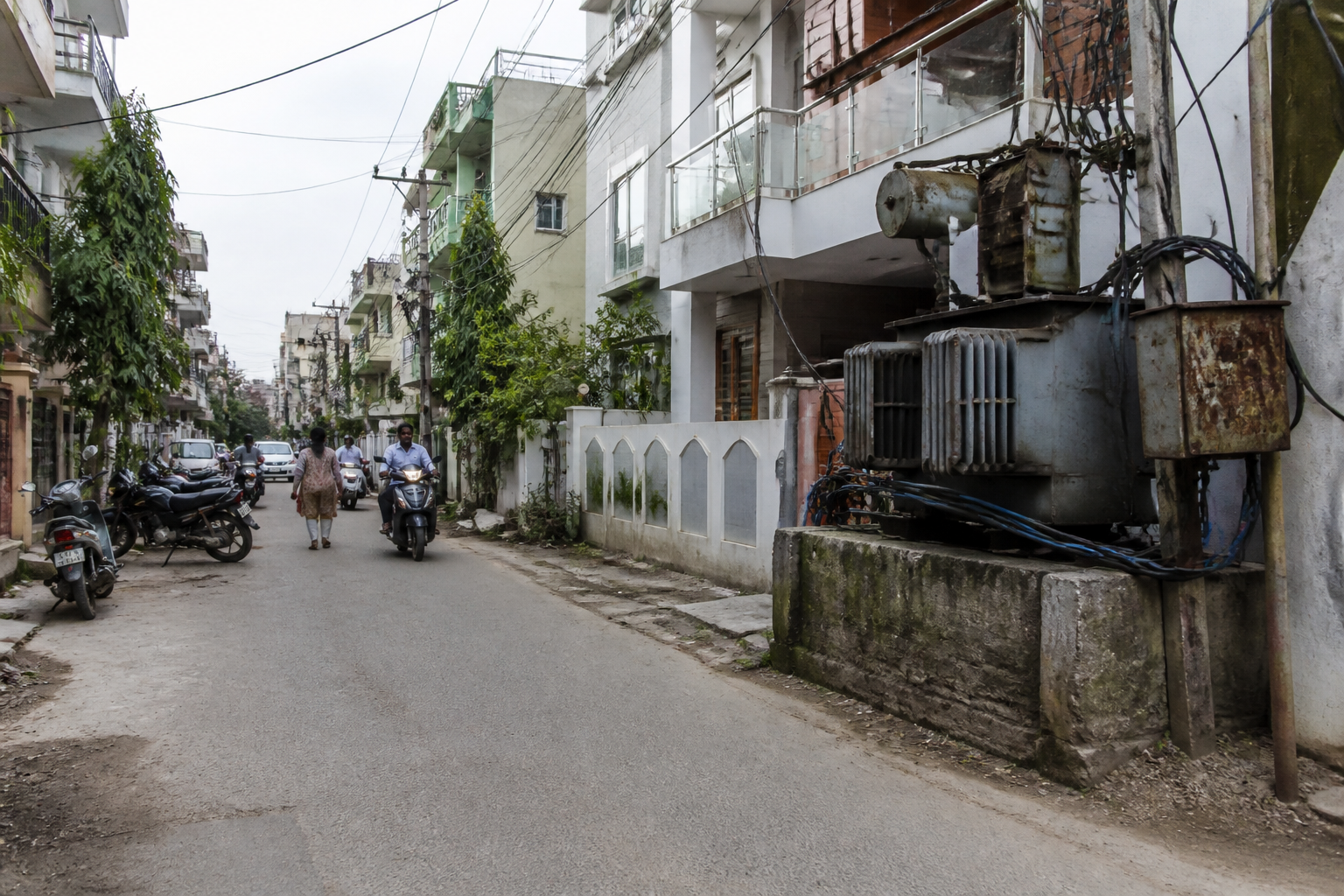
The Allahabad High Court’s Lucknow bench has ordered the registration of a suo motu public interest litigation after being told that development authorities are failing to reserve adequate space for garbage collection and disposal facilities, as well as power transformers, in city and residential-colony layout plans.
A bench of Justices Rajan Roy and Manjive Shukla passed the order while hearing a public interest litigation. The separate case will examine whether planning authorities are accounting for essential civic and power infrastructure when preparing layouts for cities, towns and residential colonies. The matter is scheduled to be heard on October 16.
During the hearing, municipal corporation counsel Shailendra Singh Chauhan told the court that development authorities do not earmark space for garbage collection or dumping while preparing layouts. He also said that adequate space is not left for installing electricity transformers.
According to the submissions recorded during the hearing, transformers are consequently installed along roads after colonies have been developed. This can obstruct traffic and cause inconvenience to residents, particularly in areas where infrastructure is added after construction rather than planned into the layout from the beginning.
The court said town planning must account not only for existing requirements but also for changing and future needs. Its observations place waste management and electricity distribution within the same planning question as roads, housing plots and other basic services: whether a colony has physically reserved space for the facilities needed to function after residents move in.
The bench observed that the issue was not limited to town planning. It also concerned residents’ right to a healthy, clean and safe environment. The court specifically referred to colonies developed by the Housing and Development Council and development authorities, saying that designated spaces for essential facilities should be provided at the planning stage itself.
The proceedings highlight a gap between the approval of a layout and the later delivery of municipal and utility services. When land for waste collection, disposal or transformer installation is not identified in advance, these facilities may have to be fitted into roadsides or other available spaces after a colony is occupied. The court’s intervention will now examine the planning and implementation responsibilities connected with that process.
The order comes as the Lucknow bench considers whether existing planning practices adequately reflect the operational needs of growing urban settlements. The record presently contains the municipal corporation’s submissions and the court’s observations; the responsibilities of individual development authorities and the measures that may be required will be considered in the proceedings.
The suo motu PIL is listed for hearing on October 16. The next proceedings are expected to determine how the court will examine the provision of waste-management areas and transformer sites in layouts prepared by the Housing and Development Council and other development authorities.
