


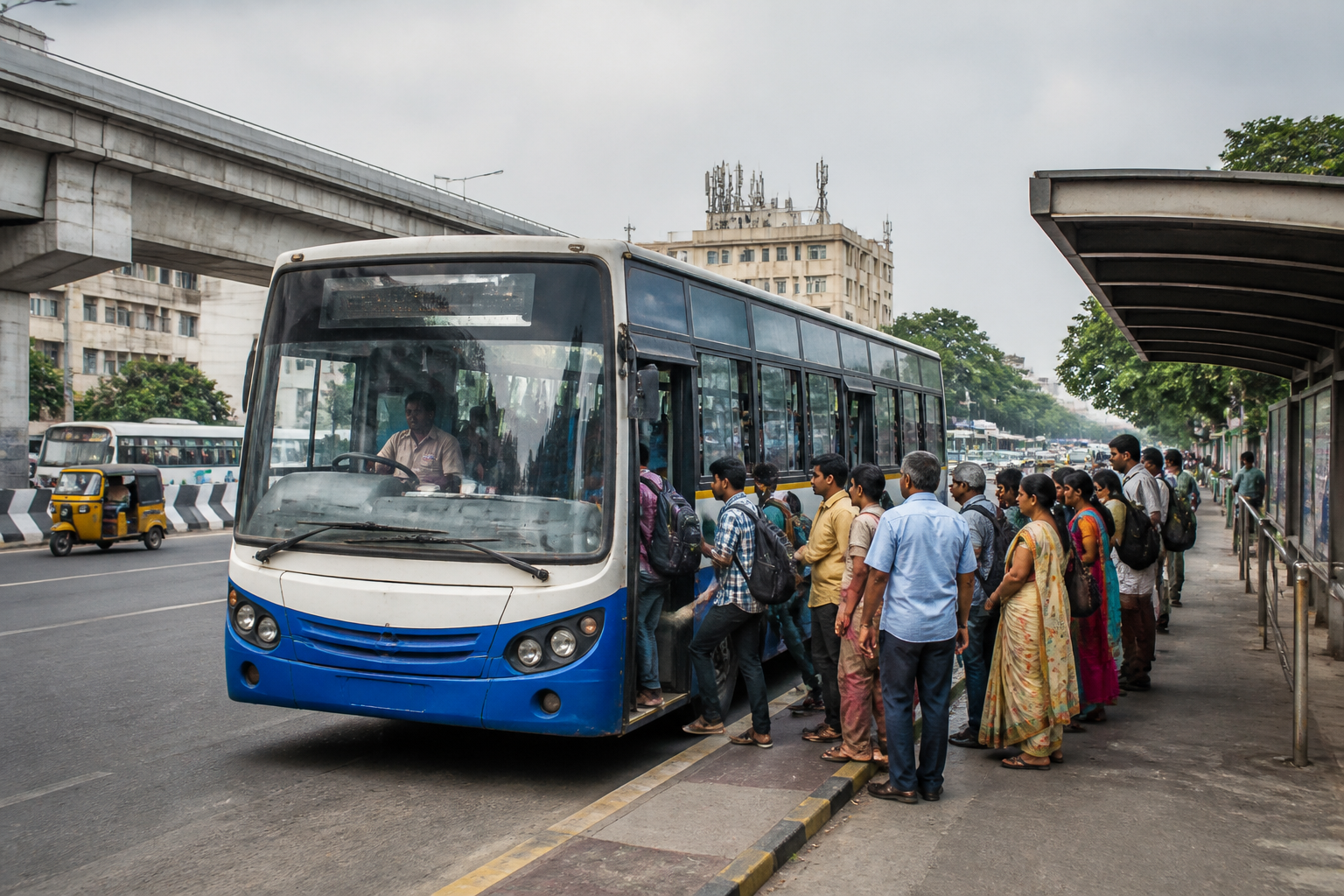
The Tamil Nadu Transport Department has directed crews operating Vetri Payanam buses to follow scheduled timetables, stop at every designated bus stop and provide passengers sufficient time to board, after identifying heavy crowds, long waits and other service defects as operational concerns.
The guidelines, issued on Monday, require buses under the scheme to run on their specified routes and maintain scheduled services during peak morning and evening hours. Transport staff and officials have been instructed to avoid “not run, late run, curtailment and route diversion” incidents, which can disrupt passenger access even when services remain officially listed on a route.
The department has also asked staff to monitor operations for crowding, delays and other defects and take immediate corrective action. Buses are to be maintained in working condition, while crews must arrange alternative buses when the scheduled vehicle cannot operate.
Complaint handling is another central part of the instructions. Officials have been told to register complaints linked to the Vetri Payanam scheme and monitor them until action is taken. The guidelines specifically state that complaints should not be closed without corrective measures. Boards displaying the instructions are to be installed for transport staff, and an action-taken report must be submitted on enforcement.
The department has directed officials to prepare a route master covering the routes served under the scheme. It has also ordered the allocation of a sufficient number of electronic ticketing machines for issuing “zero tickets”. The instructions say zero tickets must be issued mandatorily, while the words “Vetri Payanam” should be displayed digitally or through stickers on the buses.
The operational directions place responsibility for service reliability at several levels: crews must follow routes and timetables, officials must monitor performance and complaints, and transport units must arrange replacement buses when necessary. The requirement to record action taken on complaints also creates a formal follow-up process rather than treating passenger grievances as closed at the point of registration.
The department’s instructions do not specify in the supplied report the number of buses or routes covered by Vetri Payanam, or a deadline for completing the route masters and reporting enforcement. The immediate implementation priorities identified in the guidelines are adherence to timetables, full stopping at designated stops, peak-hour operations, maintenance, alternative-bus arrangements, complaint monitoring and mandatory zero-ticket issuance.

