


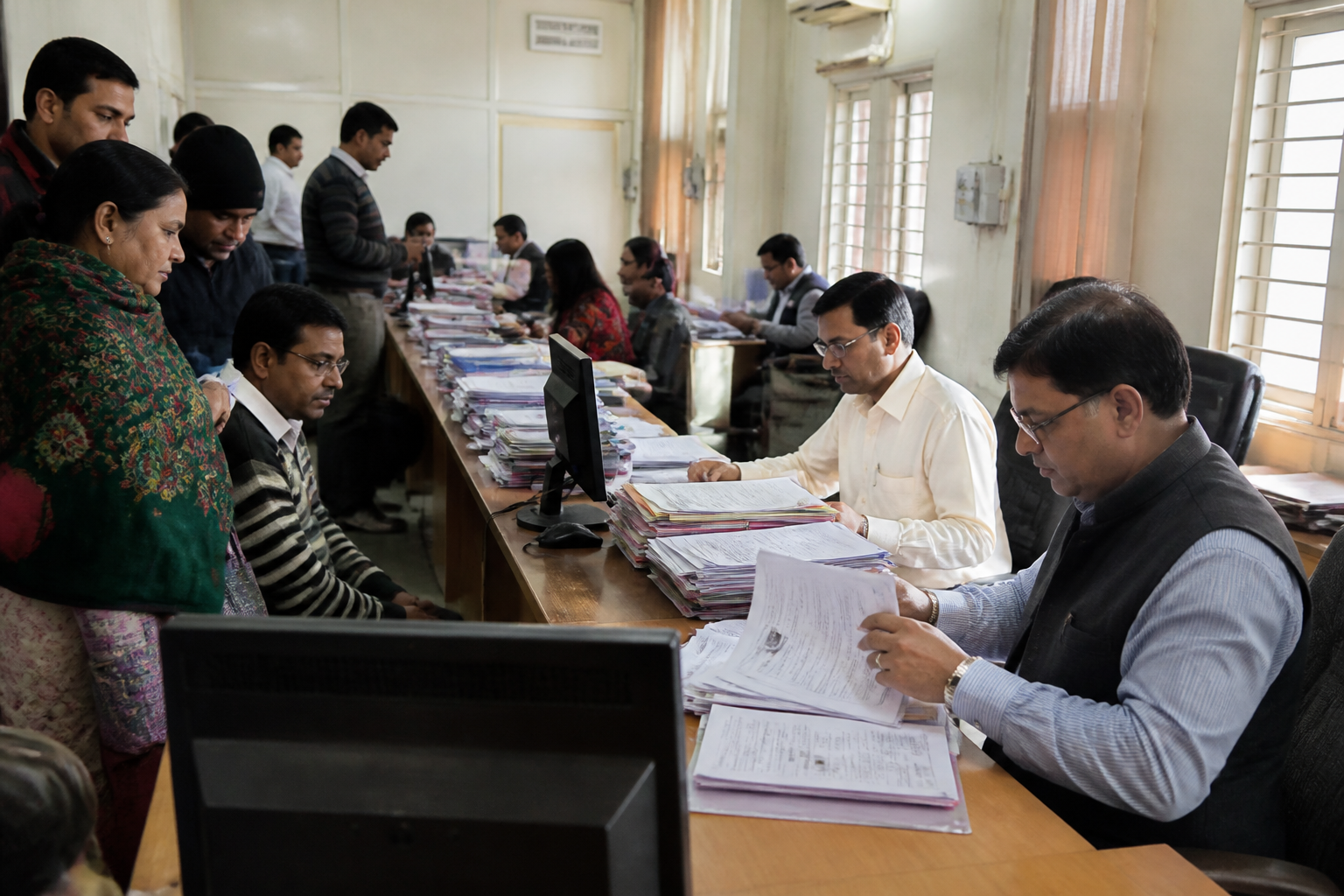
Jharkhand’s electoral authorities have deployed 882 election officials to process nearly 11.8 lakh claims and objections before the October 14 deadline for the Special Intensive Revision of electoral rolls, with the final voter list scheduled for publication on October 19.
The CEO office’s SIR bulletin said 11,79,761 applications had been received under Forms 6, 6A, 7 and 8 by September 30. Chief electoral officer K Ravi Kumar said 882 Electoral Registration Officers and Assistant Electoral Registration Officers had been assigned to the exercise.
The bulletin did not specify how many applications had been disposed of by October 1. If all applications were still pending, officials would need to process an average of about 84,269 applications a day during the 14-day period ending October 14.
Fresh enrolment requests account for the largest share of the workload, with 6,92,597 applications filed through Form 6. These were followed by 4,73,609 Form 8 applications seeking corrections in existing electoral-roll entries. The total also includes 13,443 Form 7 applications for deletion and 112 Form 6A applications from overseas electors.
The September 30 deadline saw a late surge in submissions, with 59,666 applications filed in a single day. This included 34,820 fresh-enrolment applications through Form 6 and 24,106 correction requests through Form 8. There were also 739 deletion requests under Form 7 and one application from an overseas elector under Form 6A.
The workload was unevenly distributed across districts. Ranchi recorded the highest final-day intake, with 7,662 Form 6 and Form 8 applications, followed by Giridih with 5,905, Dhanbad with 4,099, East Singhbhum with 3,455 and Hazaribag with 3,213 applications.
Within Ranchi district, Hatia recorded 2,112 applications on the final day, followed by Kanke with 1,641 and Khijri with 1,272. The figures indicate where election officials face the largest immediate processing burden as the revision moves towards its final stages.
Kumar said voters who had received notices would generally not need to visit the office of the Electoral Registration Officer for a hearing. In cases involving unmapped records or logical discrepancies, Booth Level Officers would visit voters at their homes, collect the required documents in response to the notices and upload them on the Election Commission’s ECINET platform. The ERO would then take a decision based on the available facts and documents, according to the CEO office.
The CEO also said that many voters had submitted documents, while some people who were registered in the 2024 electoral roll and had completed enumeration forms could not complete the hearing process. Such voters are to be identified through special outreach programmes and camps.
The instructions call for special attention to Particularly Vulnerable Tribal Groups, persons with disabilities, tribal communities, elderly voters, workers, poor residents, homeless people and voters who do not have their parents’ details available. Officials must also be available if voters voluntarily visit an ERO office or a designated hearing venue.
The state CEO office has advised voters seeking assistance to call the helpline number 1950. The final electoral roll is scheduled to be published on October 19.
