


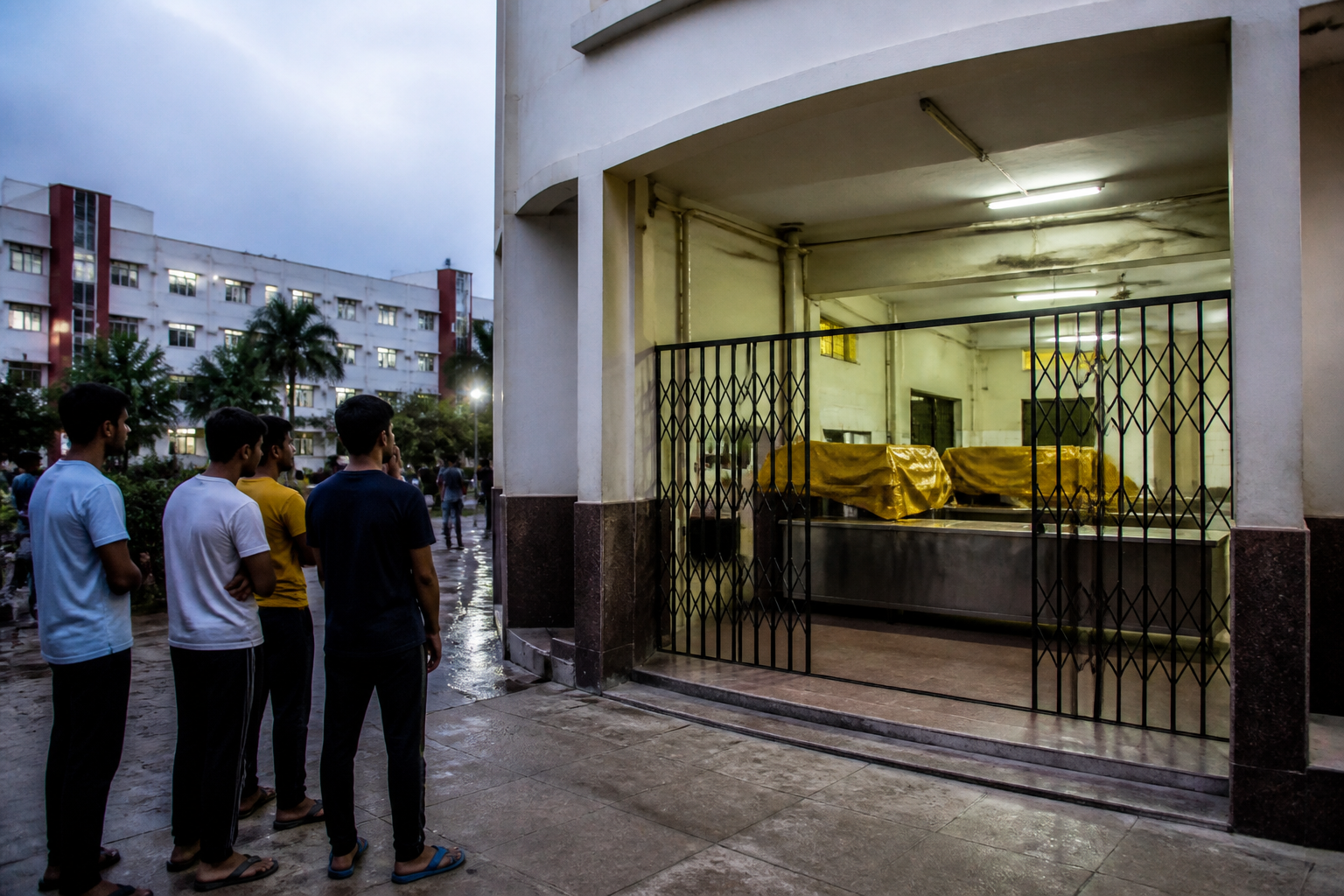
Lucknow University has ordered the closure of the Kailash girls’ hostel mess and announced a refund of mess fees after five students fell ill following dinner and were treated for suspected mild food poisoning, according to university officials and students cited by the Times of India.
The students were admitted to Vivekanand Hospital late on Wednesday with acute stomach ache. Doctors treated them and discharged them within an hour, the report said. Students told the newspaper that the illness began soon after dinner and alleged that the food contained insects and other contaminants. Their claims included allegations of mouse droppings, worms and a scorpion in food served at the hostel mess.
The incident led residents to protest outside the office of the vice-chancellor, demanding immediate action and a meeting with Vice-Chancellor Prof JP Saini. Students said they began a sit-in outside the building, while alleging that staff locked channel gates to prevent them from reaching the office.
Dean student welfare Prof Amita Kannaujiya said the university would refund the students’ mess fees, cancel the existing mess operator’s tender and keep the mess closed until a new vendor was finalised. She said students would need to arrange food from outside during the interim period.
The decision follows a university inspection of the hostel by Saini a week earlier, when instructions were issued to improve cleanliness and hygiene. Students alleged that conditions had not improved despite changes in mess staff and the appointment of observers. One student, Ishani Singh, said repeated complaints had been ignored even though residents paid about Rs 40,000 annually. Another student, Rivibha Kumari, alleged that food was often undercooked and that hygiene remained a continuing concern.
The complaints were not limited to the Kailash hostel. Students at the university’s second campus reportedly locked its front and back gates for about three hours earlier on Wednesday. They alleged that breakfast had not been served in all hostels and raised similar complaints about insects in food.
The episode places attention on the way residential universities manage outsourced food services, complaint escalation and hygiene monitoring. In this case, the administration’s response includes a financial remedy, cancellation of the existing tender and a temporary shutdown, but students continued to demand direct access to the vice-chancellor after the announcement.
The university has not publicly disclosed in the supplied report whether food samples were collected, whether a formal health inspection was ordered or when the replacement mess vendor would be appointed. The mess will remain closed until the new vendor is finalised, according to the dean student welfare.
