


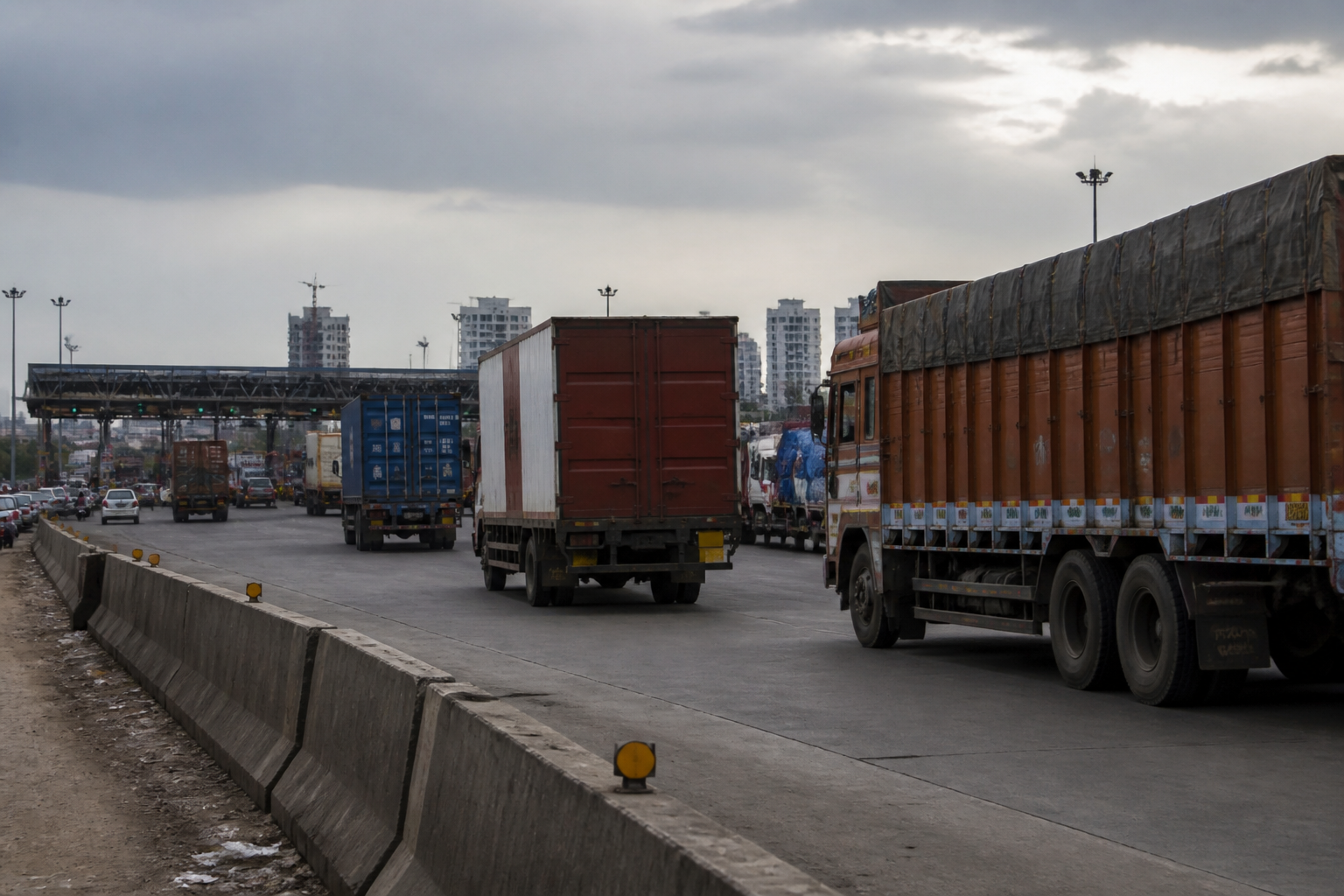
The All India Motor Transport Congress (AIMTC) has opposed the proposed Mumbai toll hike for commercial vehicles, scheduled to take effect from October 1, 2026, warning that higher charges could raise transport expenses, freight rates and the cost of goods entering the city.
Bal Malkit Singh, advisor and former president of AIMTC, said transport operators were already dealing with rising operational costs and that an increase in toll charges would add to the financial pressure on the sector. The organisation has urged the Maharashtra government to provide complete toll exemption for heavy commercial vehicles at Mumbai’s entry points.
AIMTC said the additional toll burden would first affect the operating costs of transporters. According to the transport body, operators could then pass on the extra expense through higher freight charges paid by customers. Singh said this could eventually affect consumers who depend on goods transported into Mumbai.
“Any further increase in toll charges will directly add to the operational costs of transporters. These additional costs will inevitably be passed on through higher freight charges to customers and ultimately to the common man,” Singh said, according to the report.
The transport organisation pointed to the exemption granted to smaller vehicles in 2024, before the Maharashtra Assembly elections, and said the sector had also sought similar relief for heavy commercial vehicles at the time. Singh argued that heavy vehicles should receive comparable consideration because they play a central role in moving goods into the city.
AIMTC also called for a review of the existing toll structure. One of its stated grounds is that the original cost of road construction has already been recovered by contractors. The organisation has therefore sought either an exemption for heavy commercial vehicles or a reassessment of the charges applied at Mumbai’s entry points.
The proposed revision is scheduled to come into effect on October 1, 2026, subject to the applicable provisions of the government and toll authorities. The report does not specify the revised toll amounts or identify the individual entry points where the proposed increase would apply.
The dispute places Mumbai’s toll system within a wider operational chain linking road-user charges, freight movement and retail prices. For now, the next step rests with the Maharashtra government and the relevant toll authorities, which will determine whether the proposed revision proceeds and how the demand for heavy commercial vehicle exemption is addressed.

