


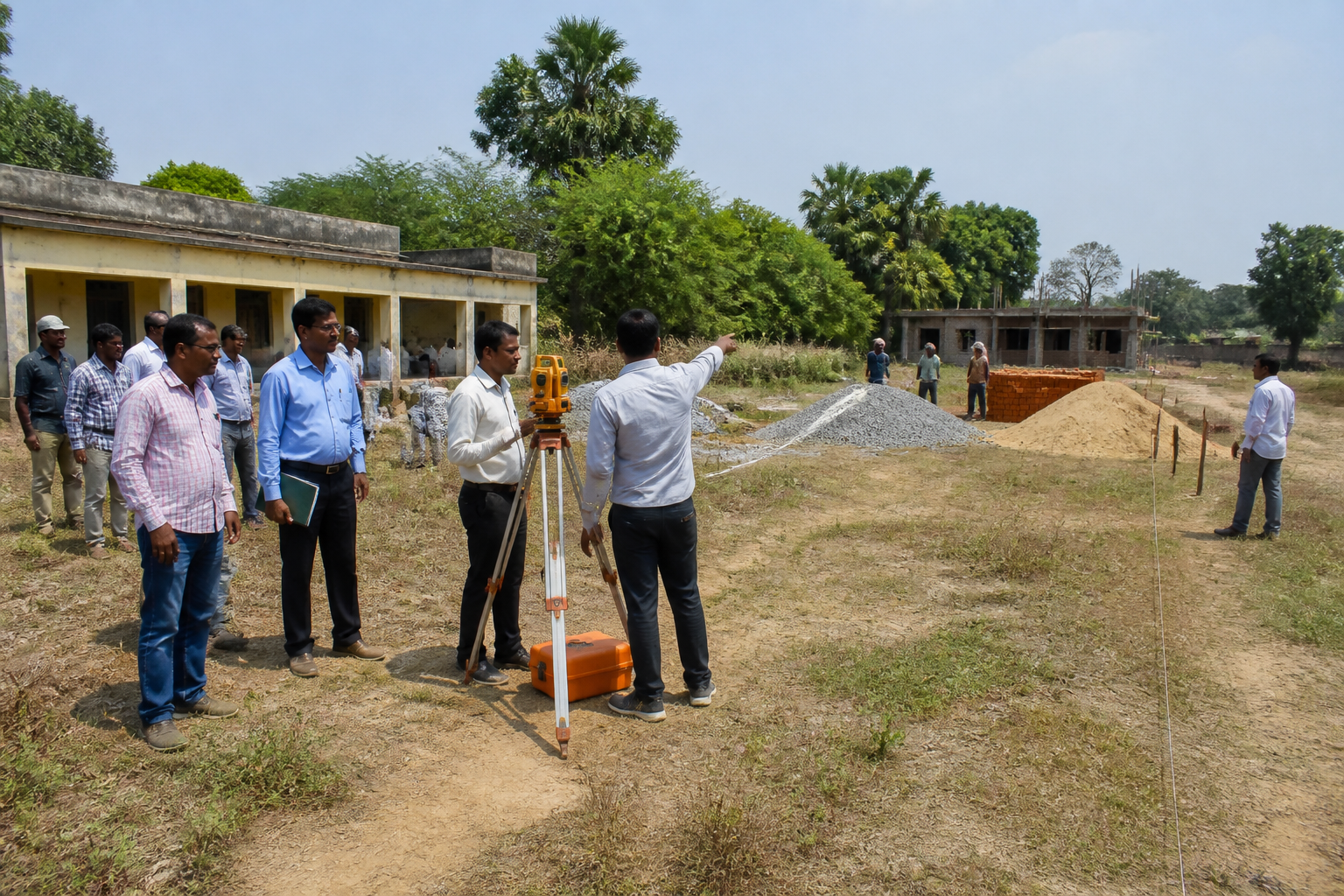
Construction of an upper primary school in Lahuria Dah village of Mirzapur district began on Wednesday, a day after former IAS officer Divya Mittal publicly highlighted the project’s three-year delay and questioned why an approved school had not been built.
The Mirzapur district administration said the proposal to upgrade Lahuria Dah Primary School had been submitted during 2024-25 and approved by the state project director in 2025-26. An amount of Rs 25.58 lakh has been sanctioned for construction of the upper primary school, according to an official statement cited by the Times of India.
The administration said 0.169 hectares of land had been made available for the project by the sub-divisional magistrate of Lalganj. The sanctioned funds have already been transferred to the school management committee, it added.
Local officials visited the site on Wednesday after construction work commenced. Haliya block education officer Prakash Chandra Yadav and village administrator Kaushalendra Kumar Gupta were present during the site inspection. The land earmarked for the school was measured and demarcated in the presence of officials.
The project will be supervised by primary school headmaster Ganga Shankar Ojha, the district administration said. The statement did not specify the expected completion date or provide details of the construction schedule.
The project gained wider attention after Mittal, who served as Mirzapur district magistrate, referred to Lahuria Dah while announcing her entry into politics. In a video released on Tuesday, she said a woman from the remote village had requested a school offering education beyond Class V instead of seeking personal benefits.
Mittal said she had approved the proposal after examining the applicable rules but alleged that the school had still not been built three years later. “It was not a question of funds, rules or approval. There was a lack of intent,” she said in the video.
The district administration’s account indicates that the school proposal moved through the approval process and received a financial sanction, but construction began only after the issue became publicly prominent. The administration has not stated why work did not begin earlier or identified any specific administrative bottleneck responsible for the delay.
The development highlights the gap that can arise between approval and delivery in rural public infrastructure projects. In this case, the project involves a small sanctioned amount and land that has now been measured and demarcated, while responsibility for supervision has been assigned to the school headmaster.
The district administration said construction work had commenced at the site. Further progress will depend on the execution of the sanctioned project under the supervision of the local education authorities and the school management committee.
