


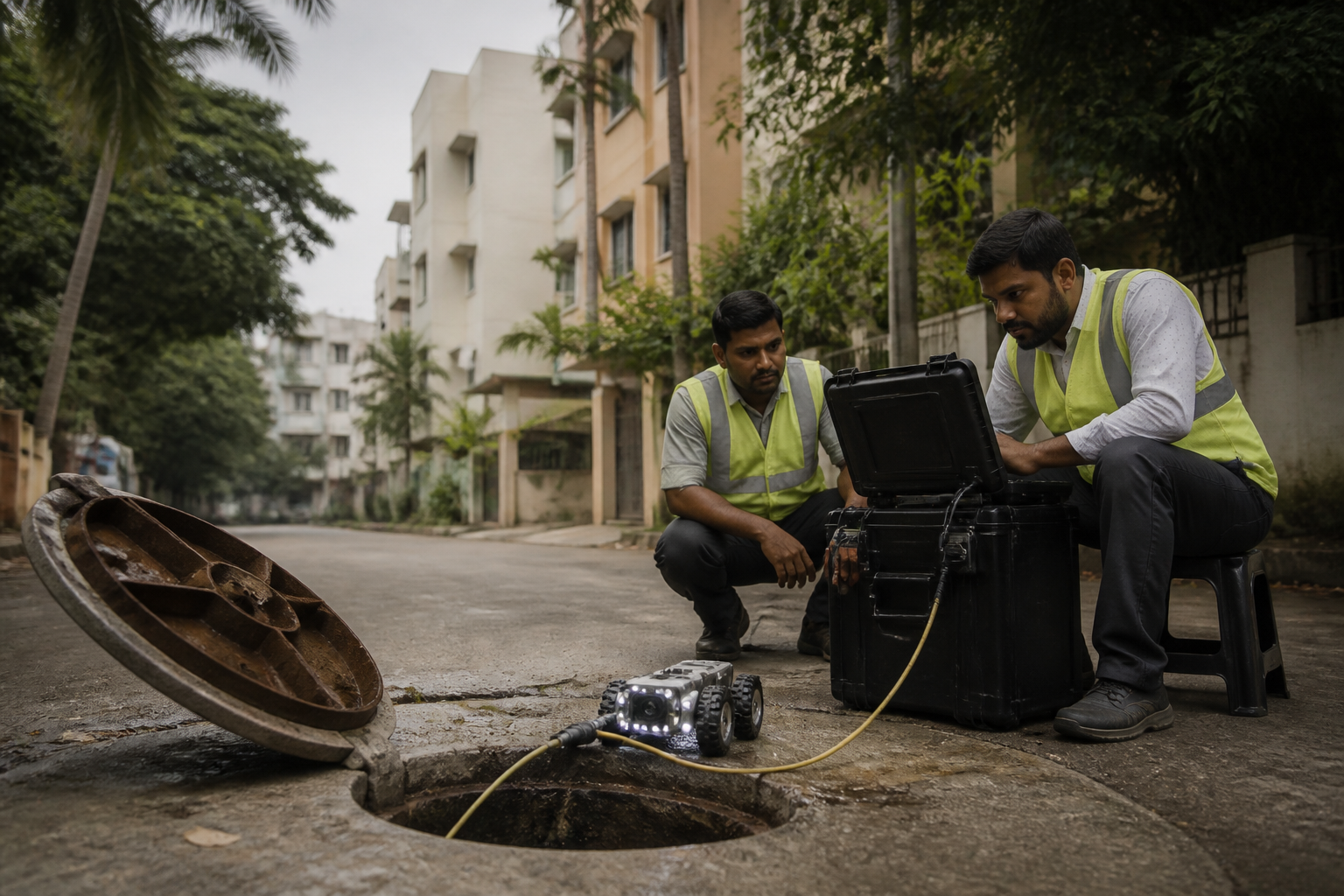
Chennai Metrowater has begun using robotic equipment to detect leaks, blockages, pollution ingress and structural damage in the city’s drinking-water pipelines, a move officials say will shorten investigation time and reduce road cuts and disruptions to supply.
The conventional process involves digging multiple trial pits to locate the source of a leak or contamination. According to Metrowater officials, this can require additional manpower, interrupt water supply and increase restoration costs. In some cases, identifying the problem and restoring the network has taken up to 10 days because contamination entry points were difficult to locate accurately.
The agency maintains a distribution network of nearly 6,200 km across Chennai. Cracks, corrosion and sediment accumulation in the ageing pipeline system pose operational challenges, particularly when defects are located beneath roads or in areas with dense development.
To accelerate complaint resolution, Metrowater has engaged Solinas Integrity Private Limited, an IIT-Madras-incubated startup, to provide robotic inspection services across the city. The water agency had deployed robots on a pilot basis in the network in 2023.
Under the current system, officials first access the pipeline through a single pit measuring 90 m to 100 m on each side, according to the report. Robotic micro-cameras are then inserted into the pipeline to capture and transmit footage of leaks, blockages and other damage. Metrowater officials said the visual data would allow them to assess defects and the condition of the pipeline within a day.
Complaints have been received from Zones 4, 5, 6 and 13. Mogappair and Ramapuram have been identified as areas vulnerable to frequent water-pollution complaints. Residents of Mogappair said pollution had repeatedly affected localities including Golden Colony, Valliammai Salai and Kavimani Salai. They also said the existing network was inadequate for the area’s growing number of buildings and called for a permanent solution.
The equipment will be hired according to the type of robotic system used and the length of pipeline inspected. Rates range from ₹13 per metre to ₹53 per metre. Robocams will be used for small-diameter pipelines, while two other types of robotic equipment will inspect pipelines with diameters larger than 100 m, as stated in the report.
The defect-detection reports are intended to help Metrowater decide whether sections require repair or replacement. The project, valued at ₹3.99 crore, will cover pipeline inspections for two years. Solinas Integrity will also be responsible for restoring the portions of roads dug up to access the network.
