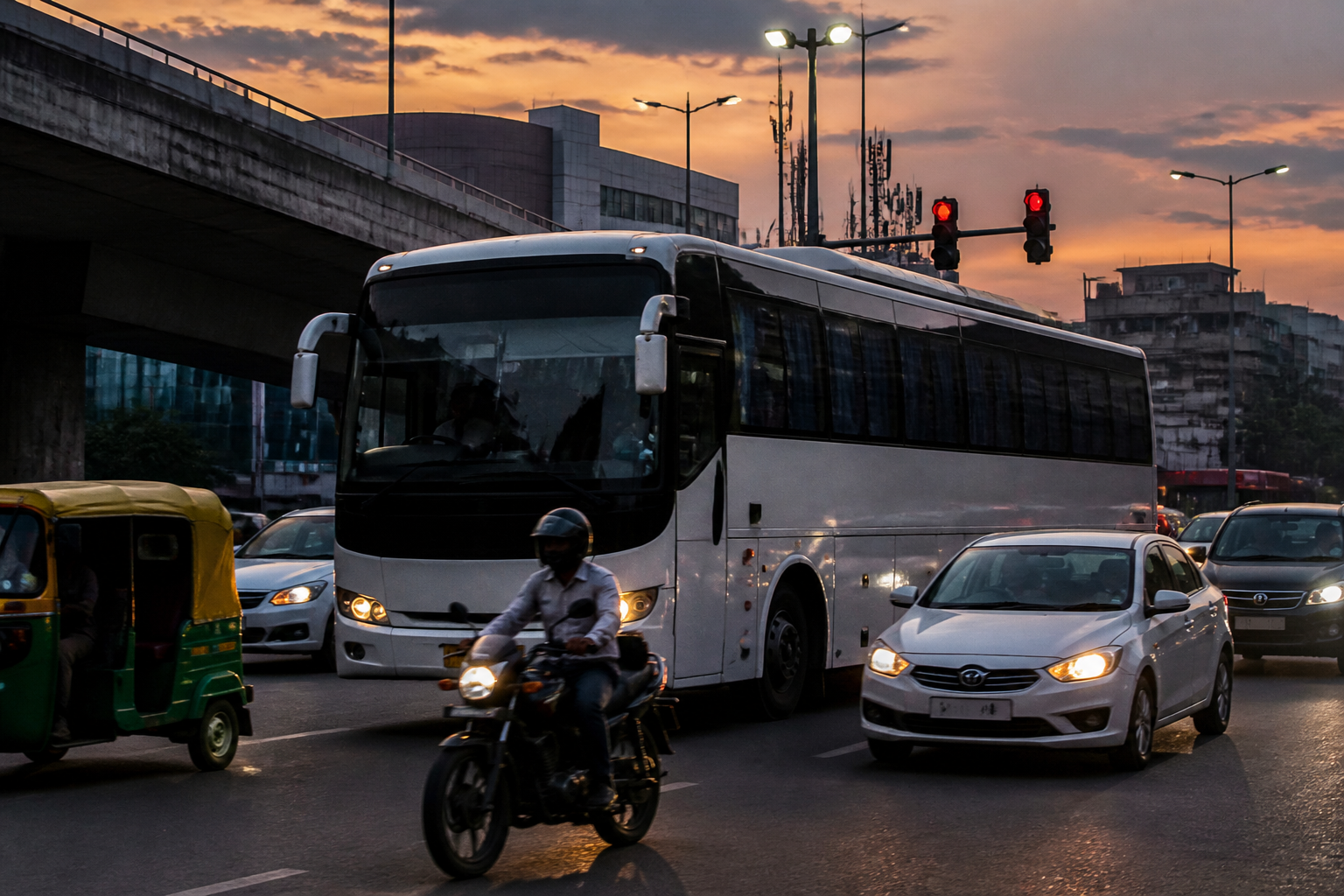
Bengaluru BMTC Smart Cameras Target Safer Bus Travel
Bengaluru Metropolitan Transport Corporation is preparing to equip a pilot fleet of 50 buses with advanced driver-assistance technology, bringing cameras, sensors and real-time safety alerts deeper into the city’s public transport system. The initiative is intended to monitor driver behaviour, identify road hazards and give the transport utility better visibility of safety events while buses are operating.
The proposed system combines driver-facing monitoring with road-facing cameras and sensors. It is designed to detect issues such as driver drowsiness, distraction, mobile-phone use and smoking, while also identifying risks including forward collisions, lane departures and potential pedestrian conflicts. Alerts can then be generated for the driver, while relevant events are made available through a central BMTC dashboard. For Bengaluru BMTC smart buses, the significance extends beyond installing cameras. The technology creates a potential link between what happens inside a moving bus and the transport corporation’s control systems. If a safety event is detected, information can be transmitted for monitoring and subsequent review, creating a more structured mechanism for identifying recurring operational risks. The pilot is being implemented through a tender covering a complete technology package rather than individual devices. The selected agency is expected to provide cameras, sensors, processing equipment, software, connectivity, data hosting, maintenance and technical support. BMTC is proposing an all-inclusive monthly rental model, allowing the corporation to evaluate the system before deciding whether wider deployment is justified.The move also builds on Bengaluru’s earlier experience with intelligent transport technology.
BMTC has long used vehicle tracking and passenger-information systems, while its official mobile platform now provides live bus locations, estimated arrival information and journey planning. However, technology alone does not guarantee safer public transport. A previous audit of BMTC’s intelligent transport system found that parts of the planned system had remained incomplete and highlighted weaknesses in operational planning, passenger information and data use. That experience makes integration and long-term maintenance as important as the initial installation. The proposed Bengaluru BMTC smart buses could also generate valuable operational data. Aggregated information on repeated collision risks, dangerous road sections, harsh driving events or driver-alertness incidents could help identify infrastructure and scheduling problems. Used responsibly, such data could support better route planning and targeted road-safety interventions. At the same time, passenger-facing surveillance requires clear rules on data access, retention and privacy. The system’s effectiveness will depend on ensuring that monitoring information is used for legitimate safety and operational purposes, with appropriate safeguards.
The pilot therefore offers Bengaluru an opportunity to test whether connected safety technology can become part of a wider public-transport management system. Its success should ultimately be measured not by the number of cameras installed, but by whether it improves response times, driver safety, passenger security and the reliability of everyday bus services.
Bengaluru BMTC Smart Cameras Target Safer Bus Travel