


Essar Group’s proposed $18-billion US steel expansion is more than a large overseas investment announcement. It is the latest stage in a business journey that began with a Rs 2.5 crore breakwater contract at Chennai port in 1969 and moved through steel, oil, power, ports, telecom and business services. The project also reveals how capital-intensive family businesses build, sell and reassemble industrial ecosystems across different economic cycles.
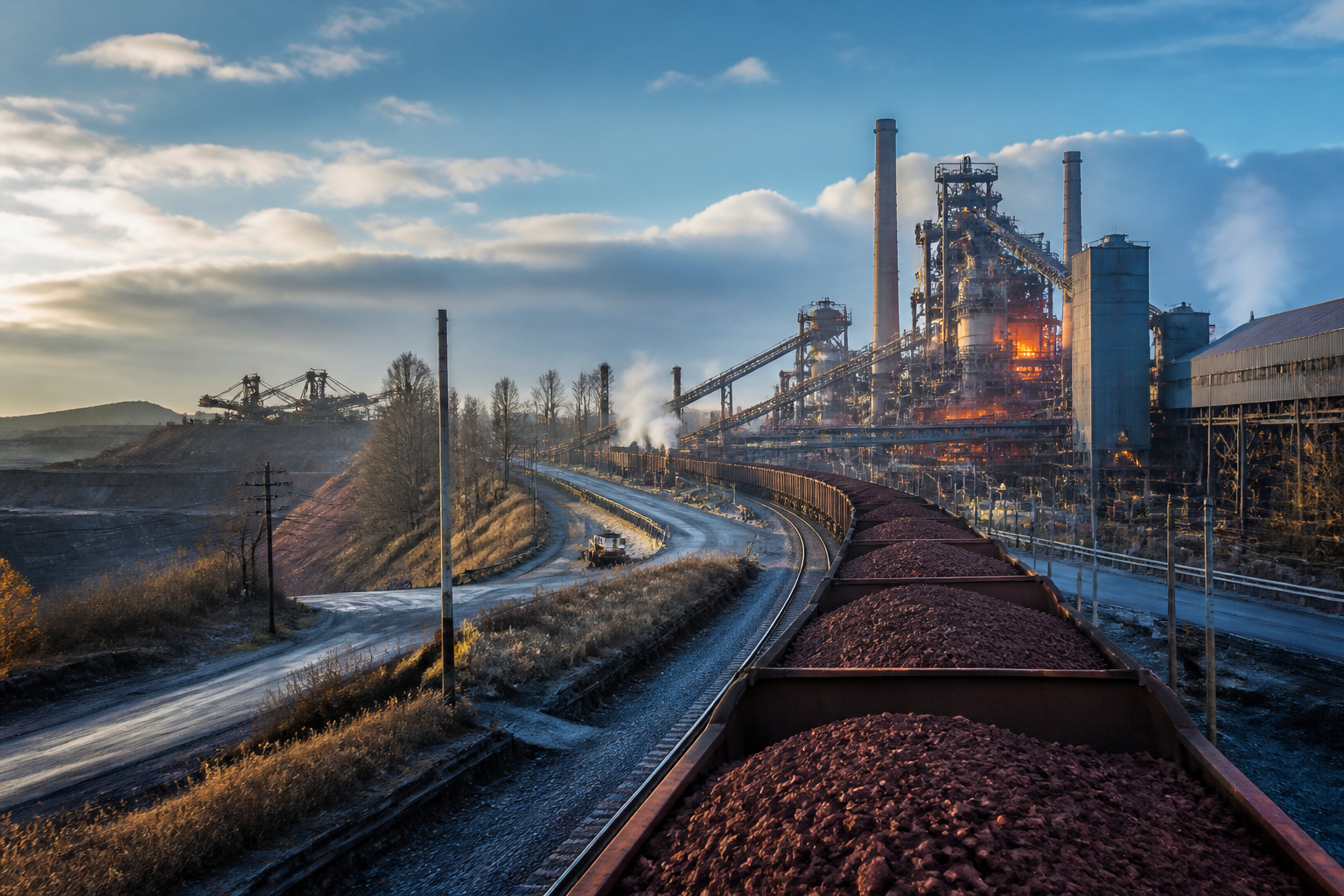
The US proposal is being developed through Essar-backed Mesabi Metallics. The first phase of the proposed Iowa steel mill is expected to produce 7.5 million tonnes of steel a year, with eventual capacity projected at around 10 million tonnes. The project is linked to Essar’s iron ore operation in Minnesota, creating a proposed chain that connects mining, pellet production and steelmaking across two states.
That integrated structure matters because steel is not simply a manufacturing product. Its production depends on access to raw materials, reliable power, transport networks, ports, processing plants and large pools of capital. Essar’s stated US strategy therefore resembles the infrastructure model through which the group expanded in India: build or control connected assets rather than operate a single standalone facility.
The company’s origins were considerably smaller. Shashi Ruia and Ravi Ruia founded Essar after winning the Chennai port breakwater contract, at a time when projects of that scale were largely handled by foreign construction companies. The project placed the brothers at the intersection of construction, public infrastructure and industrial contracting—sectors where execution capability and access to finance can determine whether a company remains a contractor or becomes an asset owner.
Shashi Ruia, the elder brother, joined the family business in 1965 under his father, Nand Kishore Ruia. Ravi Ruia, an engineer by training, joined him in building Essar. The group’s name was derived from the initials of the brothers, with “S” and “R” pronounced as Essar.
The group did not remain within construction. It bought a tanker in 1976 and expanded into shipping, energy, steel, power, ports and telecommunications. During India’s economic liberalisation, Essar entered sectors that were opening to private investment. It became an early private telecom player through Vodafone Essar and built Aegis, a major business process outsourcing company.
This expansion reflected a broader shift in India’s urban and industrial economy. As private participation widened, businesses that could combine construction, finance, logistics and operations gained the ability to create large infrastructure platforms. Essar’s businesses around the Vadinar refinery, including port and power infrastructure, illustrate that model. A refinery is more valuable and operationally resilient when supported by its own logistics and energy systems; the same principle applies to steel plants connected to mines, transport and processing facilities.
Essar also used divestments as part of its growth model. The group says its telecom, business process outsourcing and oil and gas businesses together generated more than $40 billion in monetisation proceeds through transactions with global companies. In 2011, it sold its 33 per cent stake in Vodafone Essar for $5.46 billion.
The largest transaction cited in the report came in 2017, when Essar sold 98.26 per cent of Essar Oil to a consortium involving Russia’s Rosneft and Trafigura-UCP for $12.9 billion. The transaction included the 20-million-tonne-a-year Vadinar refinery, its associated port and power infrastructure, and a network of more than 3,500 fuel outlets.
These transactions show the importance of asset recycling in infrastructure-heavy businesses. Building a refinery, port, power plant or steel facility requires large upfront investment and long operating horizons. Selling a mature asset can release capital for debt repayment or a new expansion, but it can also reduce the group’s operating base and expose the business to the risks of its next investment cycle.
Essar’s own expansion cycle produced a severe financial test. The group had invested heavily across steel, oil, power and infrastructure, creating substantial debt. Essar Steel eventually entered India’s insolvency process. In 2018, the Ruia family made a Rs 54,389 crore proposal to settle creditors’ claims, but the offer was rejected and ArcelorMittal eventually won the bid for Essar Steel.
The debt episode is central to understanding the current US steel proposal. Large industrial projects can create economic ecosystems, but they also tie up capital over long periods and depend on predictable demand, construction execution and financing conditions. The Ruia family’s subsequent strategy involved selling assets and using proceeds to reduce leverage. By 2019, Essar said it had repaid around Rs 1.4 lakh crore of debt, after selling assets including Essar Oil and Aegis.
The group’s return to steel is therefore not a simple continuation of its earlier Indian business. It follows a period in which the family moved away from some of its most prominent assets, reduced debt and rebuilt its presence through a different geography. The proposed US expansion places steel at the centre of Essar’s global strategy again, but with a new supply-chain configuration.
Mesabi Metallics is the foundation of that configuration. Its Minnesota project is centred on an iron ore mine and pellet plant. Essar says it has invested more than $1.8 billion in the project, which is designed to produce 7 million tonnes of direct-reduction-grade iron ore pellets. The mine began operations in September 2026, and Essar says it is the first new iron ore mine in the United States in more than 50 years.
The proposed Iowa mill would extend that Minnesota operation into steelmaking. In industrial terms, the plan seeks to connect an upstream raw-material operation with a downstream manufacturing facility. That can reduce dependence on external suppliers for some inputs, while creating new requirements for rail, roads, power, water, labour and logistics. The supplied report does not establish the complete financing, construction schedule or final operating arrangements for the Iowa facility, so those elements remain to be clarified as the project develops.
The model also carries a distinct intergenerational dimension. Shashi Ruia died on November 25, 2024, at the age of 81. Ravi Ruia has been associated with Essar’s international expansion across the US, Africa, Southeast Asia and the Middle East. The next generation is involved as well, including Shashi Ruia’s son Prashant Ruia and Ravi Ruia’s son Rewant Ruia.
Rewant Ruia is chairman of the executive board of Mesabi Metallics and appeared alongside Ravi Ruia when US President Donald Trump announced the latest investment. The presence of the next generation in the US project suggests that the proposed mill is not only a corporate expansion but also part of the family’s effort to reposition Essar’s industrial identity for a new phase.
An assessment quoted by NDTV from Abhishek Bhilwaria, partner at BhilwariaFinserv, described the Ruia journey as one that moved from infrastructure during India’s post-liberalisation period to a global, asset-light business. He also pointed to the group’s ability to transform, reduce leverage and reinvest across continents. Those observations describe the strategic pattern visible in Essar’s history, though the operational outcome of the new steel project will depend on implementation rather than on the group’s past transactions alone.
For cities and industrial regions, the significance of projects such as the Iowa proposal extends beyond the factory boundary. Steel plants and mines require extensive supporting infrastructure, create demand for freight movement and shape employment around processing and logistics. They also concentrate financial and environmental responsibilities among companies, public authorities and local communities. The report provides the expected production capacity and the connection to Minnesota iron ore, but it does not detail the project’s local infrastructure requirements, environmental approvals or employment projections.
Essar’s trajectory shows both the opportunity and the vulnerability of infrastructure-led conglomerates. The same ability to assemble large networks of assets can create scale across ports, energy and manufacturing. It can also produce significant debt when multiple projects are developed simultaneously. The group’s asset sales, debt repayment and renewed steel investment demonstrate how the business has repeatedly changed its portfolio rather than following a single linear path.
The evidence currently confirms three stages in the Ruia family’s industrial story: an entry through Indian port construction, an expansion into interconnected capital-intensive sectors, and a later effort to rebuild a global steel platform after debt reduction and major asset sales. The US proposal is the newest expression of that strategy. Its next significance will depend on how the Minnesota mining and pellet operation is integrated with the proposed Iowa steel mill, and on the project’s disclosed milestones, approvals, financing and construction progress.
