


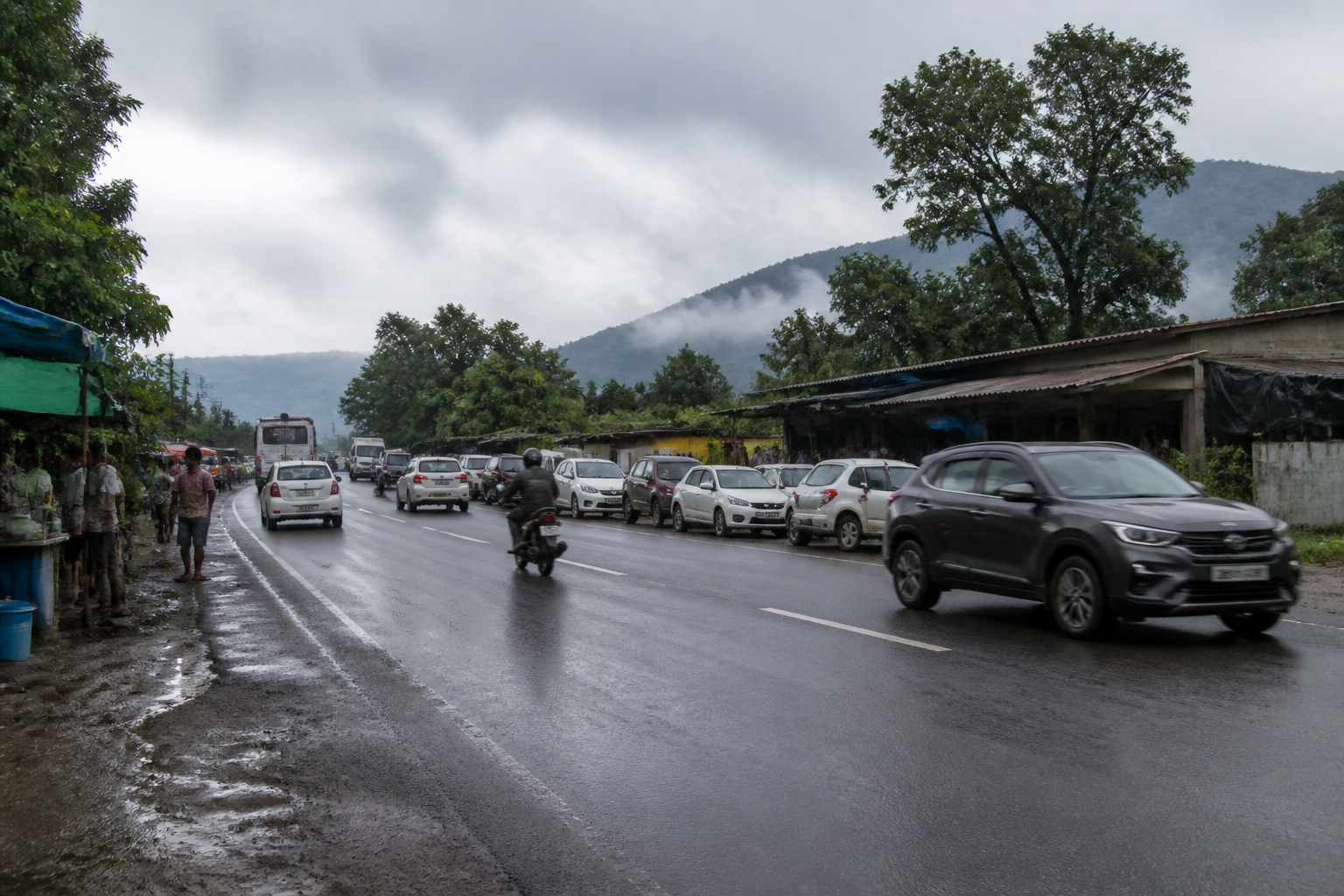
The Public Works Department has issued notices to nine unauthorised commercial structures along the Badlapur-Karjat state highway in Maharashtra, citing construction without prior permission and the traffic and safety risks created by roadside businesses. Officials said direct action will follow after the monsoon period ends.
The notices cover establishments located in the Kasgaon and Chamtoli areas near Badlapur. The affected businesses include an electric vehicle charging station, two roadside stalls selling betel products, a soft-drink shop, two dhabas and another structure in Chamtoli. A hotel and a food outlet in Kasgaon have also been served notices.
The Badlapur-Karjat route is an important link for residents travelling between Badlapur and Karjat, as well as for motorists heading towards Khopoli, Lonavala and Pune. The route has seen growing traffic, increasing the commercial value of land along its edges and encouraging businesses to operate close to the carriageway, according to the report by Loksatta – Thane.
The immediate concern for road users is vehicle parking. Customers visiting the hotels and dhabas reportedly park on the highway itself, creating obstructions and increasing the risk of accidents. The roadside activity also affects the movement of traffic on a route that remains busy through much of the day.
A recent field inspection by the Public Works Department’s sub-divisional officer found that construction was taking place without the required prior approvals. Following the inspection, officials issued notices to the businesses and identified the structures as unauthorised development within the controlled area alongside the highway.
The notices refer to provisions of the Mumbai Highway Act, 1995. They state that permanent or temporary construction, walls or fencing within the controlled area adjoining the highway cannot be undertaken without prior permission. The provision applies to structures that may affect the highway’s operational area, visibility, access or traffic movement.
The action highlights the enforcement challenge created when commercial activity expands along high-traffic roads without corresponding arrangements for parking, access and roadside safety. In this case, the establishments are described as being built immediately beside the highway, leaving customers and vehicles to use the road space itself.
Officials have indicated that enforcement will begin after the monsoon deadline. The report does not specify whether the structures will be removed immediately, whether the businesses will be given a further compliance period, or what penalties may follow if the notices are not addressed. The next action by the Public Works Department will determine how the notices are implemented on the ground.
