


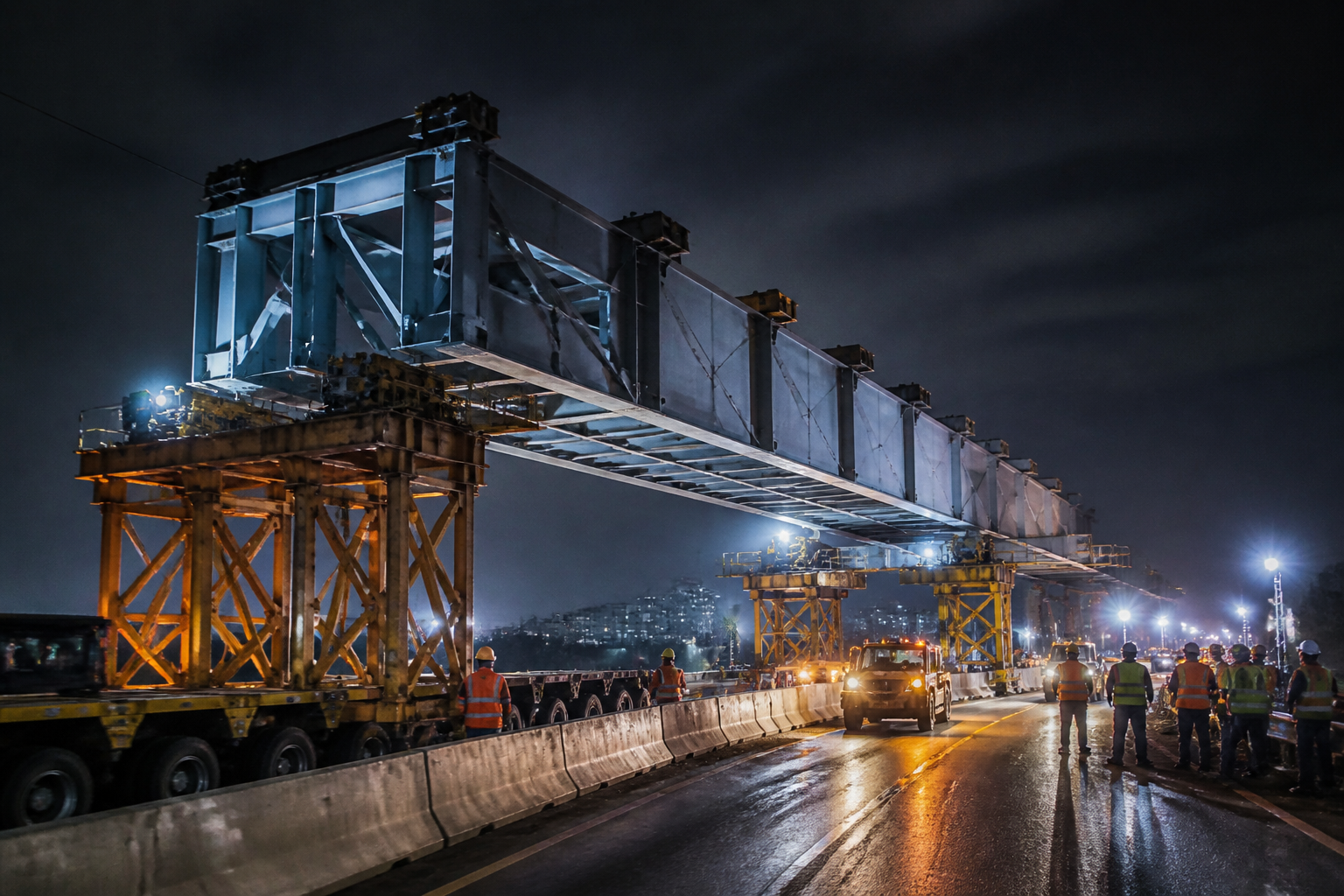
The Mumbai–Ahmedabad bullet train project has completed its first steel bridge in Maharashtra, with a 100-metre structure weighing 1,405 metric tonnes launched over NH-3 near Dive-Anjur village in Thane district, according to details shared by the National High-Speed Rail Corporation Limited (NHSRCL).
The bridge was installed above the Nashik Highway during a night-time traffic block to limit disruption to highway users. It is the first of the project’s proposed steel bridges to be completed in Maharashtra, marking a construction milestone as work advances on the state section of the high-speed rail corridor.
The Mumbai–Ahmedabad corridor is planned over 508 kilometres between Mumbai and Ahmedabad. According to the report, 28 steel bridges are proposed along the corridor, of which 16 have been completed. Steel bridges are being used at locations where the alignment must cross highways, expressways, major rivers and railway lines, requiring longer spans than conventional structures.
The bridge installed near Thane was fabricated at a workshop in Tiruchirappalli, Tamil Nadu, approximately 1,300 kilometres from the launch site. The finished steel structure was transported to Maharashtra by trailers, assembled near the site and then moved into position. The process reflects the project’s distributed construction model, in which large components are manufactured away from the final installation location and transported for assembly.
NHSRCL said the bridge was assembled on temporary trestles about 17.5 metres above the ground using 22 skid arrangements and 54,076 TTHSB. After assembly, two hollow jacks, each with a capacity of 150 metric tonnes, and pre-tensioned Macalloy Bars were used with an automatic mechanism to pull the structure into its designated position.
The structure is 100 metres long and 14 metres wide, with its stated height also given as 14 metres. It includes a C5 protective painting system intended to improve durability and elastomeric bearings designed to help manage movement and vibration. These features are important for a bridge carrying high-speed rail infrastructure above an active highway, where structural performance and clearance must be maintained over time.
The installation required coordination between the rail project authorities, highway agencies, traffic managers, transport contractors and construction teams. Carrying out the launch during a night-time traffic block allowed the work to proceed while reducing the period during which highway movement was affected. The report did not provide the duration of the traffic restriction or details of any long-term traffic management arrangements at the site.
The Maharashtra bridge is part of the wider construction effort for India’s first bullet train corridor. The report said operations on the Gujarat section are expected to begin next year, based on an announcement by Union Railway Minister Ashwini Vaishnaw. The latest milestone concerns civil and structural works in Maharashtra; it does not by itself establish an operational date for the Mumbai section or the full corridor.
