


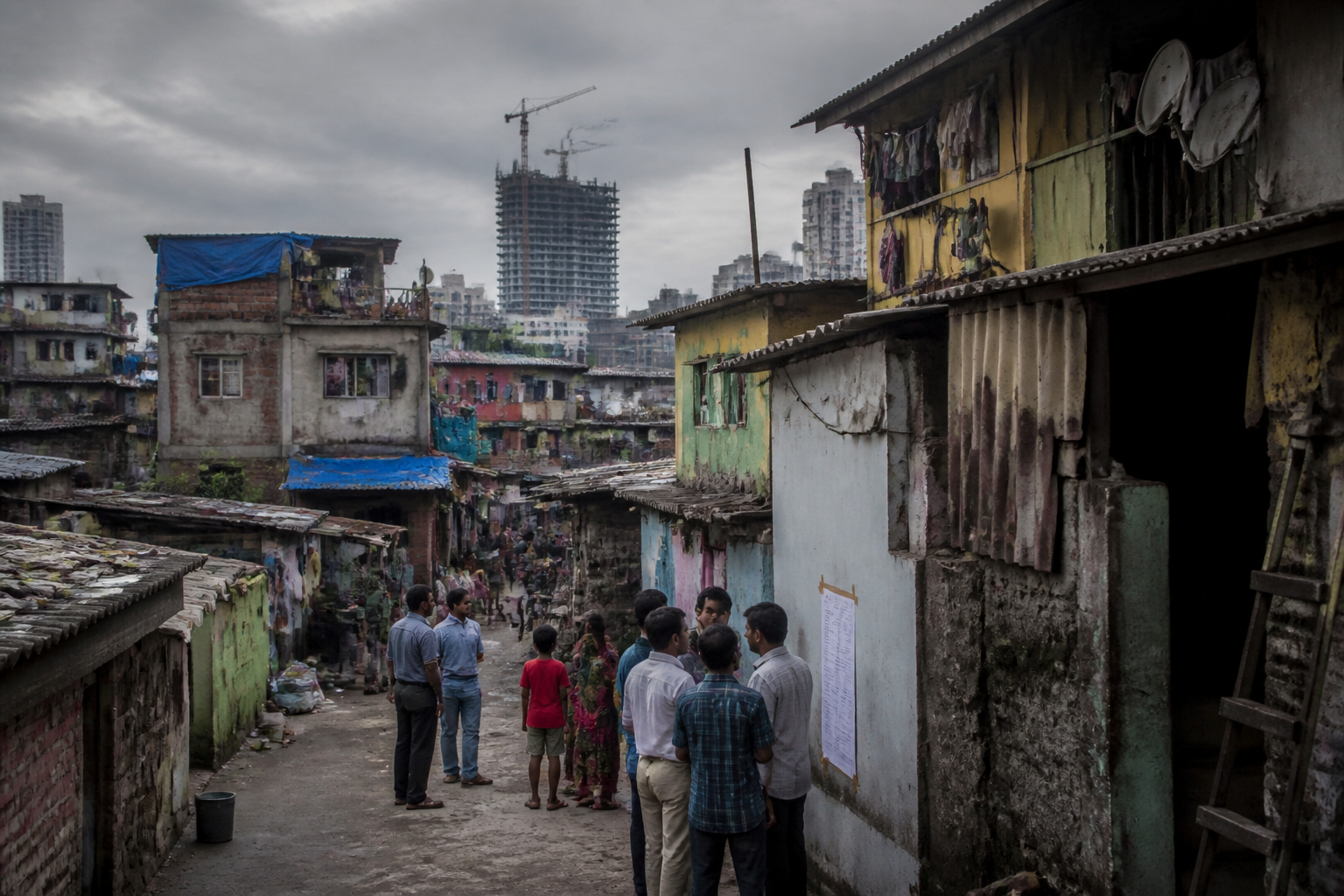
Dharavi residents who delay vacating their homes during the redevelopment project will receive reduced transit rent and lose eligibility for a one-time shifting allowance, according to a press release issued by Adani Navbharat Developers Pvt Ltd, the special purpose vehicle implementing the project.
The company said ground-floor residents who do not vacate on time will receive Rs 15,000 a month instead of Rs 18,000, while upper-storey residents will receive Rs 12,000 instead of Rs 15,000. Commercial occupants will be offered Rs 145 per sq ft rather than Rs 175 per sq ft, the release said.
The warning has been issued as eviction notices are being served in Sector 6, which includes Ganpat Nagar, Meghwadi and Azad Nagar. The company described Dharavi redevelopment as a vital infrastructure project and said that “a few cases of deliberate delay should not hold up the homes and other benefits due to almost 10 lakh people”.
The release cited Sections 33 and 38 of the Maharashtra Slum Areas Act, 1971, and Regulation 33(10)A of the Development Control and Promotion Regulations, 2034. It said action could be taken against residents who deliberately delay the project and that they may subsequently lose entitlement to rental or transit accommodation benefits.
According to the report, four households in Ganpat Nagar were forcibly evicted recently, while 12 households moved out voluntarily. Residents told the Times of India that the rent offered would not be enough to secure alternative accommodation in nearby areas, raising concerns about displacement and possible homelessness.
One resident said the minimum rent for a one-room-kitchen home in Mahim was around Rs 35,000 a month. Residents also questioned where sufficient rental homes would be found if several thousand households were required to vacate at the same time. They said the amount offered might secure accommodation only outside Mumbai.
The dispute is rooted in the redevelopment project’s rehabilitation model. Dharavi residents had been promised “key-to-key” rehabilitation, under which eligible households would move directly from their existing homes into rehabilitation flats. Residents said construction on railway land was undertaken because Dharavi has limited open space and because they expected to be shifted directly into completed rehabilitation housing.
The prospect of interim relocation has changed that expectation. Residents said they were now uncertain about where they would live while waiting for rehabilitation and described an atmosphere of fear in the affected areas. They also alleged that the company initially sent local agents to persuade households to vacate, though the report did not include a response from the company to that allegation.
The rent reduction and withdrawal of shifting assistance make the timing of eviction a central issue for affected households. The company’s stated position is that delays could obstruct a project intended to provide homes and other benefits to nearly 10 lakh people. Residents, however, say the available rent does not match local housing costs and could force families to leave the city. Further action in Sector 6 will determine how the eviction notices and the company’s stated benefit conditions are implemented.
