


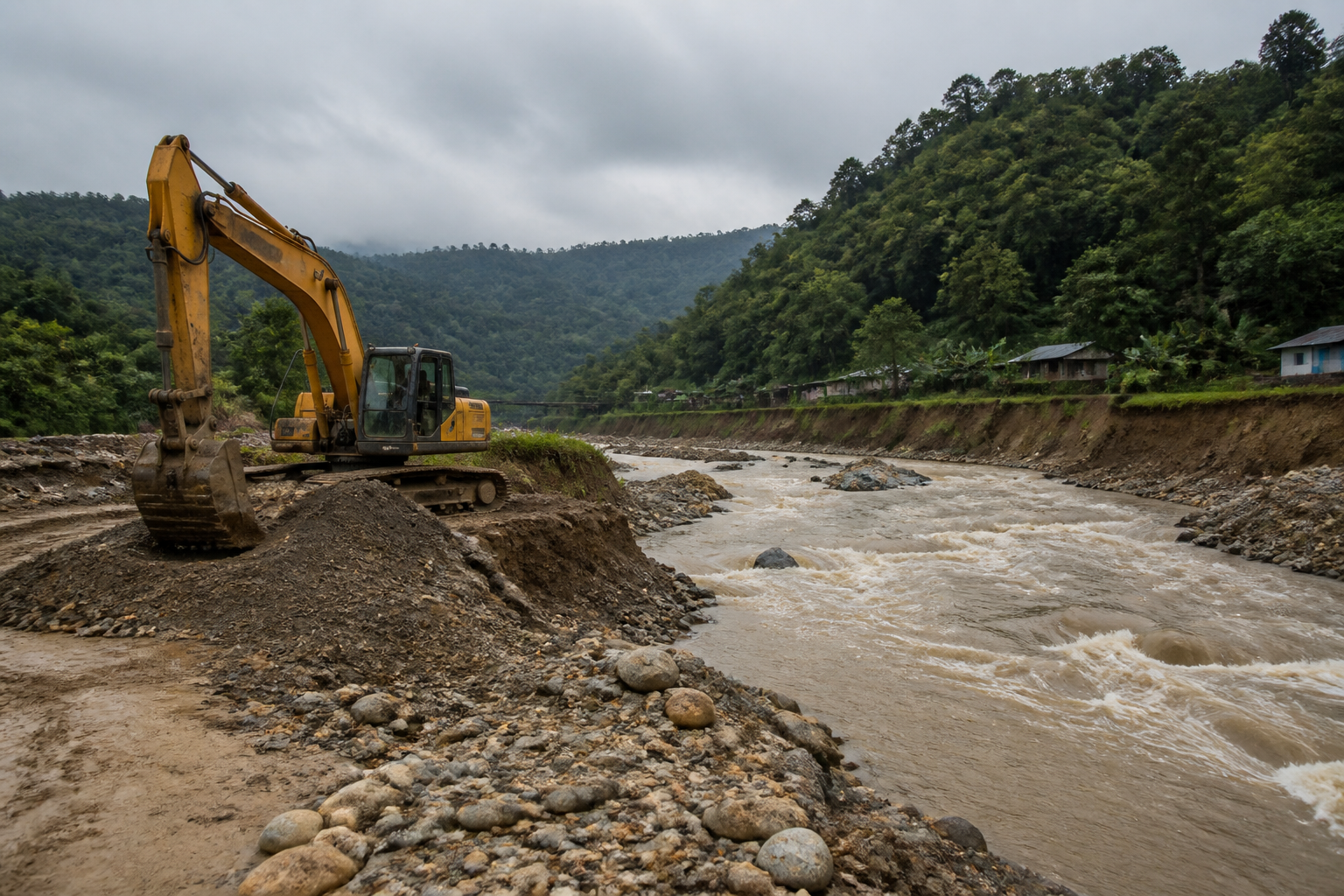
Dima Hasao riverbed mining has come under fresh scrutiny after the All Dimasa Students’ Union (ADSU) alleged that unregulated extraction of sand, gravel, stones and boulders is damaging rivers and threatening infrastructure, water security and tribal livelihoods in Assam’s hill district.
In a memorandum submitted to the chief conservator of forests in Haflong, the ADSU’s Dima Hasao district committee identified the Diyung, Mahur, Langting and Jatinga rivers and streams as areas where it alleged that excessive mining was taking place. The students’ body called for an immediate halt to mining carried out without the required approvals and environmental clearances.
According to the memorandum, heavy excavators were being used inside active river channels. The ADSU alleged that such activity was destabilising riverbanks and accelerating erosion during the monsoon. The organisation also warned that continued extraction could increase the risk of damage to infrastructure, including National Highway 27 and railway lines, as well as raise the possibility of landslides near residential areas.
The allegations place riverbed mining within a wider administrative challenge: regulating the removal of minor minerals in a geographically sensitive district where rivers, roads, railways and settlements are closely connected. The memorandum argued that extraction from active channels can alter riverbanks and affect the stability of areas around bridges, bends and erosion-prone stretches. The report did not include a response from the forest department or other authorities to the allegations.
The ADSU cited the Assam Minor Mineral Concession Rules, 2013, a 2012 Supreme Court judgment and guidelines issued by the National Green Tribunal while seeking action. It demanded inspections to establish the extent of mining and verify whether operators had the necessary permissions and clearances.
The organisation also sought the seizure of excavators allegedly being used without authorisation and prosecution of those found violating applicable rules. It called for a joint inspection involving relevant government authorities and ecological experts, indicating that the dispute may require coordination across departments responsible for forests, mining, environment, roads, railways and local administration.
The memorandum further sought the demarcation of no-mining zones near bridges, river bends, erosion-prone areas and ecologically sensitive stretches. Such demarcation, if undertaken by the competent authorities, would identify locations where extraction could pose heightened risks to public infrastructure, riverbanks and nearby communities.
The ADSU’s intervention comes as monsoon-related erosion can expose weaknesses in roads, railway alignments, bridges and slopes. In Dima Hasao, the alleged mining activity is therefore linked not only to environmental protection but also to the management of infrastructure corridors and residential safety. The allegations remain subject to examination by the authorities through the inspections and enforcement action sought in the memorandum.
