


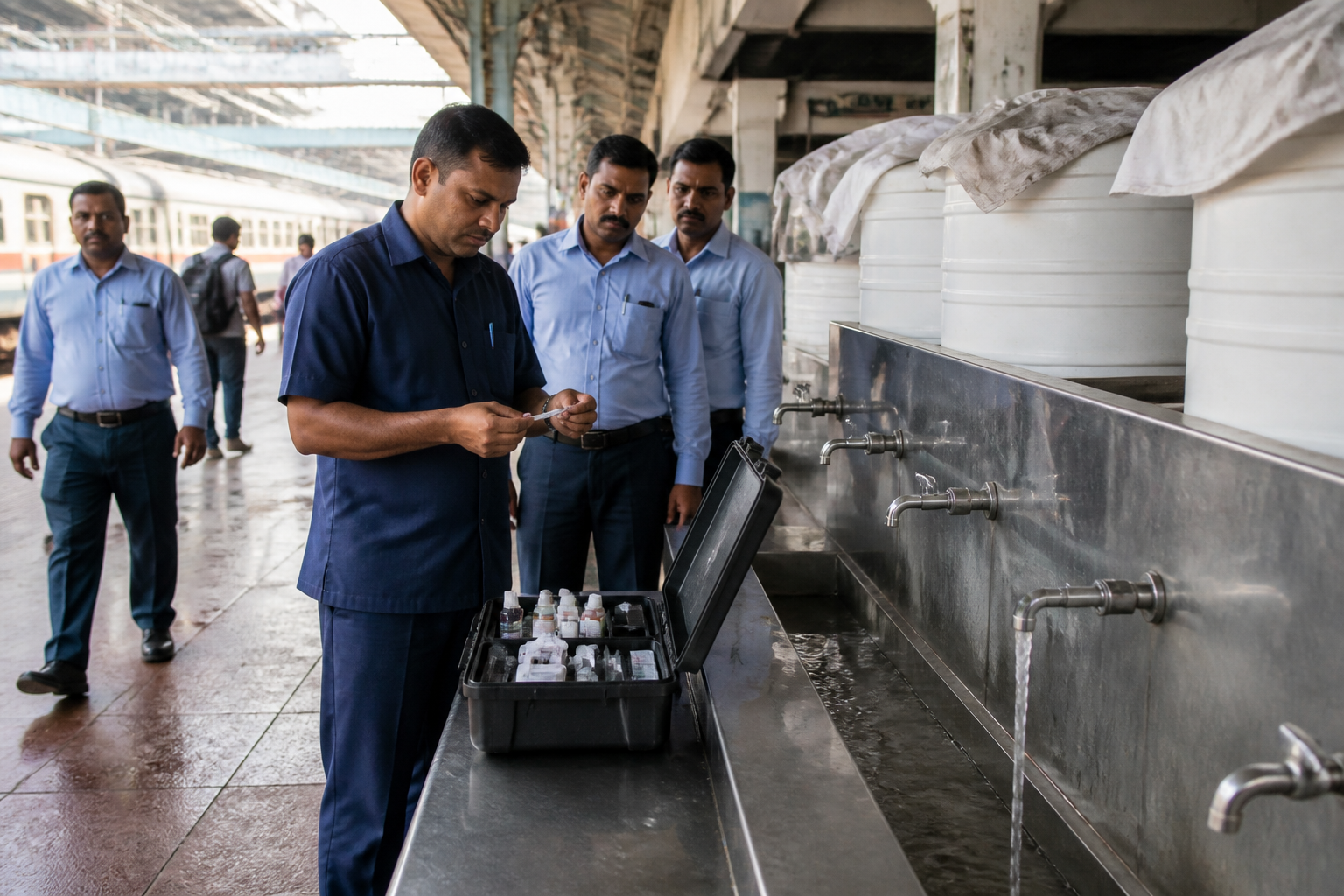
Central Railway’s Mumbai Division has reported that none of the 349 water samples tested during a special inspection drive contained bacteriological contamination or E. coli, after checks across 2,967 locations at stations, railway colonies and workplaces.
The drive followed a Comptroller and Auditor General report on sanitation facilities and passenger amenities at non-suburban railway stations. It was conducted in compliance with directions from the Railway Board, according to an official Central Railway statement cited by Mid-Day.
Inspections covered drinking-water sources, filtration plants, underground and overhead tanks, PVC tanks, water booths, taps and dispensing points. Central Railway said 410 deficiencies were identified during the exercise. Of these, 365 had been rectified, while work on the remaining 45 was still underway.
The Mumbai Division has 2,913 water tanks across platforms, station premises, colonies and office premises. Between August 20 and September 22, 1,753 tanks were cleaned. Tight covers and mesh were installed on vents and overflow points at 1,716 locations to reduce the risk of contamination.
The railway said the 349 samples were examined through physical, chemical and bacteriological testing. It also placed 134 locations under daily monitoring of residual free chlorine, a measure used to track disinfection levels in drinking water. In addition, 26 leakages or defective pipelines were repaired, while 29 hand-pump and borewell sources were checked for contamination and safety.
Pipeline systems at Chhatrapati Shivaji Maharaj Terminus, Kalyan, Bhiwandi Road and Lonavla were checked for leaks. Water coolers were inspected and cleaned by the Electrical Department, while missing taps were installed, leaking taps were replaced and accumulated silt was removed, the statement said.
Central Railway also said E. coli testing kits had been provided at all concerned Inspector of Works offices. The arrangement is intended to support continued checking of water sources at railway facilities rather than limiting testing to the special inspection period.
The inspection drive recorded deficiencies in a network that serves passengers as well as railway staff living and working across the division. Central Railway said it remains committed to supplying safe, hygienic and potable drinking water and to complying with the Uniform Drinking Water Quality Monitoring Protocol at all stations. The 45 unresolved deficiencies remain under work, according to the railway’s statement.
