


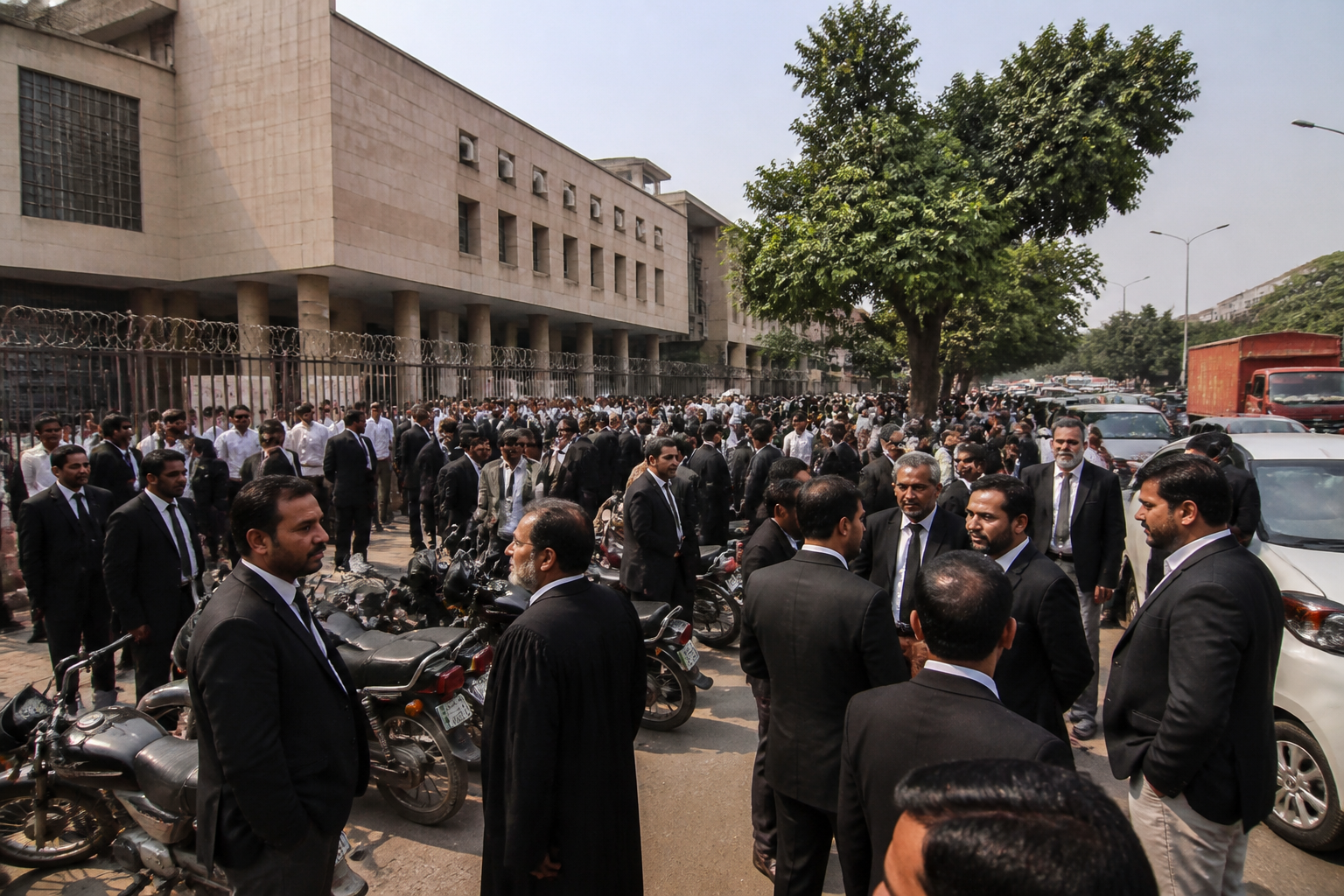
Delhi lawyers stayed away from work on Monday to protest amended traffic challan rules that require motorists to deposit 50% of a penalty before approaching a court if their challenge is rejected. The lawyers have also objected to an executive authority deciding whether a challan challenge should be accepted before the matter can reach the judiciary.
The changes were made to Rule 167 of the Central Motor Vehicle Rules, 1989, and were flagged by the Coordination Committee of all district court Bar Associations in Delhi in a circular dated September 20, according to The Indian Express. The protest centres on the procedure introduced under amended Rule 167(5).
Under the revised process, a person issued a challan must either accept and pay the amount specified or contest it through the prescribed portal. The challenge must include documentary evidence and be submitted to an authority specified by the state government. The circular said the challenge must be filed within 45 days of the challan being issued.
If a person does not contest the challan before the specified authority, the penalty will be treated as having been “deemed to have been accepted”, the circular said. Where the authority rejects the challenge, the person can approach the competent court only after depositing 50% of the amount specified in the challan, in a manner prescribed by the state government.
Lawyers said the arrangement gives the executive a role that should be performed by the judiciary. Advocate Neeraj, chairman of the Coordination Committee, told The Indian Express that requiring a person to pay half the penalty before approaching court effectively treats them as “half guilty”. He questioned how government officers would decide issues connected to an alleged violation of the Motor Vehicles Act, which he said should be determined by a court.
Neeraj also said the process could limit a person’s ability to explain the circumstances behind an alleged violation. He cited situations involving medical emergencies or accidents in which a driver may have committed a traffic violation while responding to an urgent situation. Advocate Tarun Rana, secretary of the New Delhi Bar Association, similarly questioned why a payment should be required before a court hearing and compared the provision to imposing part of a sentence before trial.
The lawyers have also raised concerns about the digital nature of the revised process. Rana said commercial drivers and truck drivers may find it difficult to receive the message, understand the objection procedure and submit their response within the prescribed period. Under the process described in the circular, an officer or other appropriate authority will be appointed in each state to respond to objections.
The dispute therefore involves both the legal route for contesting a challan and the practical ability of motorists to use that route. The amended mechanism requires a person to act within the specified deadline, submit documentary evidence through the prescribed portal and make a substantial payment before seeking judicial consideration if the administrative challenge fails. The next steps will depend on how the state authorities implement the specified authority and digital objection process.
