


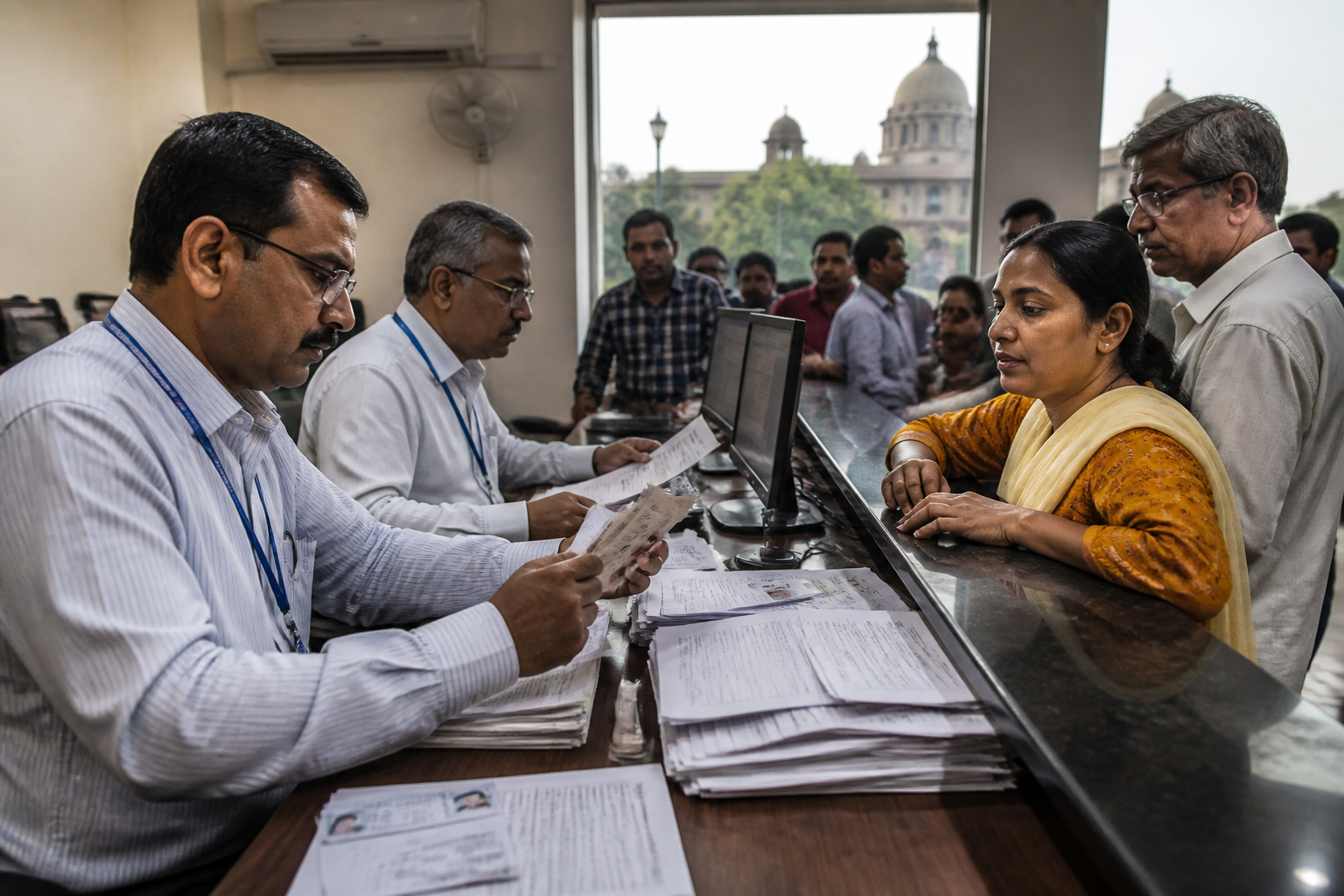
Delhi’s Special Intensive Revision (SIR) of electoral rolls has flagged 31,63,930 voter records for discrepancies, with notices issued to several prominent residents, including former Chief Justice of India D.Y. Chandrachud, former Vice-President Jagdeep Dhankhar, former deputy prime minister L.K. Advani and BJP MP Bansuri Swaraj.
The notices are being issued during the examination of voter records that either could not be mapped to the previous SIR roll or showed one of 11 logical discrepancies identified by the Election Commission’s software. The Delhi Chief Electoral Officer’s office has said that around 33.13 lakh voters are to receive notices in the exercise.
According to the list cited by Jagran, Dhankhar and his wife Sudesh Dhankhar, Advani and members of his family, Chandrachud and his wife Kalpana Das, and Swaraj were placed in the no-mapping category. Former Rajya Sabha member Subramanian Swamy was also listed in that category. Former Chief Justice B.R. Gavai’s wife, Tejaswini Bhushan Gavai, received a notice over a self-name mismatch.
Former Delhi deputy chief minister Manish Sisodia, his wife Seema and their son Mir were also included in the notice list. Officials cited different reasons in their cases, including the absence of mapping with earlier SIR data in the Patparganj-linked area, differences in the parents’ names and a discrepancy in the voter’s own name. Delhi minister Parvesh Verma, Rajya Sabha member Ajay Maken and former Delhi Congress chief Subhash Chopra were also reported to have received notices.
The review has also exposed a separate problem involving the late economist Bibek Debroy. Debroy died in 2024, but his name was reportedly present in the electoral roll for polling part 73 of the Delhi Cantonment Assembly constituency, where he was recorded as a 70-year-old voter. The name was flagged for non-mapping with the previous SIR list, although the available record indicated that it should have appeared on the electoral office’s death list.
The case raises two administrative questions: how a deceased person’s name remained on the roll and why the same record was subsequently flagged for a mapping discrepancy. The incident highlights the practical difficulties of reconciling electoral databases, death records, identity details and historical rolls during a large-scale revision.
A senior election official told Jagran that the notices were based on logical discrepancies found in enumeration forms submitted by voters. The official clarified that receiving a notice does not mean that a voter’s name has been deleted. Eligible voters will remain on the final electoral roll after the submission and verification of the required documents.
The official said booth-level officers and electoral registration officers were being sent to the residences of VIP voters where necessary. Documents from the listed voters were expected to be submitted by Monday evening, after which the verification process will determine the status of the records in the final roll.
