


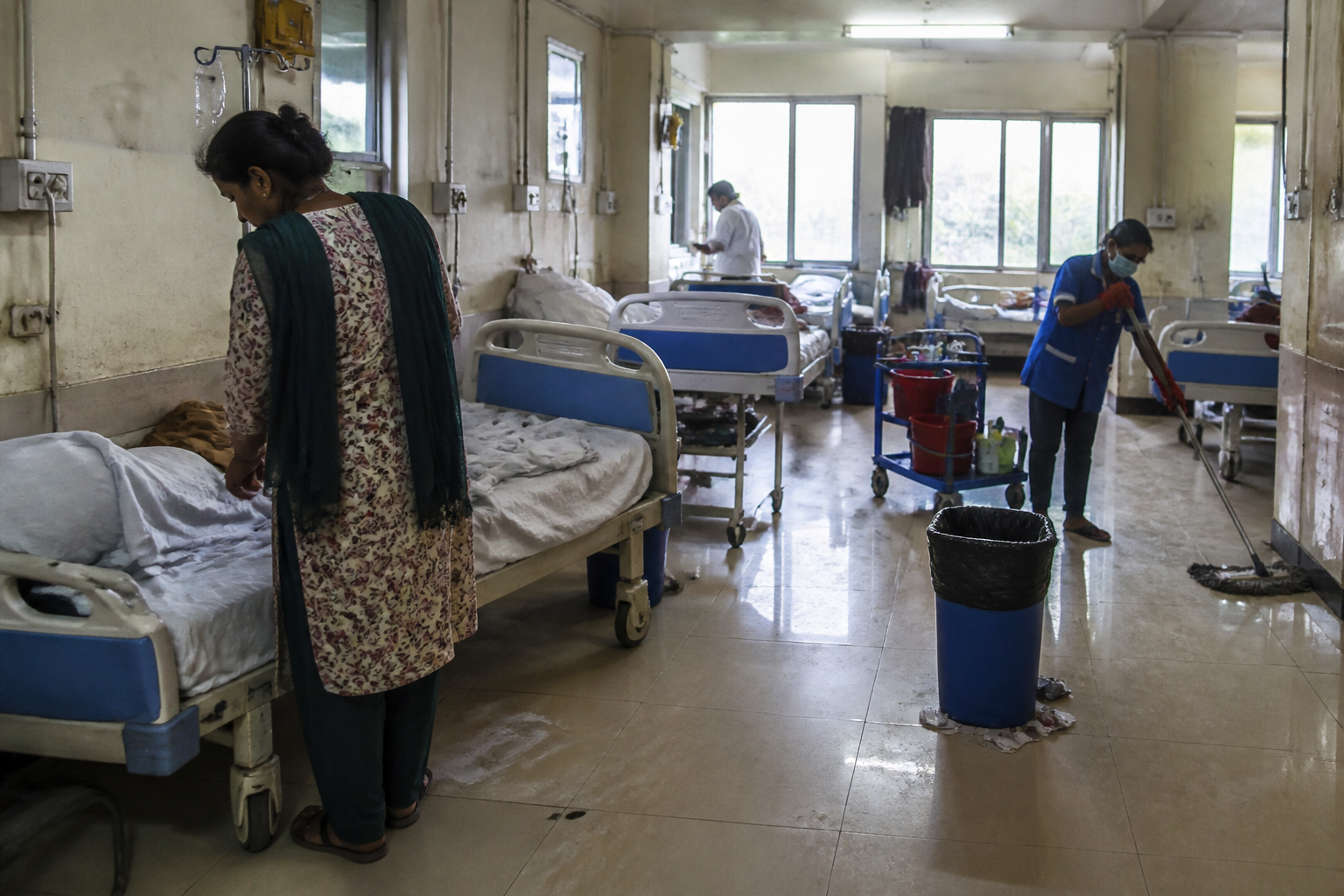
Patients and their relatives at the 200-bed Pandit Bhimsen Joshi Government Hospital in Bhayandar West have reportedly been forced to clean beds and manage basic ward hygiene amid complaints of irregular sanitation services, according to a report by Loksatta – Vasai-Virar published on September 19.
The report said waste has accumulated in the general ward and intensive care unit, with discarded water bottles, food wrappers, medicine packets and other refuse visible across parts of the hospital premises. Dirt has also reportedly accumulated on patient beds, requiring relatives to clean them when sanitation workers do not arrive regularly.
Videos showing patients or their relatives preparing and cleaning beds have circulated on social media, the report said. The situation has raised concerns about the delivery of basic hospital services at a public facility where patients receive treatment free of charge.
The hospital was initially managed by the Mira-Bhayandar Municipal Corporation. It was transferred to the state government several years ago because of financial difficulties, and is now operated by the government. The hospital offers free treatment, although the report said that services are currently available for only a limited number of illnesses.
Sanitation at the facility has been assigned to a government-appointed contractor. The contractor is responsible for deploying cleaning staff at the hospital. However, the report said sanitation employees have not received their wages on time for several months. Some workers are reportedly owed more than three months of salary.
Hospital staff told Loksatta that delayed wages have made it difficult for sanitation workers to attend regularly, and that some employees come to work only intermittently. The reported link between wage delays and irregular attendance has affected cleaning in both patient wards and other hospital areas.
The issue highlights the administrative chain behind day-to-day conditions in a public hospital: the state government operates the facility, while a contracted agency supplies sanitation workers. The available report does not specify the value or terms of the sanitation contract, the number of workers deployed, or whether the government has initiated action against the contractor.
The report also does not include a response from the state health authorities, the hospital administration or the contractor regarding the alleged wage arrears and sanitation complaints. Their response, along with details of corrective steps and a timeline for restoring regular cleaning services, remains awaited.
