


Mumbai recorded a sharp increase in malaria and H1N1 cases up to 15 September, even as dengue, chikungunya, leptospirosis, gastroenteritis and Covid-19 cases declined compared with the same period last year, according to a Brihanmumbai Municipal Corporation report.
The BMC public health department’s Epidemic Control Cell issued the monthly comparative record of monsoon-related illnesses on 18 September. It showed that Mumbai reported 8,723 malaria cases between January and 15 September this year, compared with 6,277 cases during the corresponding period last year. The increase amounts to about 39 per cent.
H1N1 cases also rose significantly, from 83 during the comparable period last year to 507 this year. The report records the increase alongside the city’s ongoing monsoon disease-control measures, which include public awareness activities and efforts to prevent mosquito breeding.
Dengue cases, however, fell marginally to 2,656 from 2,724 during the same period last year. Chikungunya cases dropped sharply from 542 to 80, while leptospirosis cases declined from 558 to 390. Gastroenteritis cases fell from 5,989 to 4,997, according to the BMC figures.
Covid-19 cases also decreased, from 1,118 last year to 178 this year up to 15 September. The comparative figures cover the January-to-September period and reflect cases recorded by the municipal health system.
The latest numbers come as Mumbai prepares for the continuing Ganesh festival period, when large public gatherings and increased movement across neighbourhoods place additional demands on civic health surveillance and public communication. The BMC said its health department is conducting public awareness initiatives across the city’s administrative wards.
The municipal corporation has distributed information, education and communication posters to Ganesh mandals. It is also broadcasting jingles on malaria and dengue prevention as part of the awareness campaign. The measures are intended to communicate disease-prevention information in public spaces and through festival-linked community networks.
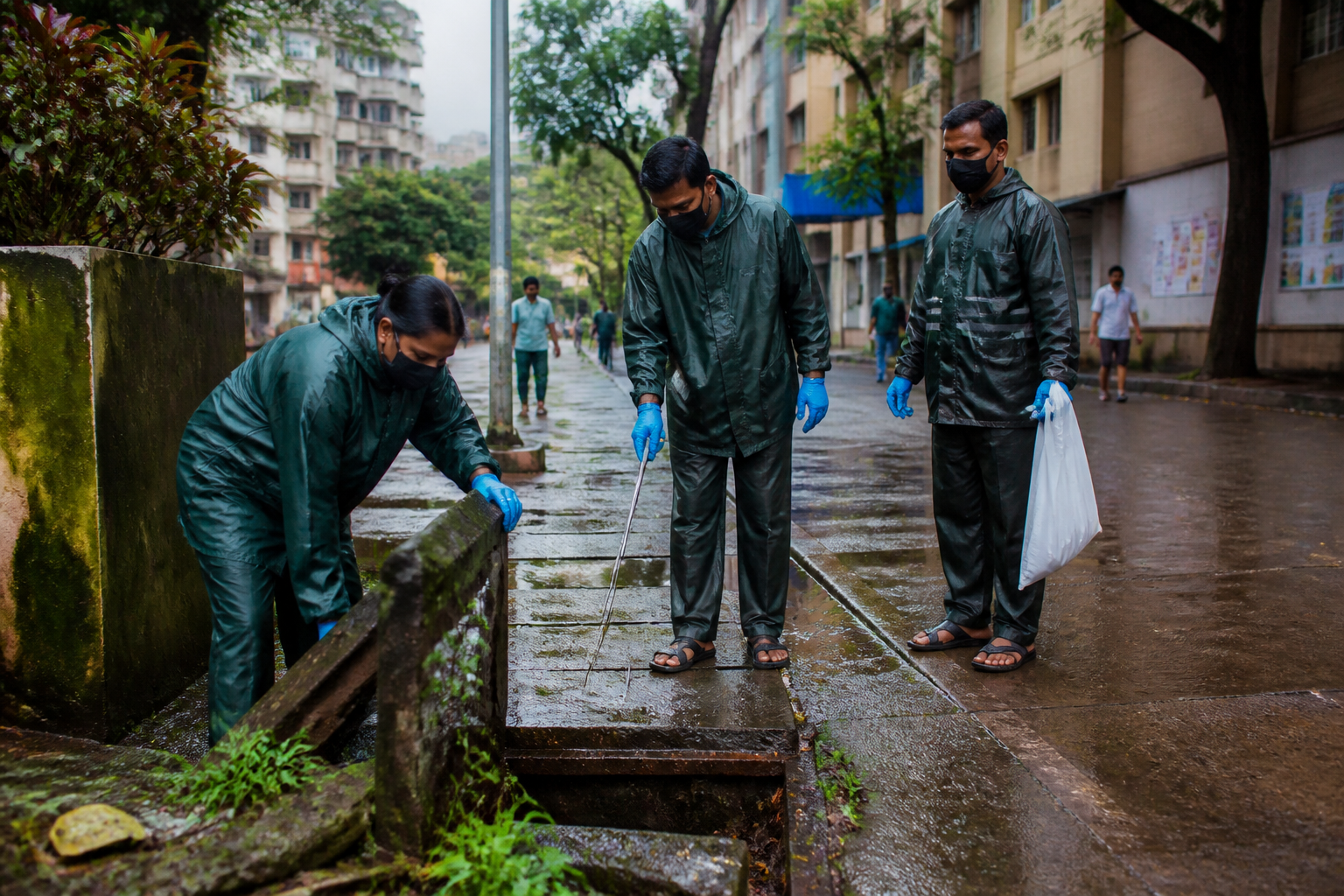
To limit mosquito breeding, special cleanliness drives are being conducted at municipal hospitals and maternity homes. The drives involve relevant staff and focus on preventing mosquito multiplication and eliminating breeding sites, the report said.
The contrasting disease figures indicate that Mumbai’s monsoon health burden is not moving in one direction. While several infectious diseases recorded lower numbers than last year, malaria and H1N1 showed increases, leaving the civic response focused on both vector control and public-health awareness. The BMC’s next comparative updates will establish whether the trends continue after the 15 September reporting cut-off.
