


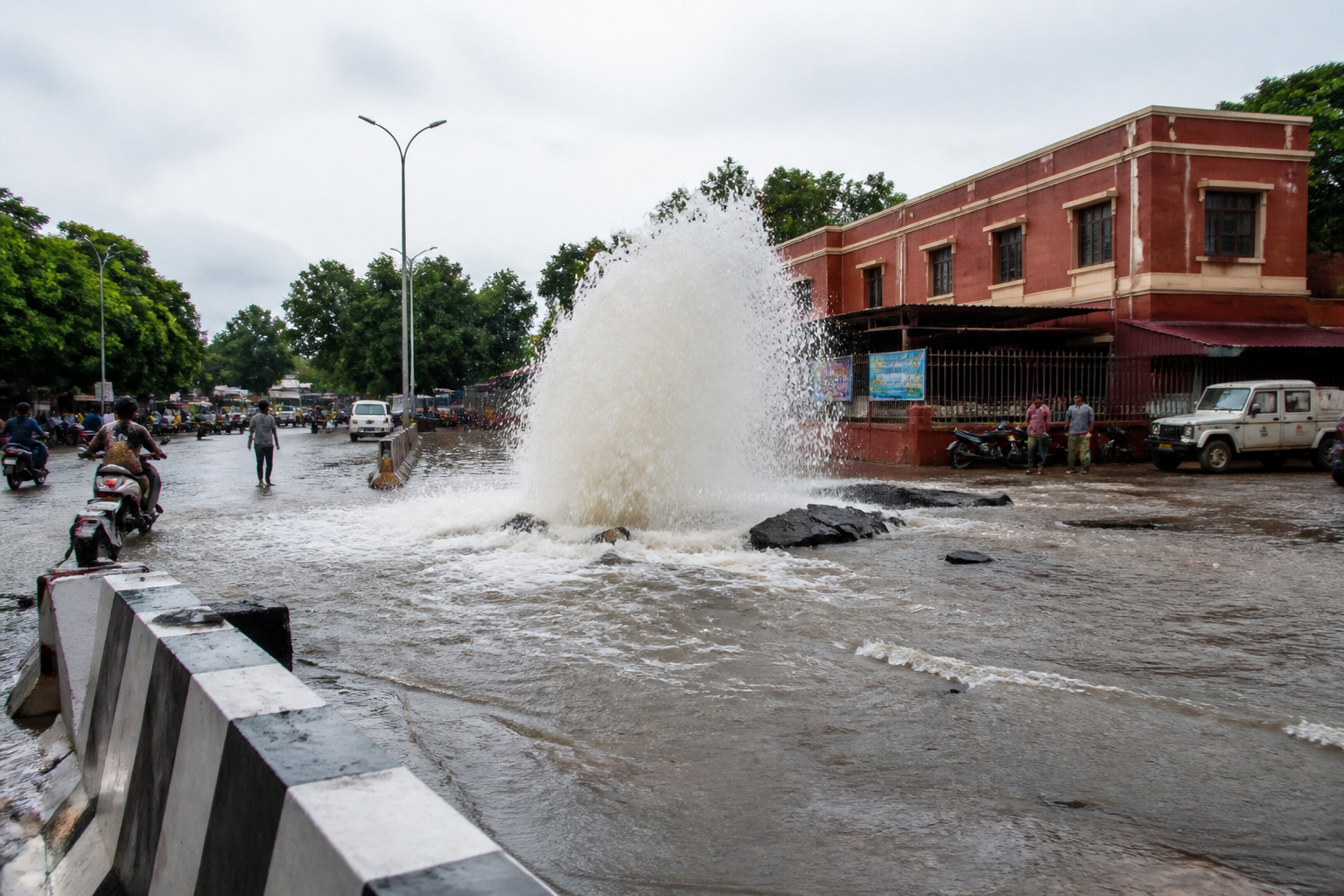
A major Metro Water pipeline leak near Pallavaram police station flooded the adjoining road and surrounding premises on Thursday, sending drinking water into the air at high pressure and disrupting movement for police personnel and members of the public.
The pipeline carries drinking water from the Chembarambakkam reservoir to Pallavaram and Chromepet areas under the Tambaram Corporation. According to residents cited by DT Next, a power outage lasting more than three hours affected operations at the Metro Water pumping station on Wednesday.
Residents said the pumping motors were restarted after electricity supply was restored at night. Officials suspected that air pressure accumulated in the pipelines during the interruption. When pumping resumed, water began moving intermittently at high pressure, after which a pipeline near Pallavaram police station developed a leak around midnight.
The water reportedly rose to a height of around 20 feet before spreading across the road and collecting around the police station. The falling stream created a temporary fountain-like scene, while some motorists brought their cars underneath it and used the flowing water to wash their vehicles.
The inundation also affected people entering and leaving the police station. Police personnel and members of the public had to wade through the waterlogged area, according to the report. The leak continued until Thursday morning, with the discharge creating difficulties around a facility that handles regular public movement.
Residents alerted Tambaram Corporation officials, who said the pipeline belonged to Metro Water and that the water supply agency would have to address the problem. Metro Water officials told DT Next that steps were being taken to stop the leak.
The incident has drawn concern because residents in several parts of Chennai are facing water shortages while a large quantity of treated drinking water was discharged onto the road. Residents have urged the authorities to identify the cause of the pipeline failure and take measures to prevent similar leaks after interruptions to pumping operations.
