


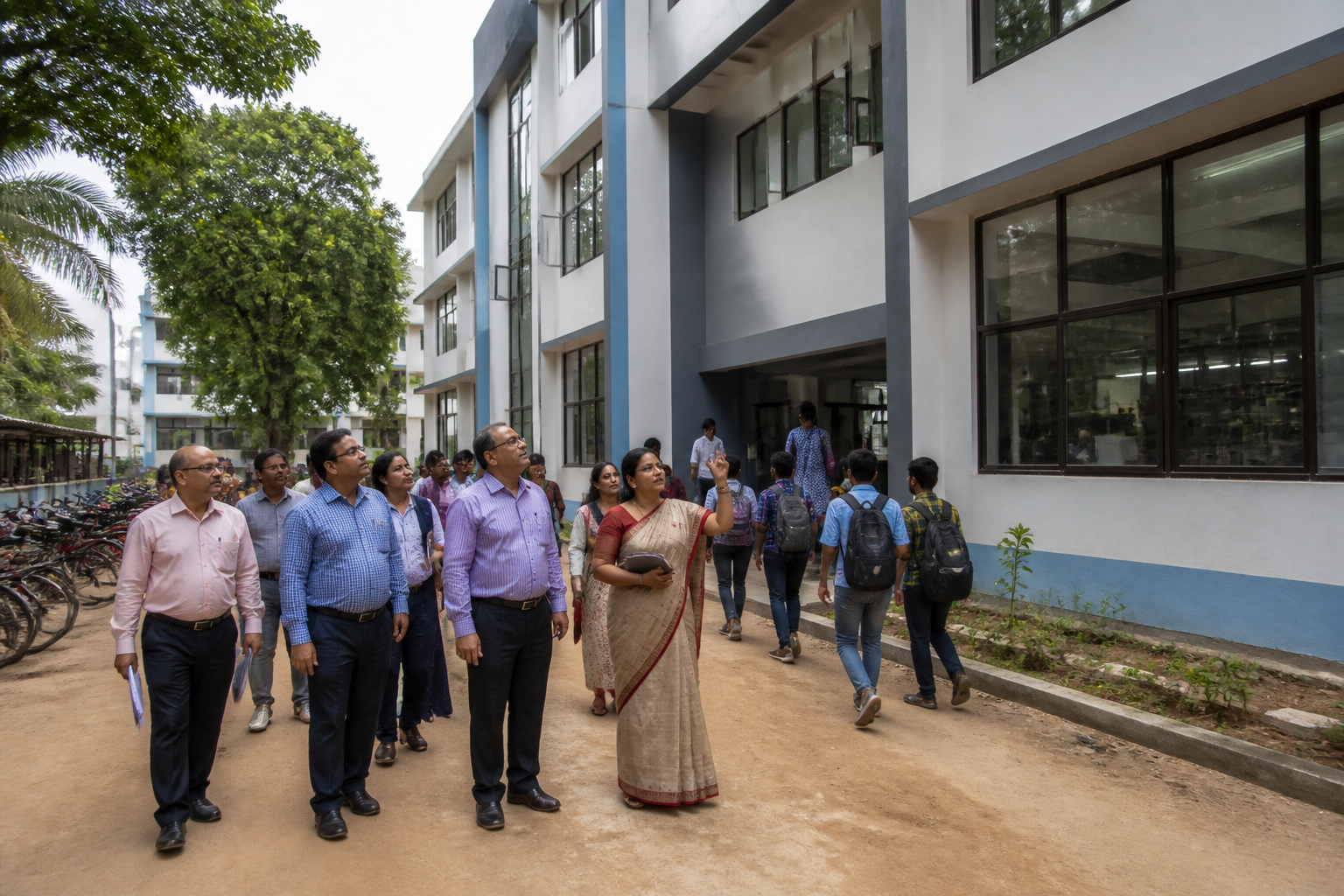
West Bengal has shortlisted 100 colleges for a state-backed initiative to improve academic and institutional standards, strengthen infrastructure and help them compete for places in the National Institutional Ranking Framework’s national top 100. The colleges have been divided into 46 first-priority institutions and 54 second-priority institutions.
Four colleges from north Bengal — ABN Seal College in Cooch Behar, Darjeeling Government College, Southfield College in Darjeeling and Gour Mahavidyalaya in Malda — are among the 46 first-priority institutions. The selection places particular emphasis on colleges with the potential to improve their performance through targeted mentoring, infrastructure assessment and academic support.
The initiative is being led by the Bengal higher education department. Teams from the department are expected to visit the selected institutions to assess their infrastructure and academic facilities and advise them on areas requiring improvement against NIRF parameters. At Gour Mahavidyalaya, a two-member department team is scheduled to conduct an inspection on September 19.
The assessment at Gour Mahavidyalaya will cover infrastructure, digitisation, the number of classrooms and laboratories, laboratory equipment, academic results, the teacher-student ratio and vocational courses. The college’s principal, Ashim Sarkar, said its vocational programmes, including food and nutrition, had recorded good placements.
The department is expected to launch the proposed ‘NIRF Mission Mode Initiative’ after the assessment teams submit their reports. The programme will focus on mentoring and guiding the selected colleges. Sources cited by The Telegraph said experienced academics and principals from institutions including Ramakrishna Mission Residential College, Narendrapur, Ramakrishna Mission Vidyamandira, Belur Math, and St Xavier’s College, Calcutta, were likely to mentor the selected colleges.
The selection process has been linked to accreditation status. A senior academic associated with Gour Banga University said Bengal has 434 colleges, of which more than 380 have obtained accreditation from the National Assessment and Accreditation Council. Colleges need a valid NAAC certificate to be considered for NIRF selection, while the NAAC grade and the five-year validity period of the accreditation were taken into account while identifying the 100 institutions.
The National Institutional Ranking Framework was introduced in 2015 by the Union education ministry, then known as the ministry of human resource development. In the 2025 NIRF rankings, five Bengal colleges featured among the national top 100: Ramakrishna Mission Vivekananda Centenary College at sixth, St Xavier’s College, Calcutta, at eighth, Ramakrishna Mission Residential College, Narendrapur, at 24th, Midnapore College at 42nd and Lady Brabourne College, Calcutta, at 47th.
The ranking system has also become increasingly relevant to institutional funding. Dhritiman Chakraborty, an English teacher and NIRF coordinator at Gour Mahavidyalaya, said better NIRF rankings could increase the possibility of receiving support and financial assistance from different higher-education authorities. A senior professor of Gour Banga University said satisfactory NIRF performance had become important for colleges seeking greater central funding after the implementation of the National Education Policy.
The next formal step is the completion of inspections by the higher education department and submission of assessment reports. The proposed mission-mode programme is expected to follow those reports with mentoring and institutional guidance for the selected colleges.
