


The Nehru Children’s Museum in Kolkata will remain open after the Bengal government reversed an earlier order to shut the 53-year-old institution and promised support to upgrade its basic fire-safety infrastructure. The intervention has protected a museum whose collection and educational programmes have made it part of several generations’ childhoods, although its financial difficulties remain unresolved.
Located on land leased by the state government for 99 years from December 22, 1966, the museum was inaugurated on November 14, 1972, by then Bengal chief minister Siddhartha Shankar Ray. Its first exhibits were clay models depicting scenes from the Ramayana and the Mahabharata. A dolls gallery was added around 1978 and has since grown into an international collection.
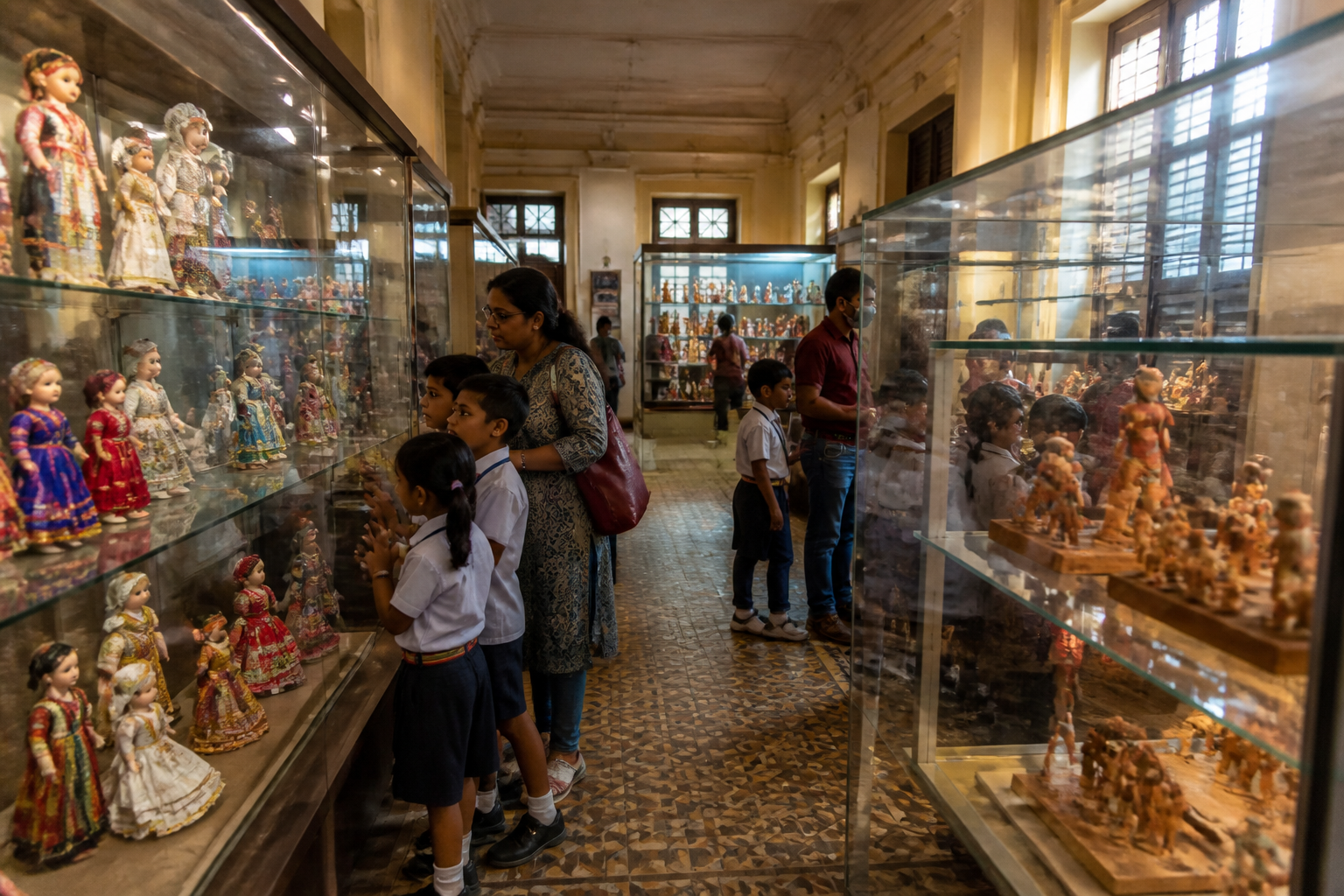
The museum now displays dolls from countries including Syria, China, Brazil, Belarus, Thailand and the United States. Its latest addition is the Moomin family from Finland. Among the exhibits drawing attention are Japanese Ningyo, including Washi Ningyo made from traditional washi paper using origami techniques and Kokeshi Ningyo known for their simple forms and bright colours.
“This hasn’t happened overnight. Over the years, we have approached various embassies to enrich our collection because we want to showcase costume dolls from different parts of the world,” Indrani Sengupta, the museum’s secretary, said, according to The Telegraph India.
Many of the dolls came from the personal collection of founder Jugal Srimal, who travelled internationally and brought back dolls from the places he visited. His son and museum director, Sudip Srimal, said the family had inherited that practice. The museum’s origins were also shaped by personal and community contributions. Srimal used family jewellery to establish the institution, while schools and students, including those from small Bengali-medium schools, contributed to the effort.
The museum’s early development followed an exhibition of the two epics organised by Jugal at the Indian Museum. Former chief minister Bidhan Chandra Roy suggested that the exhibits become a permanent display and proposed the name Nehru for such an institution. For almost two and a half years, artisans from Krishnagar worked on the clay models at the Srimal family’s home in Gariahat.
The museum continues to receive school groups, particularly on Children’s Day and during winter. Its exhibits are displayed behind glass, a feature that children sometimes find frustrating because they cannot play with the dolls. For older visitors, however, the museum has become a repository of personal memories as much as a public educational space.
The proposed shutdown prompted former visitors living in India and overseas to contact the administrators. Soumita Das, who is 61, recently returned after nearly three decades. She said she had first visited when she was 10 and decided to return after reading about the proposed closure.
The government’s decision has removed the immediate threat to the museum, but it has not settled the institution’s longer-term operating challenge. The museum has struggled to generate enough revenue to cover its expenses. The promised fire-safety upgrade is the next official step, while its financial sustainability remains a concern for the administrators.
