


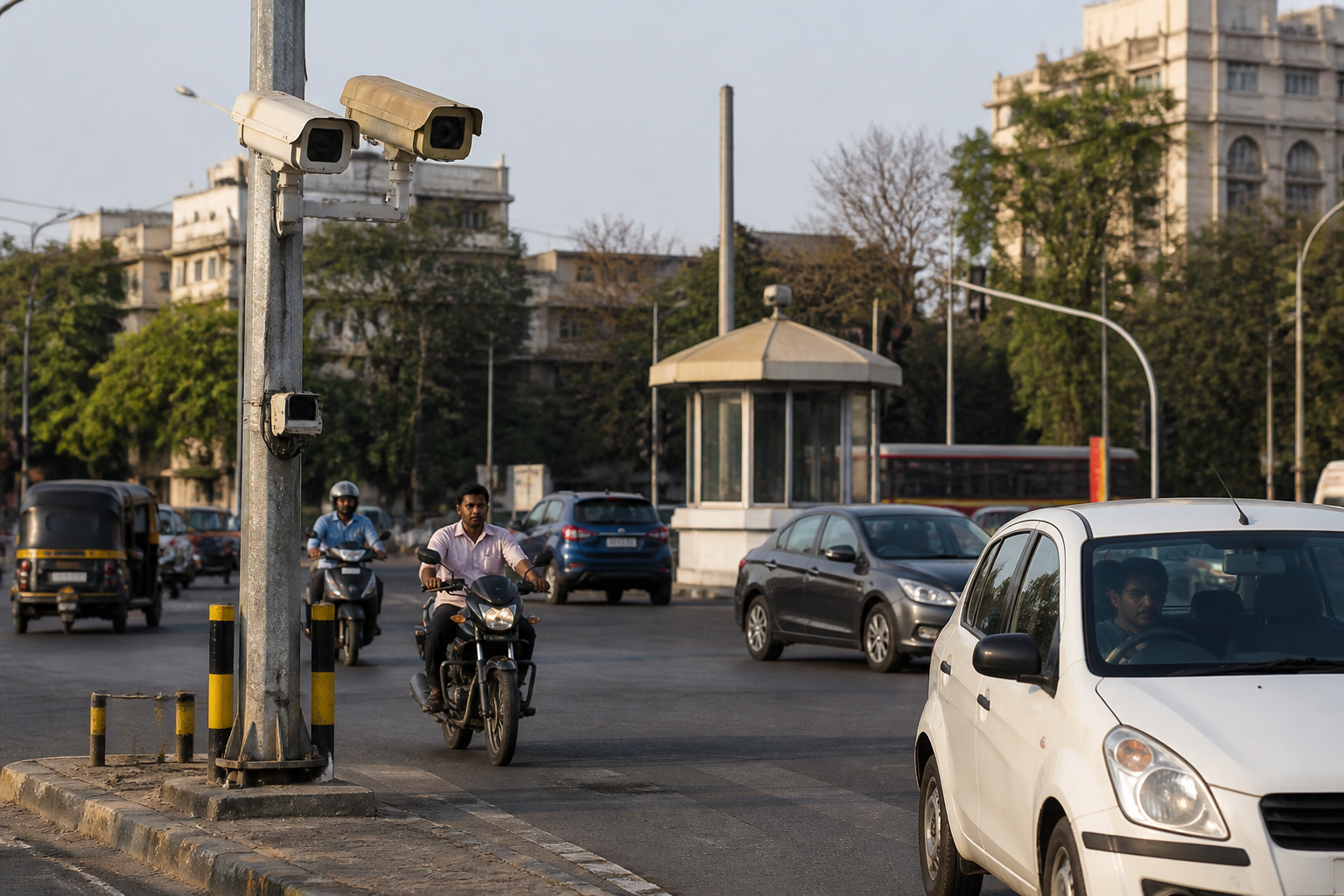
Maharashtra’s e-challan system has recorded an enforcement problem that is larger than the number of traffic violations themselves. Between January 2019 and August 2026, traffic units issued 12.8 crore e-challans, but 7.2 crore remained uncleared, according to data cited by Maharashtra traffic police. Of the Rs 8,678 crore in penalties imposed during the period, Rs 5,724 crore—66%—was still unpaid.
The figures suggest that Maharashtra has built considerable capacity to detect and record traffic violations, but far less capacity to convert those records into completed cases and collected penalties. That distinction matters. A digital challan can identify an offence and create a liability, but the enforcement system is only complete when motorists can contest disputed cases, pay valid fines and face proportionate consequences for persistent non-payment.
The immediate difficulty is administrative. Maharashtra generates an average of 15,000 challans a day, while the state has few dedicated traffic courts. The result is a large queue of cases moving through a system that was not designed to process the volume created by contactless enforcement. The upcoming Lok Adalat on September 12 will not hear e-challan cases, removing one of the mechanisms usually available for settling matters at the pre-litigation stage.
This creates a mismatch between enforcement technology and institutional capacity. Cameras and digital systems can expand the number of violations identified at relatively low marginal cost. Courts, grievance mechanisms and payment systems do not scale in the same way. If the second part of the chain remains limited, the result is a growing inventory of unresolved cases rather than a consistently enforced road-safety regime.
The Maharashtra data also shows why the backlog cannot be understood only as a collection problem. Of the 12.8 crore challans issued, 5.43 crore had been cleared. The state therefore has a substantial number of motorists who have completed the process, alongside 7.2 crore cases that remain open. The figures provided do not establish how many uncleared challans are disputed, incorrectly issued, technically difficult to pay, pending before an authority or simply being ignored. That missing classification is important because each category requires a different response.
A disputed challan needs an accessible review process and a clear evidentiary trail. A valid but unpaid challan may require reminders, convenient payment channels or a legal consequence linked to a future vehicle transaction. A case affected by an address, ownership or data error needs correction before enforcement can be considered fair. Without separating these categories, a large headline number can conceal several different administrative failures.
The report points to a rule intended to make the process more time-bound. Under a Ministry of Road Transport and Highways notification issued in January 2026, a motorist who does not accept a challan has 45 days to contest it online with documentary evidence. After that period, the challan is assumed to have been accepted. The effectiveness of this provision will depend on whether motorists receive timely notice, understand the deadline and have a functioning channel through which to submit evidence. The source material does not establish how the rule is being implemented across Maharashtra.
Other states cited in the report have responded to similar enforcement pressures through different institutional models. Delhi uses traffic-court hearings for two hours on weekday evenings, along with separate weekend courts, according to a senior police officer quoted in the report. Lok Adalats in Delhi and Kolkata continue to hear e-challan matters at the pre-litigation stage. These arrangements address the processing bottleneck by creating dedicated time and venues for high-volume traffic cases.
Karnataka’s experience illustrates a different approach: reducing the financial barrier to voluntary compliance. After authorities introduced a 50% rebate scheme in 2025, Bengaluru traffic police recovered Rs 258.16 crore during the year, compared with Rs 84.91 crore in 2024. The report says Rs 134 crore was recovered during the rebate scheme. In June and July of the following year, discounts helped the authorities collect Rs 18.15 crore and close six lakh traffic-violation cases.
These figures do not prove that rebates are universally suitable. They do show that the payment response can change when the state creates a defined opportunity to settle old liabilities at a reduced amount. A discount may recover money from motorists who would otherwise delay payment, but it also raises a policy question: whether repeated amnesties could weaken the deterrent effect of ordinary fines or encourage motorists to wait for the next concession. The supplied data does not provide enough evidence to resolve that question.
Kerala’s model relies more heavily on escalation. Motorists who fail to pay can face blacklisting, while cases may move from the Motor Vehicle Department to a judicial first-class magistrate court and then to an additional chief judicial magistrate for prosecution. The report says motorists typically pay when a matter reaches court or when they are unable to process vehicle-related services. This approach links the unpaid challan to a future administrative or legal transaction, creating a consequence beyond the original notice.
West Bengal has focused on integration. Its police and transport department launched the Sanjog unified e-challan portal to facilitate collection. The value of such a system lies in reducing fragmentation between the agency that records the violation, the department that maintains vehicle information and the channel through which the motorist pays or contests the case. Maharashtra’s figures indicate that its challenge is not a lack of recorded data, but the conversion of recorded data into a manageable, transparent case-management process.
The comparisons also reveal that the problem is not unique to Maharashtra. Karnataka had Rs 2,727 crore in penalties yet to be recovered between 2019 and April 2026, including Rs 1,800 crore in Bengaluru alone. Kerala recorded Rs 636 crore in unpaid fines between June 2023 and August 2026, while Kolkata’s unpaid fines stood at Rs 200 crore between 2019 and August 2026. The differences in period, geography and enforcement systems mean the figures are not directly comparable, but together they show the pressure created by technology-led traffic enforcement across major urban jurisdictions.
For Maharashtra, the state traffic police have proposed several responses. These include virtual traffic courts, AI-based voice calls to remind offenders, district-level grievance-redressal authorities and portable counselling booths where offenders would attend two-hour road-safety lectures. Officials have also suggested radio announcements warning that pending fines could affect the sale of vehicles, and linking challan payment with vehicle insurance so that owners with outstanding dues face higher premiums. The proposals are awaiting government approval, according to the report.
Each proposal addresses a different part of the enforcement chain. Virtual courts could expand hearing capacity without requiring every motorist to appear physically. Reminders could address simple non-payment, although their effectiveness would depend on accurate contact and vehicle-owner data. Grievance authorities could help distinguish genuine disputes from deliberate avoidance. Transaction-based restrictions could create stronger incentives, but they would need clear safeguards for ownership changes, disputed challans and cases involving multiple users of the same vehicle.
The proposed counselling booths reflect another idea: using time, rather than only money, as a deterrent. Requiring offenders to attend road-safety sessions may be intended to make violations more consequential without immediately increasing fines. Its effect would depend on attendance, content and whether the process can be administered at the scale of 15,000 daily challans. The supplied material does not provide an estimate of the staffing, facilities or cost such a programme would require.
The central urban governance issue is therefore not simply that motorists owe money. It is that Maharashtra’s enforcement system appears to be expanding faster than its adjudication, grievance and recovery institutions. The state can identify violations at scale, but the next stages—notice, contest, settlement, payment and sanction—remain congested. That weakens both revenue recovery and the credibility of traffic enforcement.
The available evidence confirms the size of the backlog and identifies several possible administrative responses, but it does not establish which intervention would work best. The next important developments will be the government’s decision on the traffic police proposals, the availability of Lok Adalat or dedicated court capacity for e-challan matters, and the publication of clearer data separating disputed, pending and unpaid cases. Until that happens, Maharashtra’s e-challan system will continue to measure violations more efficiently than it resolves them.
