


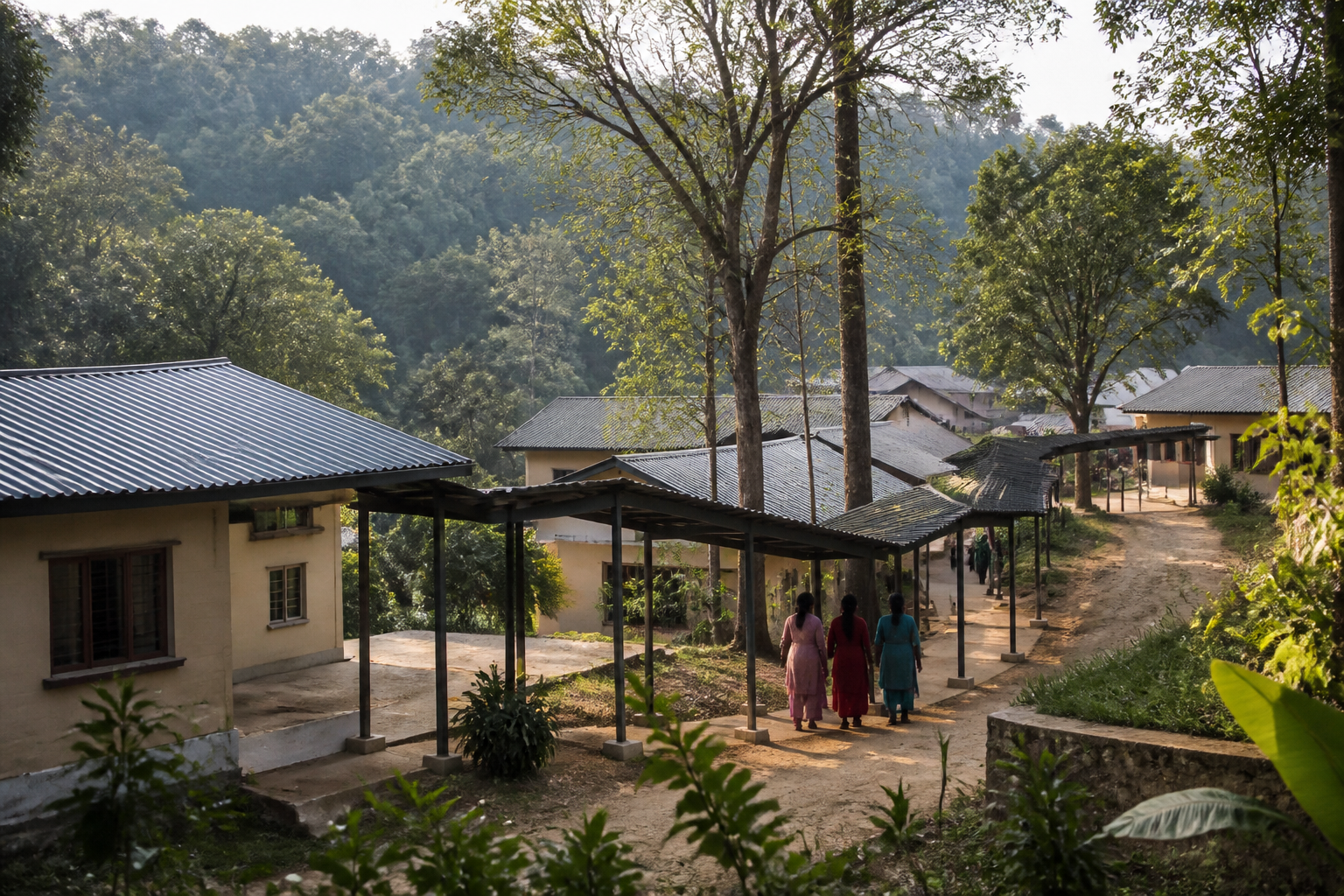
Subheadline: Teachers at 119 Valmiki Adivasi Ashram Schools say they receive a monthly honorarium of Rs 10,500 despite round-the-clock duties and difficult working conditions.
An estimated 400 to 500 outsourced teachers working at Karnataka’s 119 Maharshi Valmiki Adivasi Tribal Ashram Schools have sought President Droupadi Murmu’s intervention over low remuneration, lack of job security and inadequate workplace facilities.
The teachers, many of whom have worked in remote and forested regions for years, said they receive a monthly honorarium of Rs 10,500. They have demanded implementation of the principle of equal pay for equal work, regularisation of their services and access to employment benefits, including provident fund and Employees’ State Insurance coverage.
The residential schools serve tribal students and require teachers to remain on campus beyond regular classroom hours. According to representatives of the teachers’ protection committee, their responsibilities include teaching, maintaining discipline, supervising accommodation, attending to students’ health and handling administrative duties.
Teachers said the absence of dedicated wardens has added to their workload. They claimed that some are required to supervise multiple wards and remain at school from 4pm until the following morning for an additional Rs 6,000. They also said they accompany sick students to government hospitals during medical emergencies and do not receive salaries during holidays.
A representative who began working in 2001 said his monthly honorarium had risen from Rs 2,000 to Rs 10,500 over 25 years. The representative alleged that cooks employed through the labour department in the same institutions receive between Rs 23,000 and Rs 25,000. The teachers said the gap had intensified financial hardship and uncertainty over their employment.
The teachers also raised concerns about safety in forested border districts, including Mysuru and Chamarajanagar. They said staff faced risks from wild animals, including threats from wild elephant attacks, while working and staying on school campuses.
Basavaraju HC, project coordinator of the Integrated Tribal Development Project in Dakshina Kannada, said outsourced teachers were paid a fixed honorarium and were not covered by provident fund or ESI benefits because teaching posts did not come under the labour department. He described the matter as a state-level policy issue.
Basavaraju said the department had submitted a formal proposal seeking an increase in the teachers’ monthly remuneration to Rs 25,000. The teachers have urged the Scheduled Tribes Welfare Department and the Labour Department to consider their demands and address the staffing and security issues at the residential schools. The proposed remuneration revision remains subject to a state-level decision.
