


Thane | September 9, 2026
Sixty-eight sanitation workers at Thane Mental Hospital have received a total of ₹58 lakh in unpaid minimum-wage differences, including a penalty equal to twice the dues, after a two-year labour dispute involving the hospital administration and its contractor, according to a report by Loksatta – Thane.
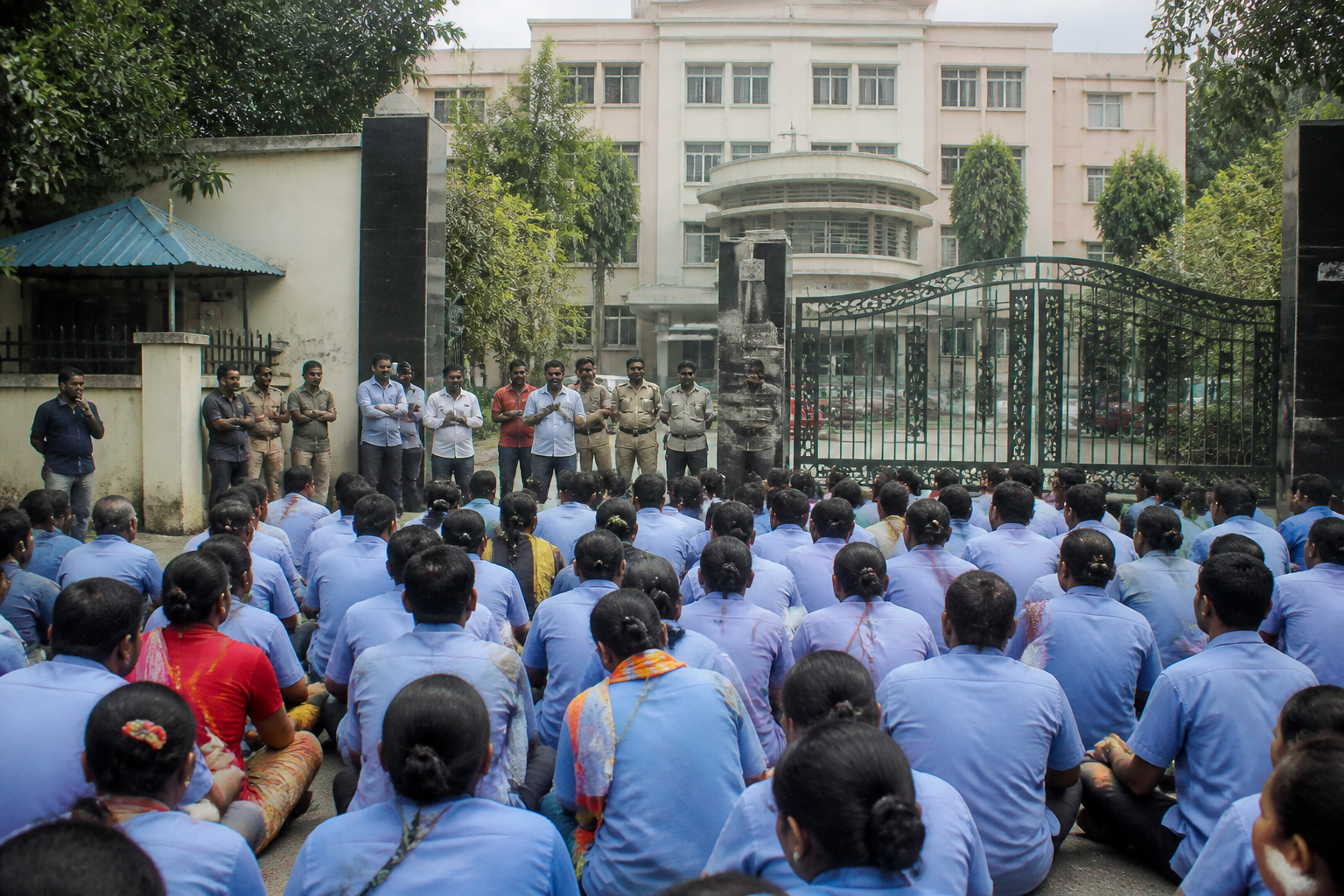
The payment was made on Monday after the workers pursued the matter through protests, sit-ins, marches and a 28-day relay hunger strike. The workers were represented by the Shramik Janata Sangh union, whose general secretary Jagdish Khairalia provided details of the case to the publication.
According to the report, the sanitation workers had not been paid in accordance with the Minimum Wages Act, 1948. The dispute was first pursued before the Thane Industrial Court. The union alleged that the hospital administration and the contractor, Lokrajya Self-Employment Service Cooperative Society, Pune, did not comply with the court’s directions.
The workers then filed a recovery claim with the Thane labour deputy commissioner’s office under the Minimum Wages Act. After roughly a year of proceedings, the assistant labour commissioner and authority under the Act issued an order on December 10, 2025. The order directed the contractor to pay the wage difference for six months, along with a penalty equal to twice the amount, totalling ₹58 lakh within 45 days of the order.
The order further stated that if the contractor failed to make the payment, the hospital administration, described in the order as the principal employer, would have to pay the amount within the following 60 days. Khairalia said the contractor and the administration did not implement the order within the prescribed periods.
The contractor subsequently approached the Bombay High Court. The High Court, in an order issued on April 16, 2026, directed implementation within four weeks of the Thane Industrial Court’s order dated June 11, 2024, and of the order passed by the authority under the Minimum Wages Act in the recovery proceedings, according to the report.
The case highlights the enforcement responsibilities that can arise when essential sanitation work at a public healthcare institution is carried out through a contractor. The reported payment follows the workers’ prolonged campaign and the intervention of labour authorities and the court. The available report does not provide a worker-by-worker breakdown of the amount or further details on the contractor’s response after the payment.
