


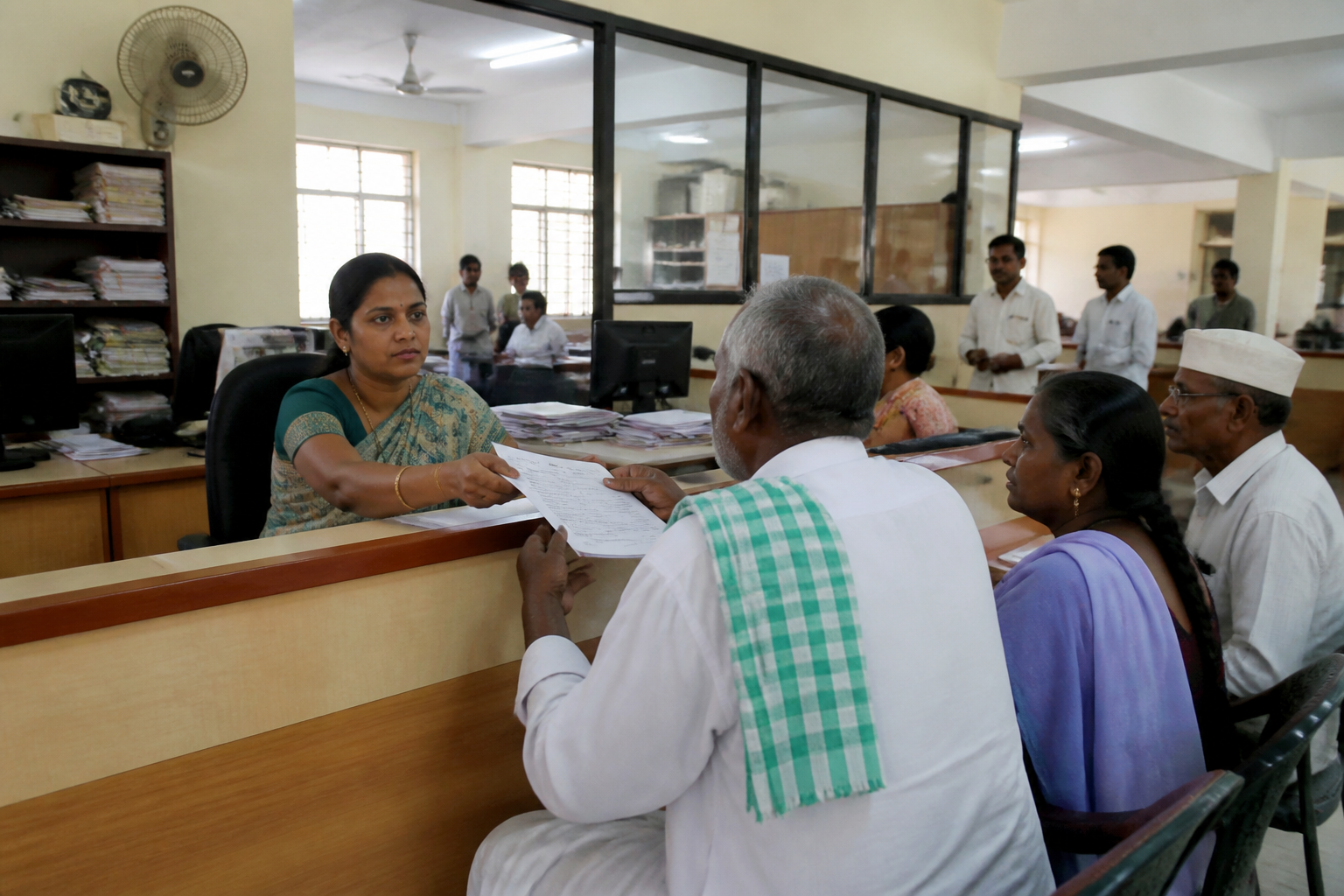
Karnataka launched the Praja Seva campaign across all 224 taluks on Saturday, with the state government directing ministers, legislators and officials to take public grievance hearings closer to residents and resolve applications related to pensions, land disputes, welfare benefits, property records and housing.
Chief Minister D.K. Shivakumar inaugurated the campaign in Kudligi in Vijayanagara district and said district in-charge ministers would be required to visit their districts twice a month to hear public complaints. Ministers are expected to lead hearings at taluk and hobli levels, while legislators will oversee the programme at panchayat level.
Where legislators are unavailable, officials will visit panchayat centres and hold smaller meetings to receive grievances, the chief minister said. The campaign’s stated objective is to bring government services to residents rather than requiring citizens to repeatedly visit government offices.
The programme will cover applications involving pensions, land disputes, government benefits, account transfers, guarantee schemes, and house and site-related matters. The government also said free legal assistance would be made available to poor and vulnerable applicants involved in cases before tahsildar, assistant commissioner or deputy commissioner-level authorities.
Applicants whose requests are rejected are to be informed of the reasons, according to the campaign’s stated guidelines. The government has also said it will continue supporting applicants until their problems are fully addressed, although the report did not specify a separate budget or service-level deadline for every category of grievance.
Under the operational guidelines, Praja Seva meetings involving district in-charge ministers and legislators are to be held at taluk offices every Saturday. Gram One and Karnataka One centres are expected to be opened at the venues so that applications received during the meetings can be digitised.
Complaints that can be resolved at the venue are to be addressed immediately. Cases that cannot be settled locally must be forwarded for further action. New complaints and older pending complaints are to be recorded and handled separately.
The status of complaints received on Saturday is to be reviewed on the following Wednesday. Tahsildars and taluk panchayat executive officers are scheduled to review cases from 9 a.m. to 11 a.m., assistant commissioners from 11 a.m. to 1 p.m., and deputy commissioners from 3 p.m. to 5 p.m.
Residents dissatisfied with the disposal of a complaint may appear in person and submit their grievance again, according to the guidelines. The government has also indicated that officials working on holidays may receive compensatory leave, although orders concerning compensatory leave for some senior categories were still pending.
During the launch, Shivakumar said the programme’s success would be measured by the number of grievances resolved rather than the number of people attending or applications received. He also described the initiative as an effort to make government services a right accessible at people’s doorsteps.
The chief minister additionally referred to a proposed internal reservation within the existing rural quota for students who have studied exclusively in rural government schools. He said the government was considering a 7.5% internal reservation within the existing 15% rural reservation, but the report did not indicate that a final decision had been taken.
The launch event was linked by video conference to Praja Seva programmes held in Tumakuru, Dharwad, Hassan, Kalaburagi, Davanagere and Mysuru districts. The campaign guidelines require the administration to review applications through the specified Wednesday schedule and continue follow-up on unresolved cases.
