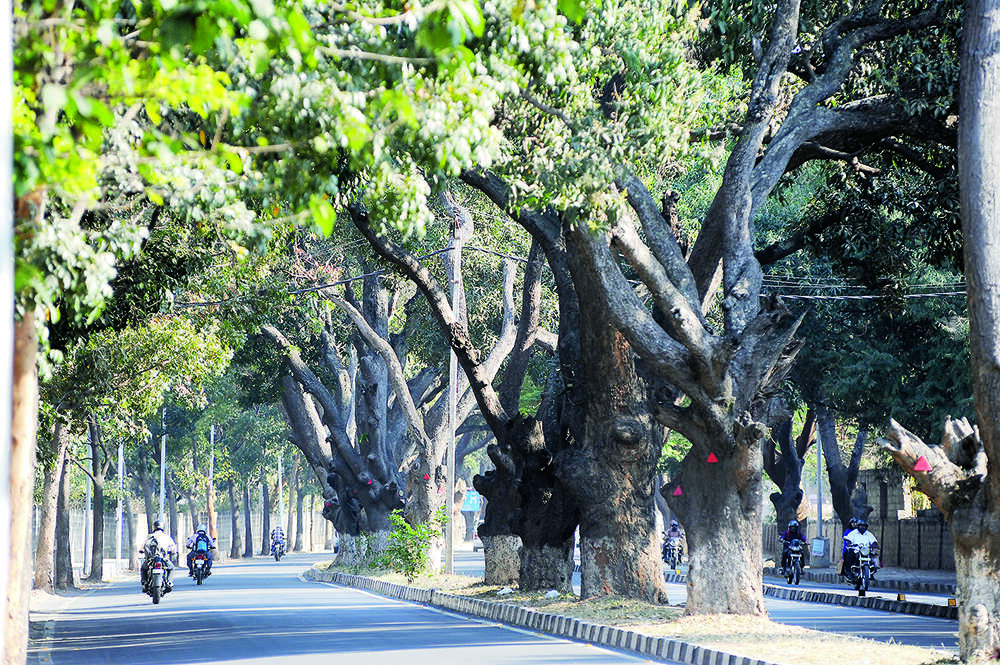
Bengaluru HRBR Layout Residents Demand Tree Felling Accountability
Around 80 residents of Bengaluru’s HRBR Layout II Block took to the streets after a mature banyan tree and two other trees were felled during the night, raising fresh questions over how the city protects established urban greenery. The protest has brought attention to a wider challenge: balancing redevelopment and commercial activity with the ecological value of mature trees in dense neighbourhoods.
The banyan had stood in the neighbourhood for roughly three decades and had become part of the area’s everyday public life.Residents said its shade was used by students and elderly people, while bird nests were also reported on the tree. The sudden removal has therefore been viewed not simply as the loss of vegetation, but as the disappearance of a small community space and an established urban habitat. Residents said the trees were reportedly cut at about 2am without the knowledge of the local residents’ welfare association. They are seeking clarity on who authorised the work, whether the required permission was obtained and why mature trees were removed during the early hours. Construction and commercial activity around the site have fuelled speculation about the reasons, although residents said they had not established who ordered the felling. The incident also highlights that Bengaluru tree protection is governed by an established legal framework. Under the Karnataka Preservation of Trees Act, felling a tree generally requires prior permission from the designated Tree Officer. Applications are expected to specify the tree, its location and the reason for removal, while permissions can carry conditions for compensatory planting.The Greater Bengaluru Authority’s forest system also provides procedures for residents and property owners seeking permission to remove trees or branches.
Official guidance requires applications and supporting documents, while the city’s tree-management framework includes inspection of trees considered dangerous, diseased, obstructive or otherwise requiring removal.For Bengaluru tree protection to work effectively, however, compliance cannot depend only on action after a tree disappears. A transparent urban tree inventory could help. Each mature roadside and neighbourhood tree could be digitally mapped, tagged and linked to information on species, approximate age, health condition and permissions sought for pruning or removal. Such a system would also make compensatory planting more meaningful. A mature banyan cannot be ecologically replaced overnight by a newly planted sapling. Established trees provide shade, habitat, carbon storage and local cooling that young plantations take years to replicate. The HRBR Layout protest therefore points to a broader urban-planning lesson. As Bengaluru becomes denser and redevelopment accelerates, protecting mature trees needs to be integrated into construction approvals, neighbourhood planning and public-space management.
Clear disclosure of permissions, advance resident notification and independent assessment of alternatives could reduce conflict while allowing legitimate development to proceed. For a city seeking to retain its Garden City character, Bengaluru tree protection must become a measurable part of development planning rather than an issue addressed only after residents raise objections.