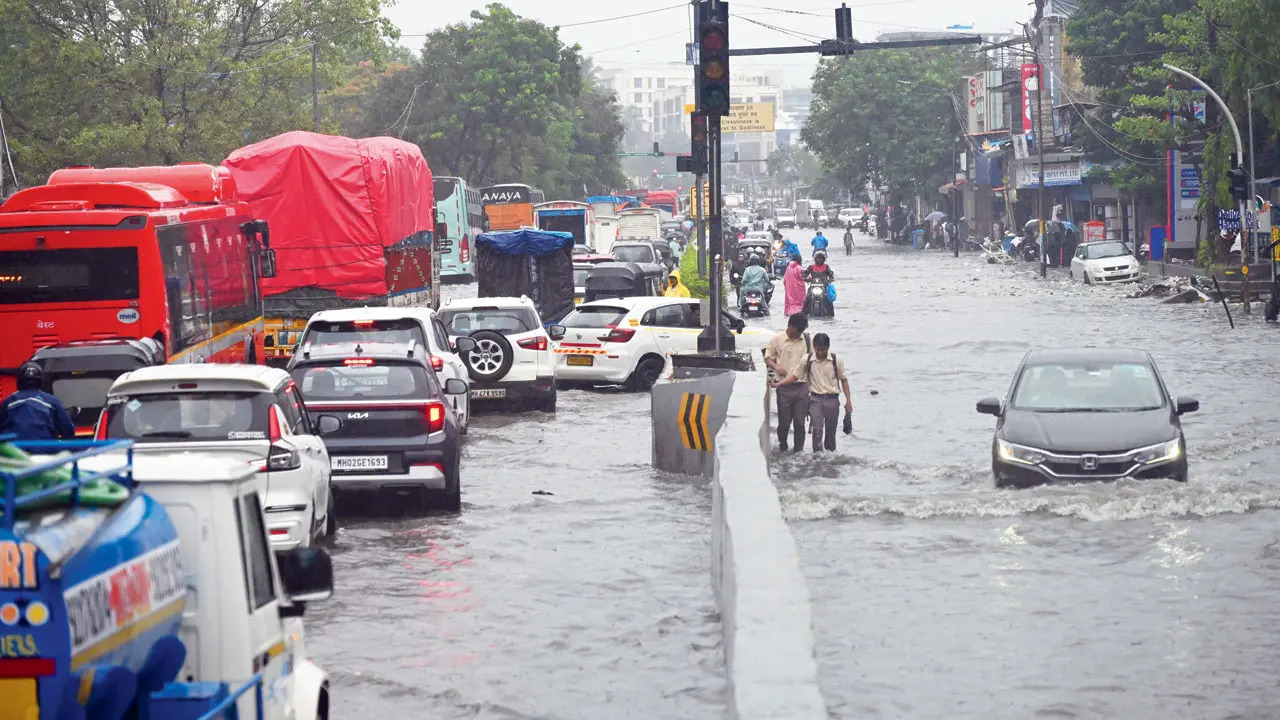
Mumbai Rains Disrupt Transport As Schools Shut Again
Mumbai faced another day of severe monsoon disruption on July 7, with the India Meteorological Department retaining an orange alert as heavy rain and strong winds continued to threaten the city. Schools and colleges remained closed as a precaution, while aviation and railway operations faced widespread disruption. The episode again exposed how quickly intense rainfall can place pressure on Mumbai’s transport, public services and everyday economic activity. The decision to close educational institutions covered government, municipal and private schools and colleges across Mumbai. The precaution came after intense rainfall on July 6 and forecasts of further heavy showers and gusty winds. Authorities also advised residents to limit non-essential travel.
Rainfall totals varied sharply across the city. Bhandup recorded more than 143 mm during the daytime period monitored by the civic administration, while several other locations reported rainfall approaching or exceeding 90 mm. Falling trees and branches added to the disruption, particularly in the western suburbs. The impact extended well beyond local roads. A landslide in the Karjat-Lonavala ghat section blocked railway tracks on the Mumbai-Pune corridor, forcing Central Railway to cancel, divert and regulate services. More than 120 trains were affected during the disruption, underlining the vulnerability of a crucial regional connection to extreme rainfall and slope instability. Air travel was also hit. Airport data reported 17 cancellations and 217 delays by late morning on July 6, although the disruption increased later in the day as weather conditions persisted. Poor visibility, heavy rain and strong winds affected flight schedules, leaving passengers facing delays and changes to travel plans.
The disruption illustrates a wider urban challenge. Mumbai’s transport system is highly interconnected, so a failure or slowdown at one point can quickly affect commuters far beyond the original weather event. Railway lines through vulnerable terrain, airport operations dependent on weather windows and roads prone to waterlogging all form part of the same mobility network. For businesses, repeated weather-related disruption can also mean delayed deliveries, staff absenteeism and lost working hours. For lower-income commuters and workers whose jobs require physical presence, the cost can be harder to absorb.
The latest Mumbai rains therefore raise questions beyond immediate disaster response. Better drainage, stronger slope protection, resilient transport corridors and reliable public information will be increasingly important as rainfall becomes more intense and less predictable. The priority is not simply keeping the city moving during the next storm, but reducing how severely the next extreme-weather event can interrupt everyday urban life.