


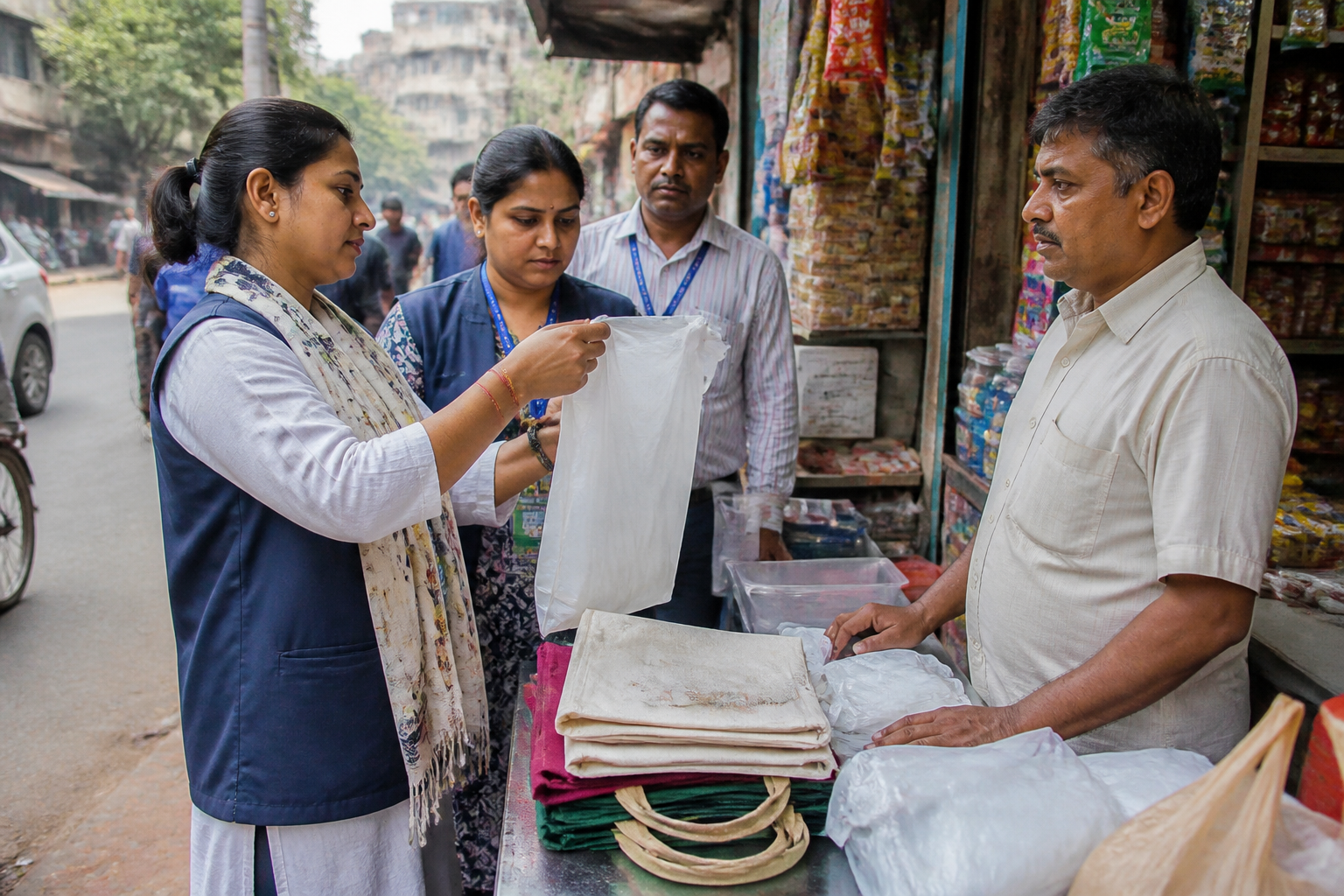
A letter from Mumbai civic law committee chairperson Diksha Harshad Karkar has called for inspections of shops across the Brihanmumbai Municipal Corporation’s 26 administrative wards to identify the use of prohibited plastic bags and single-use plastic items.
Karkar has written to the chief officer of the BMC’s Shops and Establishments Department, seeking inspections of registered establishments under the Maharashtra Shops and Establishments Act. The letter asks officials to take immediate action if they find plastic bags thinner than 50 microns or other prohibited single-use plastic products, and to submit reports on the inspections.
The reported move could restart more intensive enforcement of Maharashtra’s plastic ban in Mumbai. The ban was introduced across the state through a notification dated March 23, 2018, covering the production, use, sale, transport, handling and storage of specified plastic products.
The prohibited items include plastic bags with or without handles, single-use plastic plates, cups, glasses and spoons, as well as certain plastic packaging used for food, grains and other products. The restrictions also cover some plastic containers, pouches and packaging used for storing or serving food and liquids.
According to the report, enforcement weakened during the coronavirus pandemic and the subsequent lockdown. Plastic products, including personal protective equipment and other safety-related materials, were used extensively during that period. Plastic bags also became widely used again, reducing the impact of the ban’s earlier enforcement measures.
The renewed demand for inspections comes as Mumbai generates an average of more than 6,300 tonnes of waste each day. Karkar’s letter states that plastic bags thinner than 50 microns form a significant part of the prohibited plastic found in the city. Such bags do not decompose easily and can contribute to the obstruction of drains and nullahs during the monsoon, besides causing environmental damage.
The BMC had appointed enforcement teams in 2018 and had also begun promoting alternatives to plastic products. The latest request focuses on checking small and large shops registered with the civic administration and acting against establishments found using banned plastic bags or single-use plastic items.
The penalties under the state rules are graduated. A first offence can attract a fine of Rs 5,000, while a second offence can result in a fine of Rs 10,000. A third offence carries a fine of Rs 25,000 and may also lead to imprisonment for up to three months. The reported letter calls for enforcement officials to record the inspections and submit their findings to the relevant authorities.
