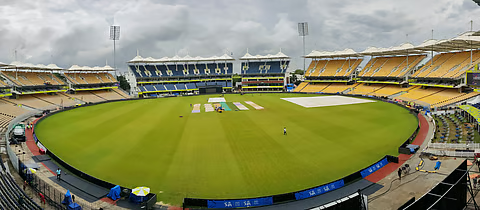
Hyderabad Stadium Plan Targets Future City Sports Hub
HYDERABAD, August 31: Telangana is planning a large international cricket stadium within Bharat Future City at Mucherla in Rangareddy district, adding a major sports facility to the proposed greenfield urban development. The planned 100-acre venue is intended to form part of a wider sports district, linking entertainment, tourism and recreation with the city’s emerging economic infrastructure.
The stadium is being planned as part of Bharat Future City, a proposed 30,000-acre development positioned as a next-generation urban centre. The state’s planning documents identify an international cricket stadium as one of the major recreational facilities alongside an 18-hole golf course, eco-trails and other entertainment infrastructure. Reports about the proposed venue suggest a capacity above 1.32 lakh, which would put it above the current capacity of the Narendra Modi Stadium in Ahmedabad if that figure is ultimately approved. However, the final capacity, design and construction arrangements remain subject to further planning. The proposed stadium is expected to be located on a large site within the Future City area. Its development would add a significant destination to a region that is being planned around several economic and institutional clusters.
The wider Future City plan includes an AI City, Health City, Education Hub and Life Sciences Hub. The government’s planning document also identifies 15,000 acres of reserve forest within the proposed development, indicating an attempt to combine large-scale urban expansion with protected green areas. Connectivity will be central to the stadium’s viability. Large sporting venues can generate substantial traffic during matches and events. Future City is being planned with major road and public transport links, including connections to the airport and proposed Metro infrastructure. Government plans have also referred to wider regional road and high-speed rail connections. For Hyderabad, the economic implications could extend beyond cricket. A major international venue can attract sporting events, visitors, hospitality activity and associated services. This can create demand for hotels, food services, retail, transport and other visitor-oriented businesses around the wider development. At the same time, the environmental and mobility footprint of a stadium of this scale will require careful planning. Event-day traffic, parking demand, water consumption, waste management and energy use can place considerable pressure on surrounding infrastructure.
The state’s Future City vision describes the development as a sustainable and net-zero-oriented urban project. Its official planning framework includes green infrastructure, transit-focused neighbourhoods and large protected forest areas. That makes the stadium’s eventual design important beyond its seating capacity. Public transport access, pedestrian movement, renewable energy, water efficiency and waste management will influence whether the venue functions as part of a resilient city rather than as an isolated destination. The project is still at the planning stage, and key details will need to be finalised before construction begins. If delivered with integrated transport and environmental planning, the stadium could become a major sports and tourism anchor for Future City while contributing to Hyderabad’s broader shift towards planned peripheral growth.