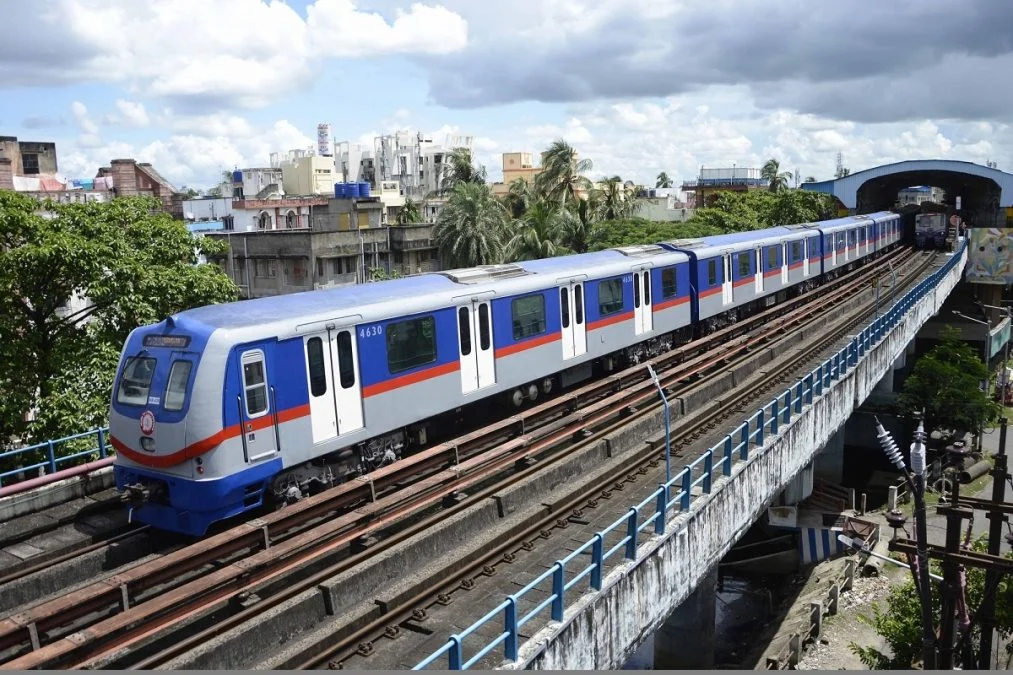
Kolkata Rail Upgrade Puts Commuter Capacity in Focus
Kolkata’s rail network is set for a major capacity-building programme, with Eastern Railway planning investments of about ₹12,000 crore over the next four to five years. The programme will focus on additional tracks, railway-yard upgrades, bypasses and terminal infrastructure. For a city and metropolitan region heavily dependent on rail, the bigger question is whether this investment can translate into more reliable journeys, smoother freight movement and better access to jobs and services.
Eastern Railway’s planned spending comes as passenger and freight demand continues to place pressure on critical sections of the network. The proposed works are intended to remove operational bottlenecks rather than simply increase the number of trains on existing infrastructure. About ₹10,000 crore is expected to support roughly 563 km of line expansion, while around ₹2,000 crore has been earmarked for 10 bypass projects.The emphasis on Kolkata rail capacity is significant because the network serves more than the city’s daily commuters. It connects residential areas with employment centres while carrying freight towards industrial zones, markets and wider regional corridors. More track capacity can reduce conflicts between suburban, long-distance and freight services, potentially improving punctuality and network resilience.Work is already progressing on parts of the wider system.
On the Howrah–Bally–Dankuni–Hooghly corridor, Howrah Yard remodelling includes a new interlocking system, platform extensions and a service building, while Dankuni Yard is undergoing shunting-line and signalling improvements. A detailed project report for a Dankuni coaching terminal is also being prepared. The corridor currently has 113 regular train services and one special service.The wider scale of railway investment in West Bengal also provides context. As of April 2026, 63 sanctioned railway projects covering 5,148 km and costing ₹83,433 crore were listed across the state, including new lines, gauge conversions and doubling projects. The 2026–27 railway outlay for projects and safety works in West Bengal stands at ₹14,205 crore.For Kolkata, however, infrastructure expansion cannot be measured only in kilometres of new track. Urban planners point to the need for better station access, pedestrian connections, interchange facilities and integration with other public transport. Construction must also be phased carefully to limit disruption to neighbourhoods and existing services.
A stronger rail network could support more sustainable urban growth if additional capacity helps people and freight shift away from road transport. The immediate test will be implementation: whether large capital spending produces measurable gains in reliability, accessibility, safety and everyday mobility across Kolkata’s metropolitan region.