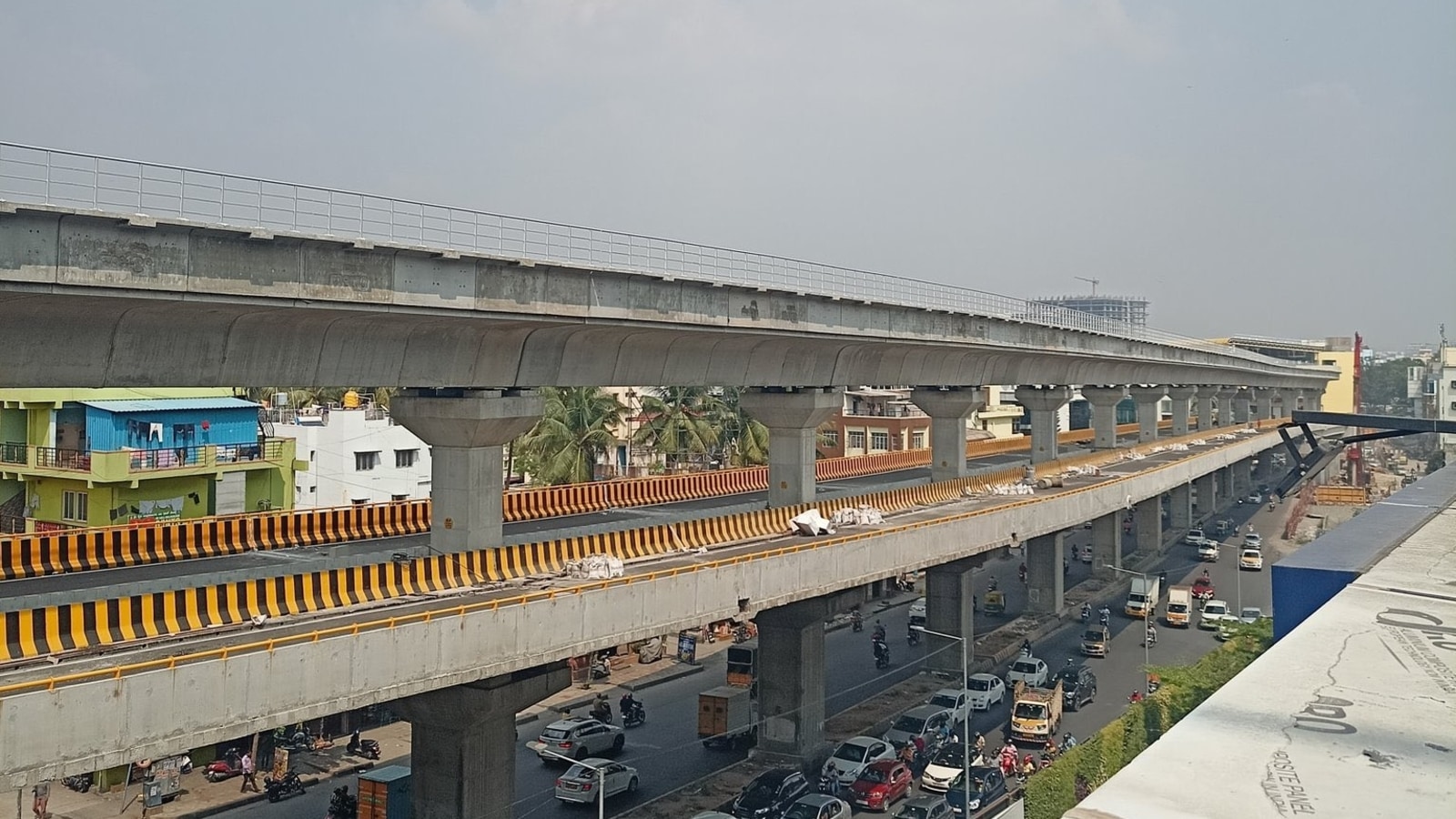
Bengaluru Flyover Rules Set To Reshape Daily Commutes
Bengaluru is set to introduce new vehicle restrictions on five major flyovers and elevated corridors from September, changing how two-wheeler, auto-rickshaw and goods-vehicle users access some of the city’s busiest routes. The measures are being introduced on a trial basis, with authorities seeking to address accident risks, speed differences between vehicles and congestion on elevated infrastructure.
The restrictions will be phased in from September 4, while the Electronics City Elevated Expressway will come under the new regime from September 11. The affected infrastructure includes the BGS Sirsi Circle flyover on Mysuru Road, Peenya flyover, the Silk Board-Ragigudda double-decker flyover, the Ballari Road airport corridor and the Electronics City elevated corridor. The most significant change concerns two-wheelers. They will be prohibited throughout the day on the Electronics City elevated corridor and the Ballari Road airport flyover. Passenger autorickshaws will also face round-the-clock restrictions on these stretches. At other locations, the rules focus more heavily on goods vehicles and slow-moving commercial traffic, with some restrictions tied to peak hours. Traffic authorities have based the intervention on several factors, including the physical configuration of the flyovers, traffic volumes, accidents, vehicle breakdowns and congestion around entry and exit points. The concern is particularly acute where slower vehicles share narrow elevated sections with faster-moving traffic, creating substantial differences in operating speeds.
For Bengaluru’s commuters, however, the policy creates a parallel access challenge. Two-wheelers remain an important mode of travel for workers, students, delivery personnel and other citizens who depend on relatively low-cost individual mobility. Shifting these users to surface roads could redistribute congestion rather than eliminate it if alternative routes lack adequate capacity. That makes the effectiveness of the Bengaluru flyover restrictions dependent on what happens below the elevated corridors. Service roads, junctions and surface-level routes will need sufficient capacity, safe crossings and effective traffic management. Without those supporting measures, pressure could simply move from one part of the network to another. The restrictions also raise a broader urban planning question: whether elevated infrastructure should be managed primarily as high-speed vehicle corridors or integrated into a wider multimodal transport system. Earlier traffic-management proposals have included greater use of shared mobility and restrictions on selected vehicle categories during busy periods.
For now, the trial provides an opportunity to measure whether targeted restrictions actually reduce crashes and improve travel times without disproportionately affecting people dependent on two-wheelers and public roads. The results should inform future corridor design, enforcement and investment in safer alternatives.