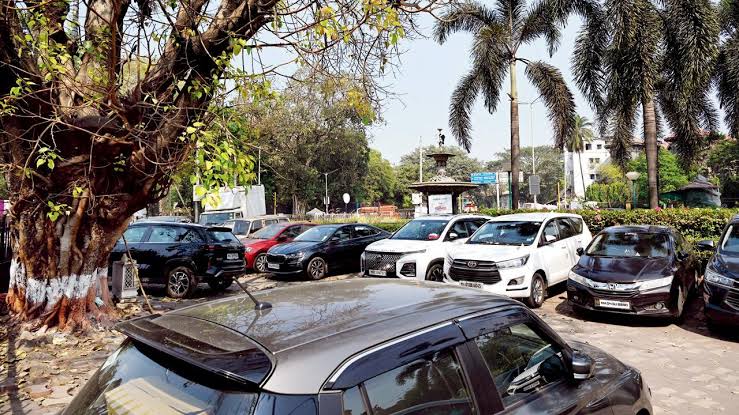
Mumbai’s parking system could see a modest increase in user charges after the civic administration revised an earlier proposal for a much steeper rise. The Brihanmumbai Municipal Corporation is now preparing a 10% increase across its public parking lots and on-street facilities for two years. The proposal, however, is still at the administrative stage and would require further approvals before motorists begin paying more. The revised approach follows an earlier request from the civic traffic department for a 46.40% increase, citing inflation and higher operating expenses over several years. The municipal commissioner instead directed officials to work on a substantially smaller revision, bringing the proposed increase down to 10%.
Mumbai currently has about 37 public parking lots and 67 on-street parking locations operated under the civic system, according to the latest reported proposal. Charges vary according to parking category, location and vehicle type. Existing rates for two-wheelers range from ₹5 for an hour to ₹30 for up to 12 hours, while three- and four-wheelers are charged between ₹20 an hour and ₹70 for 12 hours. If approved, the Mumbai parking charges revision would have a relatively limited direct impact on individual parking bills. Its larger significance lies in how the city prices scarce road space. In a dense urban environment, parking policy can influence whether valuable street space is used for stationary vehicles, pedestrian movement, loading, public transport or other civic functions. Urban transport specialists have long argued that parking fees work best when they are connected to wider mobility planning. A charge that reflects demand can discourage unnecessary car use in congested areas, but only if residents have practical alternatives such as reliable public transport, safe walking routes and convenient last-mile connections.
The proposal also raises questions about what motorists receive in return. Higher fees are easier to justify when parking facilities are properly marked, managed, digitally monitored and maintained. BMC has previously pursued technology for parking guidance and management, including systems using cameras, sensors and digital payments. There is also a wider land-use issue. Parking occupies some of Mumbai’s most constrained public space, while demand for roads, footpaths, bus movement and pedestrian access continues to rise. Recent traffic measures, including changes to parking arrangements on selected roads, show how closely parking management is linked with congestion and street functionality.
The Mumbai parking charges proposal must now move through the civic approval process. The next stage will determine not only whether motorists pay more, but whether the revised pricing forms part of a broader strategy for managing limited urban road space more efficiently.