Bengaluru Art Exhibition Explores Japan Through Sketches
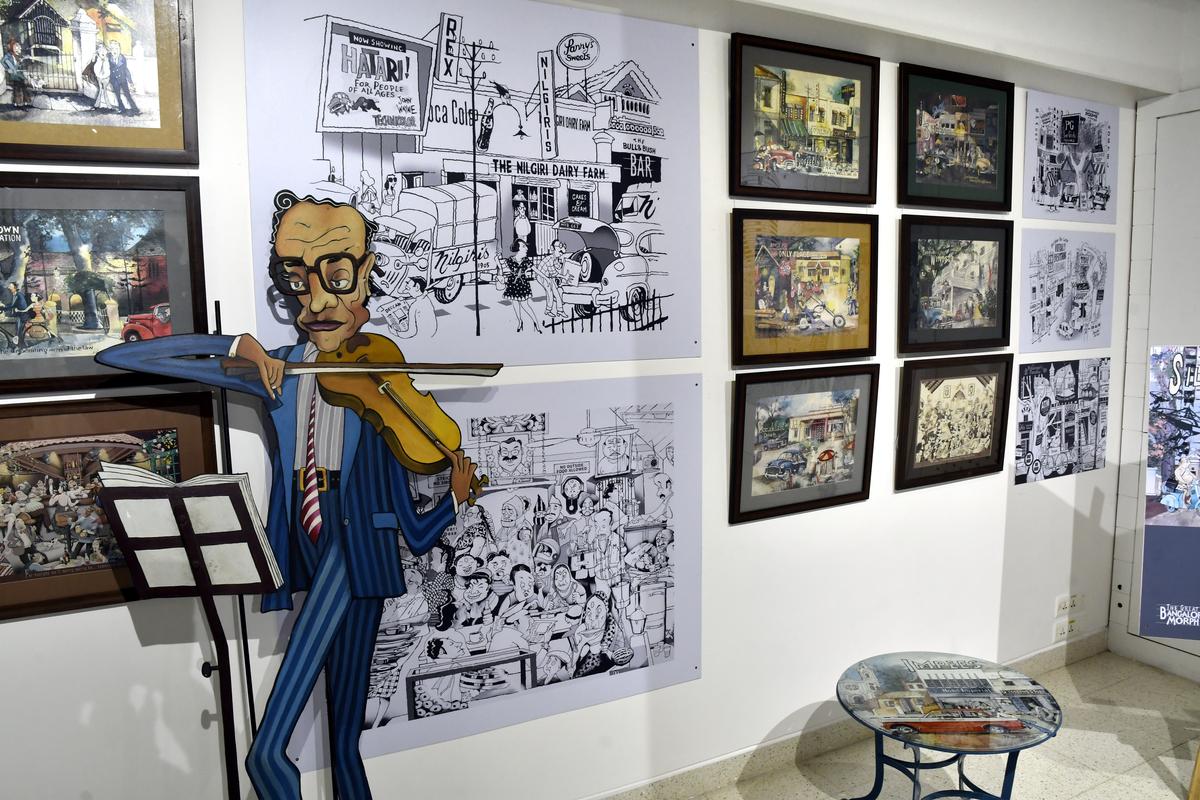
A new exhibition in Bengaluru is bringing Japanese streets, architecture and everyday life into focus through hand-drawn sketches, offering visitors an intimate visual record of urban spaces shaped by tradition and modernity. The exhibition, being held at the India International Women’s Centre, uses architecture and street scenes to explore how cities can preserve cultural character while continuing to evolve.
Titled “Sketching Japan”, the exhibition features works created during an artist’s travels across Japan. Rather than presenting the country through conventional tourist imagery, the collection focuses on observations of streets, buildings, public spaces and ordinary moments. The sketches cover a range of locations and urban environments, capturing traditional structures alongside contemporary cityscapes. The medium allows architectural details, street proportions and public life to become part of the visual narrative, giving viewers a slower perspective on places that are often experienced at the speed of travel. The exhibition is also relevant to Bengaluru because the city itself is undergoing rapid physical transformation. Older neighbourhoods, historic buildings and established public spaces increasingly exist alongside high-rise development, new infrastructure and changing commercial districts. Visual documentation can help record aspects of urban identity that may otherwise disappear as the built environment changes.
Architecture is particularly prominent in the collection. Japanese buildings often demonstrate how traditional materials, proportions and design elements can coexist with highly modern urban systems. For Bengaluru’s planners and architects, such contrasts offer an opportunity to consider how new development can respond to local context instead of producing uniform urban landscapes. The sketches also draw attention to public space. Streets, lanes, transport areas and small neighbourhood environments can reveal how cities function beyond their major landmarks. The relationship between buildings, pedestrians and everyday activity can be as important to urban character as individual architectural icons. There is a broader cultural dimension as well. Exhibitions that focus on another country’s built environment can encourage visitors to view their own city differently. Comparing urban forms across countries can raise questions about walkability, density, heritage conservation and the balance between development and continuity. For Bengaluru, where infrastructure projects and real-estate development are rapidly reshaping neighbourhoods, that perspective has particular relevance. The city needs to accommodate growth while retaining elements that give different districts their identity and social character. The exhibition therefore offers more than a collection of travel sketches.
It presents a visual study of how people inhabit urban environments and how architecture interacts with daily life. By documenting Japan through streets and buildings rather than only famous landmarks, the exhibition encourages a broader understanding of urban design — one in which cultural identity, public space and everyday experience remain important even as cities modernise.