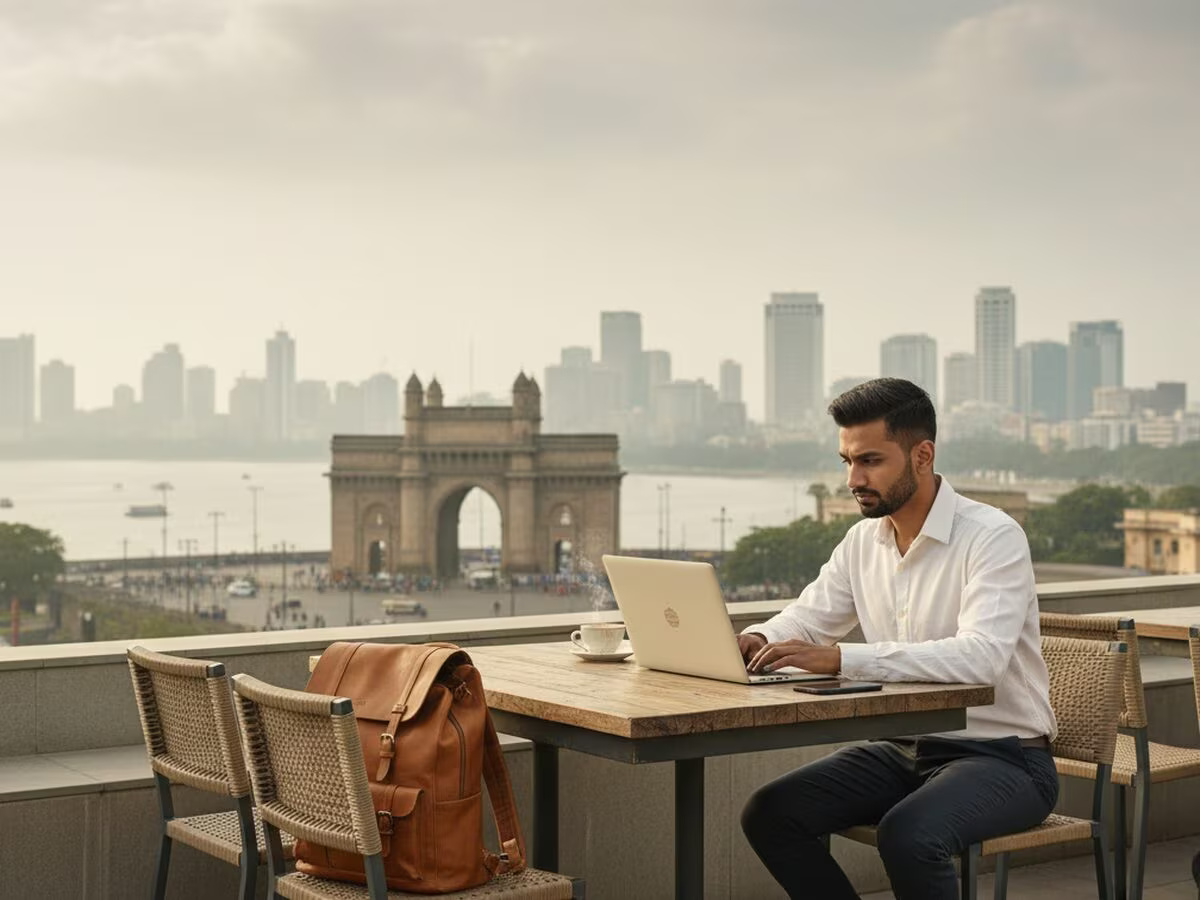
Mumbai Gains Ground Among Global Workcation Cities
Mumbai has entered the global workcation market, ranking among destinations assessed for their ability to combine professional infrastructure with travel convenience. The city scored 77 points in the 2026 Work From Anywhere Index, placing it ahead of London and Miami. Its performance highlights how workspace availability, transport and accommodation are becoming important factors in shaping the competitiveness of cities beyond conventional tourism. Mumbai’s workcation appeal is closely linked to the expansion of flexible workplaces across the city. Coworking centres and serviced offices allow location-flexible professionals to maintain access to meeting rooms, reliable office facilities and business services without committing to a conventional workplace.
The city performed strongly on transport affordability, flexible workspace availability, accommodation and climate. These advantages are particularly relevant in a dense metropolitan region where accessibility can influence both the cost and practicality of working remotely. However, the ranking also identifies areas where Mumbai remains less competitive. Broadband performance, the availability of local events and reported happiness indicators weakened its overall position. For a city seeking to attract longer-stay professionals, digital connectivity is especially important because remote work depends on stable and high-quality internet access. Mumbai’s workcation appeal also reflects a broader change in India’s commercial property market. Flexible offices have expanded rapidly across major Indian cities as companies adopt hybrid working arrangements. Industry data has placed India among the region’s largest flexible workspace markets, with substantial floor space already operating across its leading urban centres.
The shift has implications beyond office demand. A stronger workcation economy can support hospitality, local retail, food services and cultural businesses, particularly when visitors stay for longer periods rather than making short tourist trips. It can also create new demand for neighbourhoods that combine housing, transport, digital connectivity and everyday services. Yet the benefits will depend on how evenly these advantages are distributed. Urban planners note that connectivity and flexible workspaces alone cannot make a city attractive for remote professionals. Reliable public transport, affordable accommodation, walkable neighbourhoods, public spaces and resilient digital infrastructure also shape the experience of living and working in a city. The wider survey found that flexible working is influencing travel decisions, with many respondents considering combining holidays with remote work. However, the research was based on 2,000 hybrid workers in the UK and US, so its findings cannot be treated as representative of Indian workers.
For Mumbai, the ranking is less a measure of tourism than a signal of changing urban competitiveness. Strengthening broadband reliability, improving public amenities and maintaining affordable mobility could determine whether the city converts its existing advantages into sustained workcation demand.