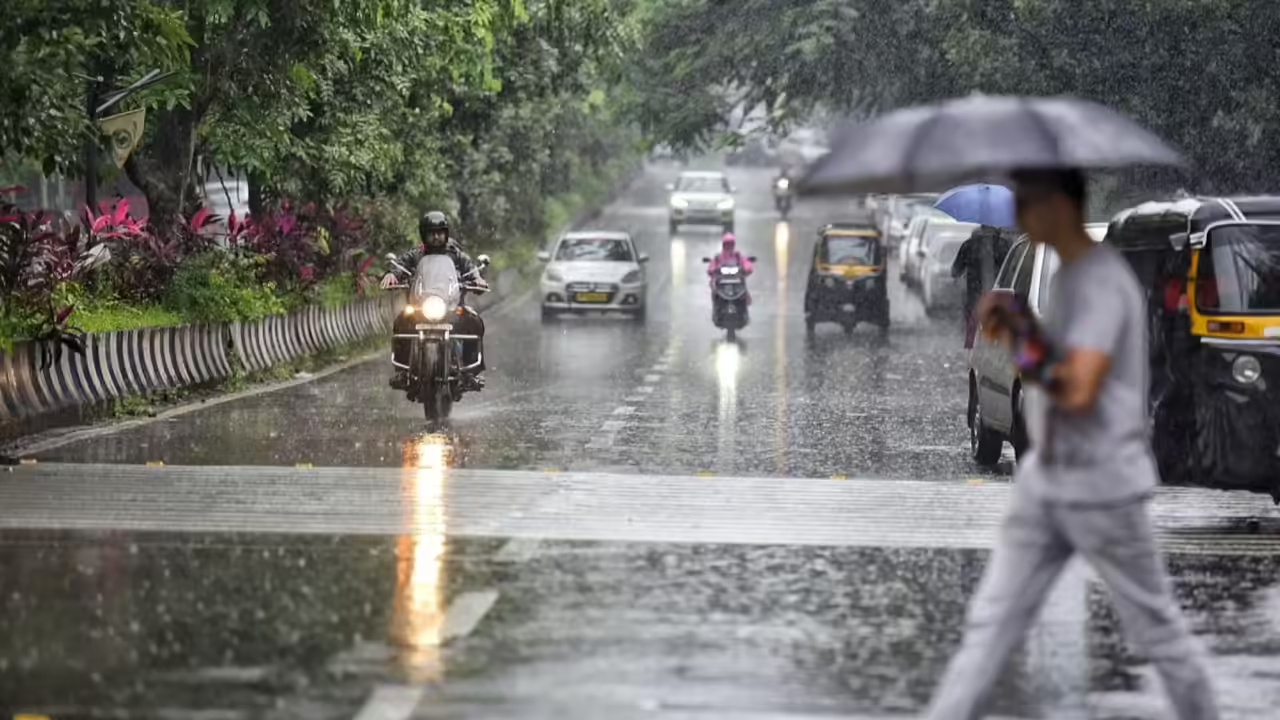
Mumbai Monsoon Keeps Roads Vulnerable To Sudden Spells
Mumbai remained under persistent monsoon cloud cover on Wednesday, with intermittent rain and gusty winds expected across the city and suburbs. The India Meteorological Department’s latest Mumbai forecast points to light to moderate rainfall, with thunderstorms possible at isolated locations. While the city is not facing a major rainfall warning, short intense spells could still affect roads, drainage and daily commuting. The latest conditions suggest a continuation of Mumbai’s wet-season pattern rather than a sharp escalation in rainfall. IMD’s district forecast indicates the possibility of thunderstorms accompanied by lightning, light to moderate rain and gusty winds at isolated locations. The official forecast places expected wind speeds around 30–40 kmph during such activity.
For the city’s transport network, the absence of a major warning does not necessarily mean zero disruption. Mumbai’s dense road system contains several low-lying and waterlogging-prone stretches where even brief bursts of heavy rain can slow traffic. Public transport, pedestrians and two-wheeler users remain particularly exposed when rainfall coincides with poor visibility or strong winds. Rainfall observations also show that the latest spell has been relatively contained. Mumbai’s mesonet, operated by the Indian Institute of Tropical Meteorology with IMD data, recorded 8.4 mm as the highest 24-hour rainfall at a monitored location between August 25 and August 26. The same system described conditions as generally cloudy with intermittent light to moderate rainfall, while noting the possibility of isolated heavier showers.
The weather is also relevant to the city’s infrastructure performance. Repeated rainfall, even without extreme totals, places pressure on storm-water drains, road surfaces, construction sites and electricity networks. Urban planners note that the cumulative effect of frequent rain can be as important as individual extreme events, particularly where drainage capacity, road maintenance and natural water-retention areas have been reduced by development. Mumbai’s air quality, meanwhile, remained relatively favourable amid the wet conditions. An AQI reading of 28 falls within the ‘Good’ category under the standard classification, indicating low pollution levels. Rain can temporarily suppress airborne particulate matter, although such improvements depend on rainfall intensity and duration.
The immediate forecast therefore points towards a manageable but unsettled monsoon day. For residents, the main concern is not widespread disruption but the possibility of localised problems developing quickly. Continued monitoring of drainage hotspots, road conditions and weather changes will remain important as Mumbai moves through the latter part of the monsoon.