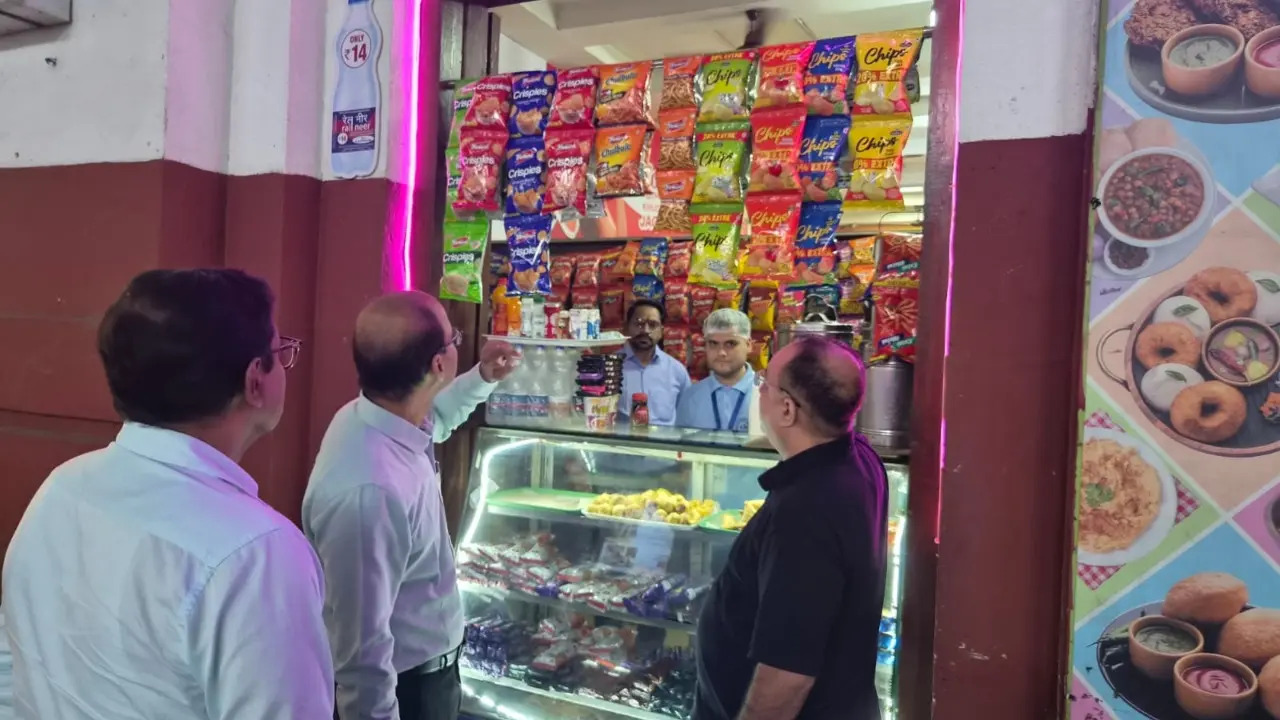
Mumbai Railway Food Stalls Under Stricter Safety Checks
Western Railway has intensified food-safety inspections across its Mumbai Central Division, with 39 catering outlets shut since August 15 over reported hygiene and compliance shortcomings. The action has resulted in ₹3.80 lakh in penalties, while 20 outlets have subsequently resumed operations after corrective measures and verification. The remaining closures highlight a wider challenge for Mumbai’s railway network: ensuring affordable station food meets basic sanitation standards at a time when millions depend on the system daily. The enforcement drive covers catering facilities serving passengers at stations and platforms across the division. Nineteen outlets remain closed following inspections conducted between August 22 and 24. They include seven tea stalls in Surat, six in Vapi, three in Valsad, two in Borivali and one in Dadar, extending the issue beyond Mumbai’s municipal limits into the wider suburban and inter-city rail network.
For passengers, the concern is more than the condition of individual stalls. Railway stations operate as high-density public spaces where food is prepared, stored and consumed alongside large volumes of commuters. Poor sanitation can therefore create risks that are difficult to contain quickly. Industry observers say regular inspections, traceable licences and documented corrective action are important because station catering combines high passenger turnover with limited time for consumers to assess food-handling conditions. The enforcement also has a business dimension. Temporary closures can directly affect small catering operators, while repeated non-compliance can undermine passenger confidence and create additional regulatory costs. Western Railway’s catering framework provides for inspections and punitive measures where deficiencies are identified, including possible termination or other action in serious cases. The 20 outlets already permitted to reopen illustrate how compliance can be used as a corrective mechanism rather than simply a punitive measure.
Operators must address identified deficiencies, meet applicable requirements and undergo verification before returning to service. That approach places responsibility on vendors while also requiring the railway administration to maintain consistent inspection standards across busy and smaller stations. The scale of the division makes that consistency important. Western Railway’s Mumbai Division extends from Churchgate towards Surat and serves major urban and industrial centres across Maharashtra and Gujarat. Its stations form part of a wider transport corridor supporting daily commuting, business travel and regional economic activity. From a sustainability perspective, better food hygiene should sit alongside responsible waste handling, water use and cleaner station environments. Catering generates packaging and organic waste, making enforcement an opportunity to improve the broader quality of public infrastructure rather than focusing only on visible cleanliness.
The immediate test will be whether inspections continue after the current drive and whether reopened outlets remain compliant. For passengers, the measure of success will ultimately be simple: safe food, clean facilities and dependable standards at the stations they use every day.