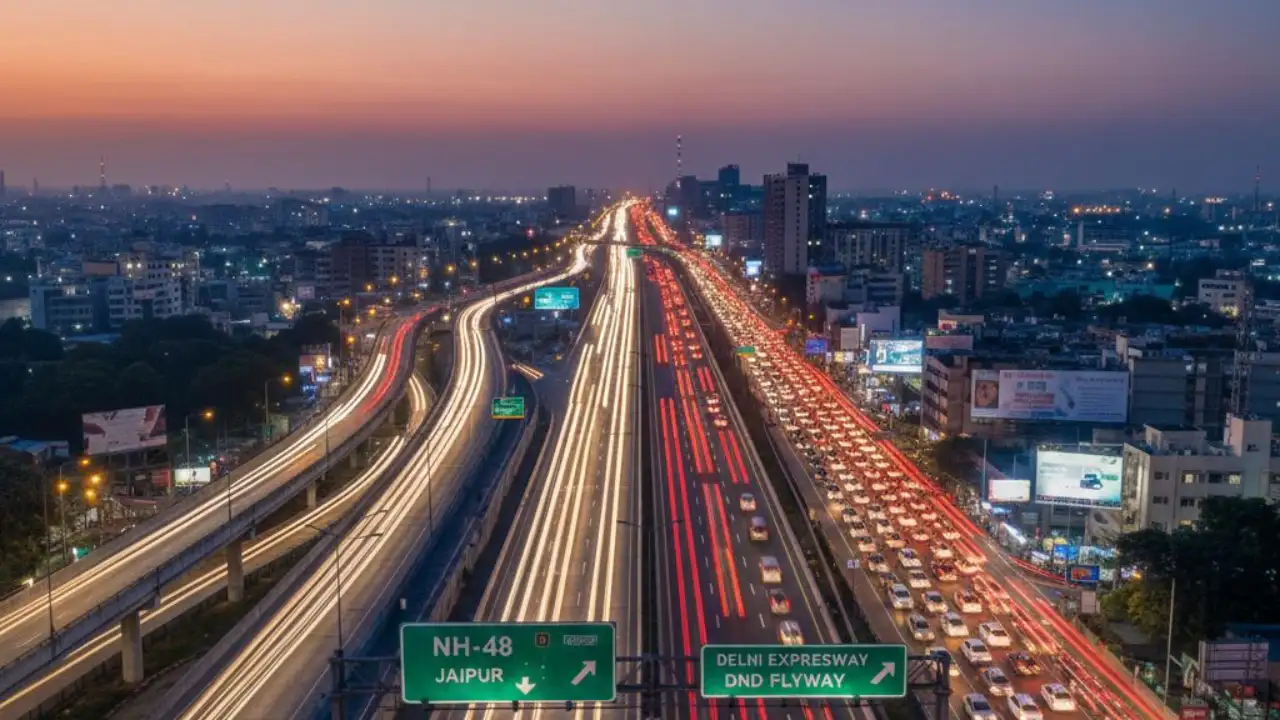
A major upgrade is underway on the Gurugram–Jaipur section of NH-48, where new grade-separated structures are being built to tackle recurring congestion. The ₹282-crore package covers four new six-lane flyovers, pedestrian infrastructure, drainage and road improvements. The intervention could improve journey reliability for commuters and freight operators while influencing development pressures along the corridor.
The current programme includes flyovers at Panchgaon Chowk, Rathiwas, Sahlawas and near the Hero Company junction in Dharuhera. Each is designed with three lanes in each direction, allowing through traffic to avoid intersections where local movement has historically created long queues. Construction began in 2025, with the structures targeted for completion during 2026-27. The intervention is part of a wider upgrade covering about 58.8 km between Kherki Daula and Jaisinghpur Khera. Alongside the NH48 flyovers, the programme includes service roads, pavement strengthening, drainage works and nine foot overbridges. These elements are important because faster vehicle movement alone does not necessarily create a safer urban corridor. NH-48 is not simply a route between two cities. It connects industrial areas, residential settlements, logistics hubs and employment centres across Gurugram, Rewari and adjoining parts of Haryana. Reducing delays can therefore have implications for worker mobility, freight costs and the reliability of regional supply chains.
The wider package also includes drainage interventions and rainwater-management measures, including new RCC drains and rainwater harvesting structures. These components could become increasingly important as intense rainfall and waterlogging place additional pressure on expanding highway corridors. The project also provides for tree planting and pedestrian facilities. Improved road access can increase development interest around transport corridors, but RERA does not govern NHAI highway construction itself. Its relevance arises for private residential and commercial projects marketed around improved connectivity. Buyers should therefore distinguish between an infrastructure announcement and legally approved, registered real-estate projects.
The social impact will also depend on how local access is managed. Footbridges, service roads, drainage and safe crossings need to work alongside the flyovers so that villages, workers and businesses located beside NH-48 are not effectively cut off by faster through traffic. For commuters, the immediate test will be whether bottlenecks actually disappear once construction is completed. For the region, the bigger measure will be whether improved mobility is accompanied by safer pedestrian access, better drainage and more balanced development. The NH48 flyovers could strengthen the Delhi-NCR–Jaipur economic corridor, but their long-term value will depend on whether transport efficiency is matched by resilient infrastructure and inclusive local connectivity.