


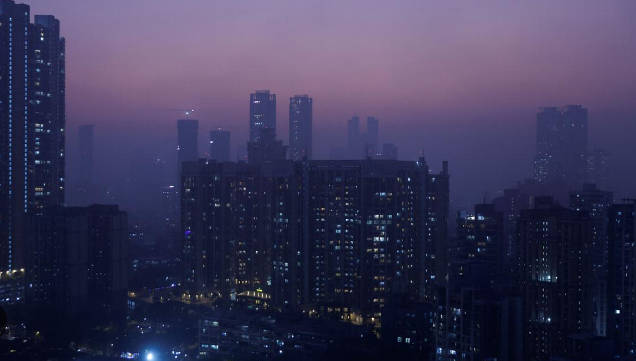
Mumbai has recorded the highest rise in nighttime temperatures among Indian metropolitan cities between 2018 and 2023, according to a tri-nation analysis conducted by Climate Central and Climate Trends. This study, which also covered the US and the UK, attributed the changes to global warming and highlighted the significant impact on urban environments.
The analysis revealed that Mumbai saw the greatest increase in warmer nights, defined as nights where the minimum temperature exceeded 25 degrees Celsius. This threshold is significant as temperatures above this level can adversely affect sleep and overall human health. In contrast, Bengaluru experienced no change in nighttime temperatures during the same period. Other cities also noted increases, with Delhi witnessing 3.7 additional warm nights, Hyderabad 13, Mangaluru 31.8, Nagpur 39.3, Chennai 0.7, and New Delhi 3.8. Regions beyond the metros were also affected. West Bengal and Assam reported substantial increases in warmer nights, with cities like Jalpaiguri, Guwahati, Silchar, Dibrugarh, and Siliguri experiencing between 80 and 86 additional warm nights annually on average.
The country-wide analysis indicated that climate change contributed to an additional 50 to 80 days each year where nighttime temperatures exceeded 25 degrees across various states, including Kerala, Karnataka, Maharashtra, Tamil Nadu, Punjab, Jammu and Kashmir, and Andhra Pradesh from 2018 to 2023. An expert on Climate Trends, noted the severity of warm nights this summer, with multiple cities breaking five-decade records. She emphasised the exacerbating role of the urban heat island effect, which makes urban areas more susceptible to heat due to dense infrastructure and human activity. Khosla stressed the importance of reducing fossil fuel consumption to mitigate these effects, warning that without substantial reductions, some areas might never see nighttime temperatures fall below 25 degrees during hot weather by the end of the century.
A research scientist at the National Centre for Atmospheric Science, University of Reading, UK, pointed out that the impact of high minimum temperatures is often overlooked in tropical countries like India. He highlighted the challenges faced by densely populated areas where many residents lack access to cooling devices. In such conditions, the indoor temperature can exceed the outside air temperature, and combined with high humidity, it becomes increasingly difficult for the human body to cool down. This analysis underscores the pressing need for climate action and urban planning that addresses the escalating impact of global warming on urban areas. The findings serve as a call to action for policymakers to implement strategies that mitigate heat and enhance the resilience of cities to climate change.
