


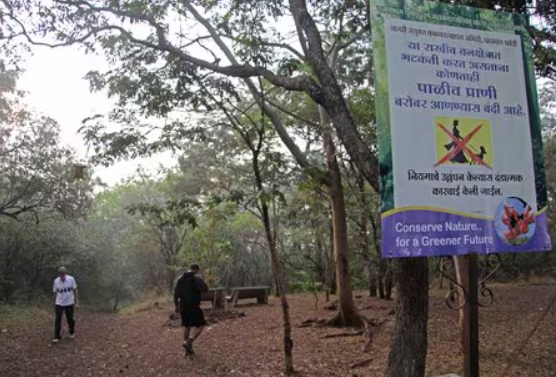
A recent rockfall incident at Kshitij society in Sahakarnagar, Pune, has reignited concerns over the perils of hillside construction and environmental oversight. Following heavy rainfall on June 13, loose boulders, soil, and trees cascaded into the society’s premises, damaging five parked two-wheelers and prompting renewed scrutiny of urban planning practices.
Residents, speaking anonymously, expressed apprehension over recurrent incidents dating back to 2004, highlighting inadequate precautions against such hazards despite warnings. Environmentalists and activists attributed the catastrophe to unrestricted construction activities atop and along Taljai hills, a practice they vehemently opposed over two decades ago. An environmentalist, critical of Pune Municipal Corporation’s (PMC) oversight, emphasized that construction permissions in hilltop and hill slope zones flouted city development plans explicitly prohibiting such developments. Citing past protests involving thousands of citizens, the activist underscored PMC’s failure to enforce regulations meant to safeguard biodiversity parks and hilltop regions. Urban planners echoed concerns, noting that construction at Taljai was conducted improperly on elevated slopes instead of lower foothills, exacerbating soil erosion and increasing the risk of rockfalls during heavy rains. They pointed out that such practices lead to excessive soil runoff, transforming streets into watercourses and endangering public infrastructure.
In response, PMC officials defended their regulatory framework, claiming restrictions on construction in biodiversity parks (BDPs) and hill zones were in place, though admitting certain areas near Taljai were exempted from stringent scrutiny. Officials stressed the importance of developers adhering to environmental guidelines and pledged cooperation with forest authorities to mitigate risks. A senior PMC official from the building permissions department confirmed ongoing discussions with the forest department post-incident to assess safety measures, including potential rock-cutting initiatives. However, conflicting opinions within PMC have emerged, with some advocating stricter regulations to prevent further hillside development, underscoring the need for sustainable urban planning practices.
The incident prompted immediate action from local authorities, with PMC and Pune forest division officials conducting site visits alongside the MLA to assess damage and review mitigation strategies. This collaborative effort aims to balance developmental aspirations with environmental conservation imperatives, ensuring future constructions near hillsides prioritize safety and sustainability. As debates over urban growth continue, stakeholders emphasize the necessity for comprehensive policies that prioritize environmental protection alongside urban expansion, fostering a balance that safeguards both communities and natural ecosystems from preventable disasters like the recent Taljai rockfall.
