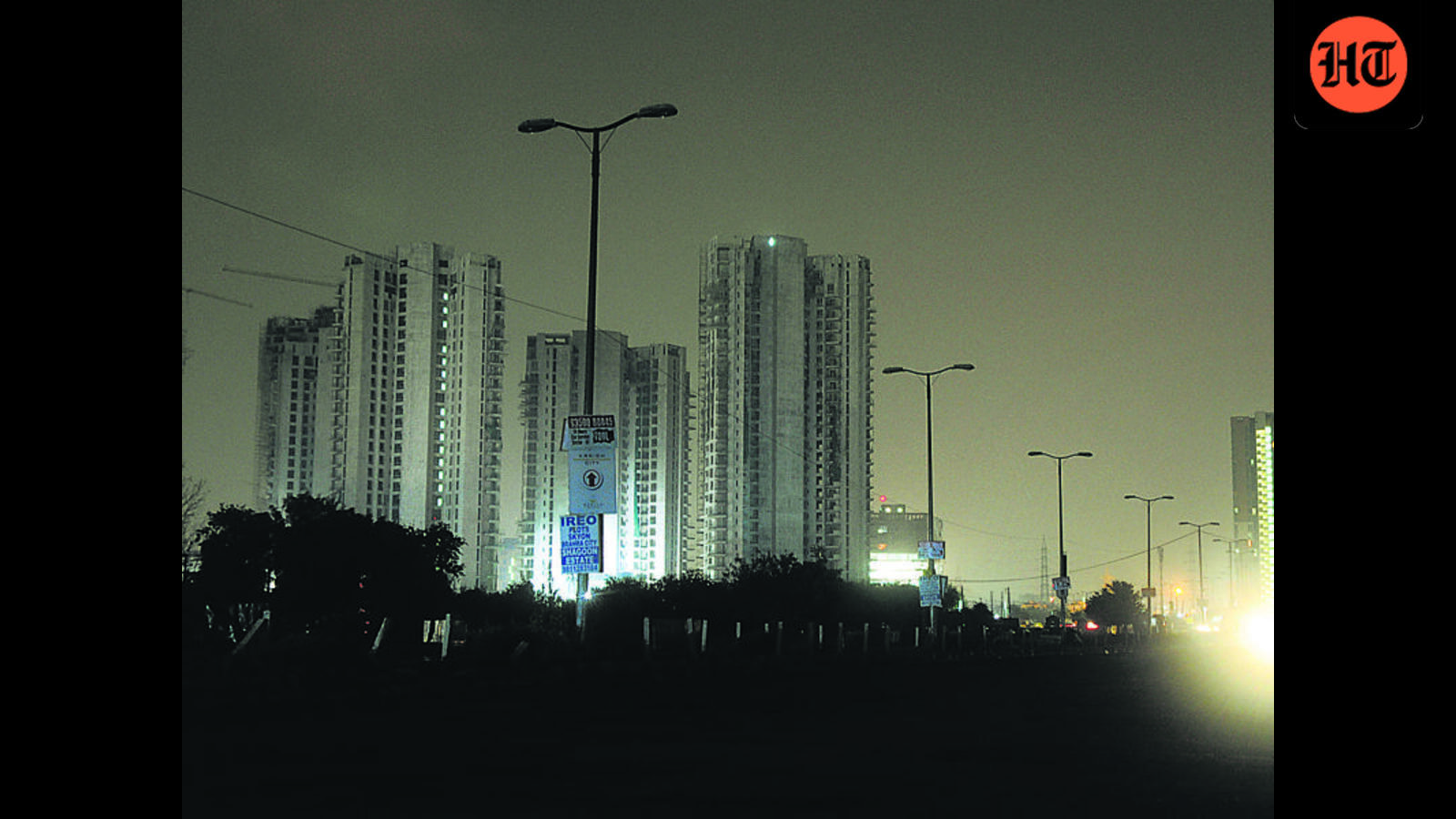
Gurugram Streetlight Failures Raise Night Safety Risks
Large stretches of Gurugram’s arterial road network are continuing to operate under poor night-time visibility conditions, exposing commuters to rising safety risks and highlighting deeper gaps in urban infrastructure maintenance across the rapidly expanding NCR city. Faulty streetlights, delayed repairs, and unmanaged roadside vegetation have left several high-density corridors inadequately illuminated despite ongoing civic modernisation efforts.
A recent assessment across multiple traffic-heavy routes found prolonged lighting failures on roads connecting residential sectors, commercial districts, and intercity links. Key stretches including Maidawas Road, Gurugram-Faridabad Road, Rajesh Pilot Marg and corridors around Ghata reported extended dark patches after sunset, affecting both motorists and pedestrians. The issue has become particularly significant in areas already categorised as accident-prone. Residents in southern Gurugram said reduced visibility is compounding risks from speeding vehicles, roadside parking, damaged barriers and inadequate traffic signage. Urban mobility experts note that poorly lit corridors not only increase crash vulnerability but also weaken accessibility for women, senior citizens and late-night workers who depend on safer public movement. Officials associated with civic and public works departments acknowledged that multiple road segments remain caught between overlapping maintenance responsibilities. Several infrastructure proposals linked to new lighting installations and restoration works are reportedly pending administrative approvals between agencies managing Gurugram and adjoining Faridabad zones.
The recurring streetlight failures also reflect mounting pressure on Gurugram’s ageing urban services network as the city expands toward peripheral sectors and new real estate clusters. While smart mobility systems and integrated command centres have been introduced in parts of the city, residents argue that basic infrastructure reliability continues to lag behind Gurugram’s rapid economic and residential growth. Urban planners say street illumination is increasingly being viewed as an essential climate-resilient urban service rather than merely a civic utility. Efficient lighting systems improve road safety, reduce emergency response delays, support walkability and contribute to more inclusive urban environments. Experts also point out that delayed maintenance increases long-term operational costs for municipalities already managing rising infrastructure demand.
According to civic estimates, Gurugram operates more than one lakh streetlights across its road network, with a small percentage remaining non-functional at any given time. However, residents across several sectors claim repair timelines frequently extend beyond official targets, especially on peripheral stretches where maintenance monitoring remains inconsistent. The problem has additionally drawn attention during recent road safety review meetings, where authorities reportedly discussed pruning requirements, visibility concerns and the need for improved illumination at critical junctions. High-mast lighting systems and corridor upgrades are being planned for selected intersections and service lanes in the coming months. Traffic enforcement officials maintain that road lighting, lane visibility and signage are central to reducing urban crash risks as vehicle volumes continue to rise across NCR corridors. With Gurugram positioning itself as a major investment and mobility hub, infrastructure experts say dependable street illumination will remain essential for ensuring safer, people-first urban growth rather than car-centric expansion alone.