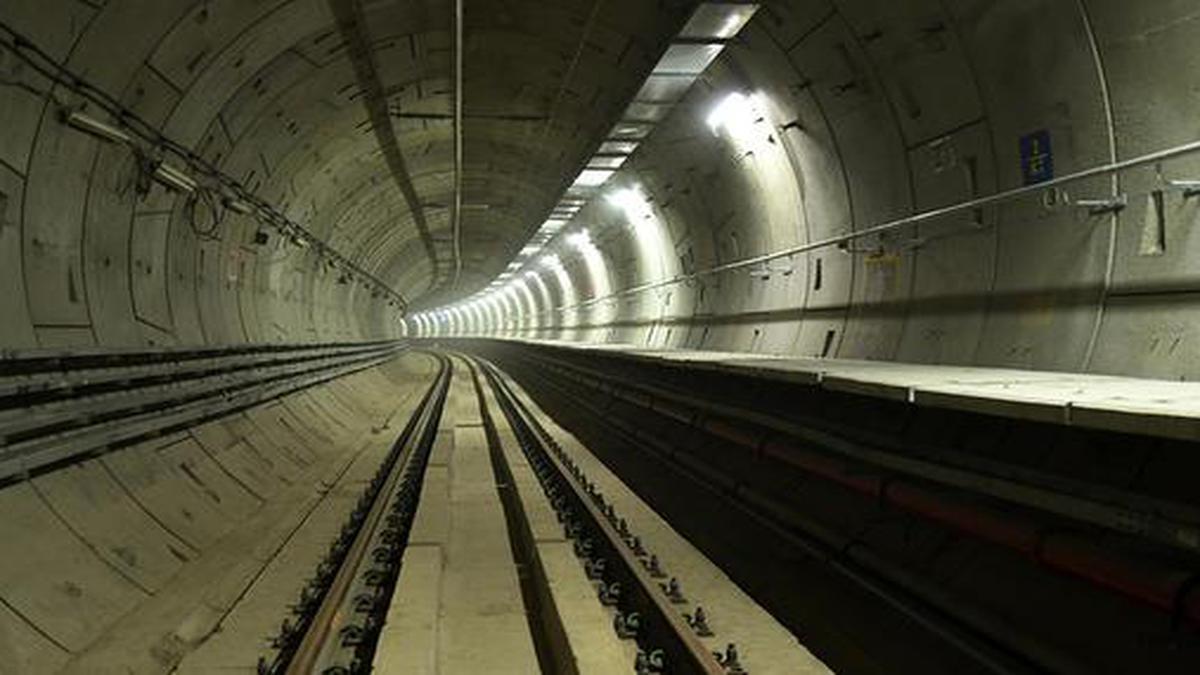
Chennai’s underground metro expansion has encountered another construction hurdle, with tunnelling activity between Perambur Barracks and Purasawalkam falling behind schedule due to unresolved utility relocation and delayed shaft construction. The setback affects a critical section of Corridor 3 under Phase II of the city’s metro expansion, a project positioned as essential to reducing road congestion and improving low-emission mobility across northern and central Chennai.
The affected tunnel segment, stretching roughly 1.2 kilometres beneath densely populated neighbourhoods, forms part of the larger north-to-south metro corridor linking Madhavaram with the IT and industrial belt near SIPCOT. Urban mobility planners view the corridor as strategically significant because it connects residential clusters, commercial districts and employment zones through a high-capacity public transport system intended to reduce dependency on private vehicles. According to officials associated with the project, tunnelling progress has advanced substantially on one line of the underground stretch, but completion timelines have shifted after engineering teams encountered prolonged delays in preparing the retrieval shaft at Purasawalkam junction. Underground infrastructure such as water pipelines, sewer networks and power transmission cables reportedly occupied the proposed construction zone, requiring extensive coordination among civic agencies before excavation could proceed.
The challenge highlights a recurring issue in Indian metro projects where ageing underground utility networks, incomplete mapping records and congested streets complicate infrastructure delivery. Urban development specialists note that such delays not only increase construction costs but also prolong disruption for residents and small businesses operating around major junctions.The Chennai Metro Phase II programme, spanning nearly 119 kilometres, is among the country’s largest urban transit investments currently under execution. A substantial portion of Corridor 3 is being developed underground to minimise surface displacement in older neighbourhoods with limited road width and dense built environments. Transport economists argue that while underground systems are more expensive, they offer long-term environmental and social benefits by preserving urban land and reducing vehicular emissions. Officials monitoring the work indicated that the tunnel boring machine is currently operating through weathered rock formations at significant depth below the city surface. However, civil works connected to shaft construction may continue beyond the tunnelling breakthrough itself, pushing final completion of this section towards the end of the year.
For commuters in north and central Chennai, the delay underscores the fragile balance between rapid infrastructure expansion and the operational realities of building beneath an already burdened city. Residents in surrounding areas have also raised concerns over traffic diversions, construction noise and pedestrian safety near active work sites. Despite the slowdown, urban planners maintain that the long-term value of Chennai Metro Phase II remains substantial, particularly as the city confronts worsening traffic congestion, rising fuel consumption and climate-linked urban stress. The coming months will test how effectively agencies can coordinate utility management and minimise disruption while keeping one of Chennai’s most ambitious sustainable mobility projects on track.