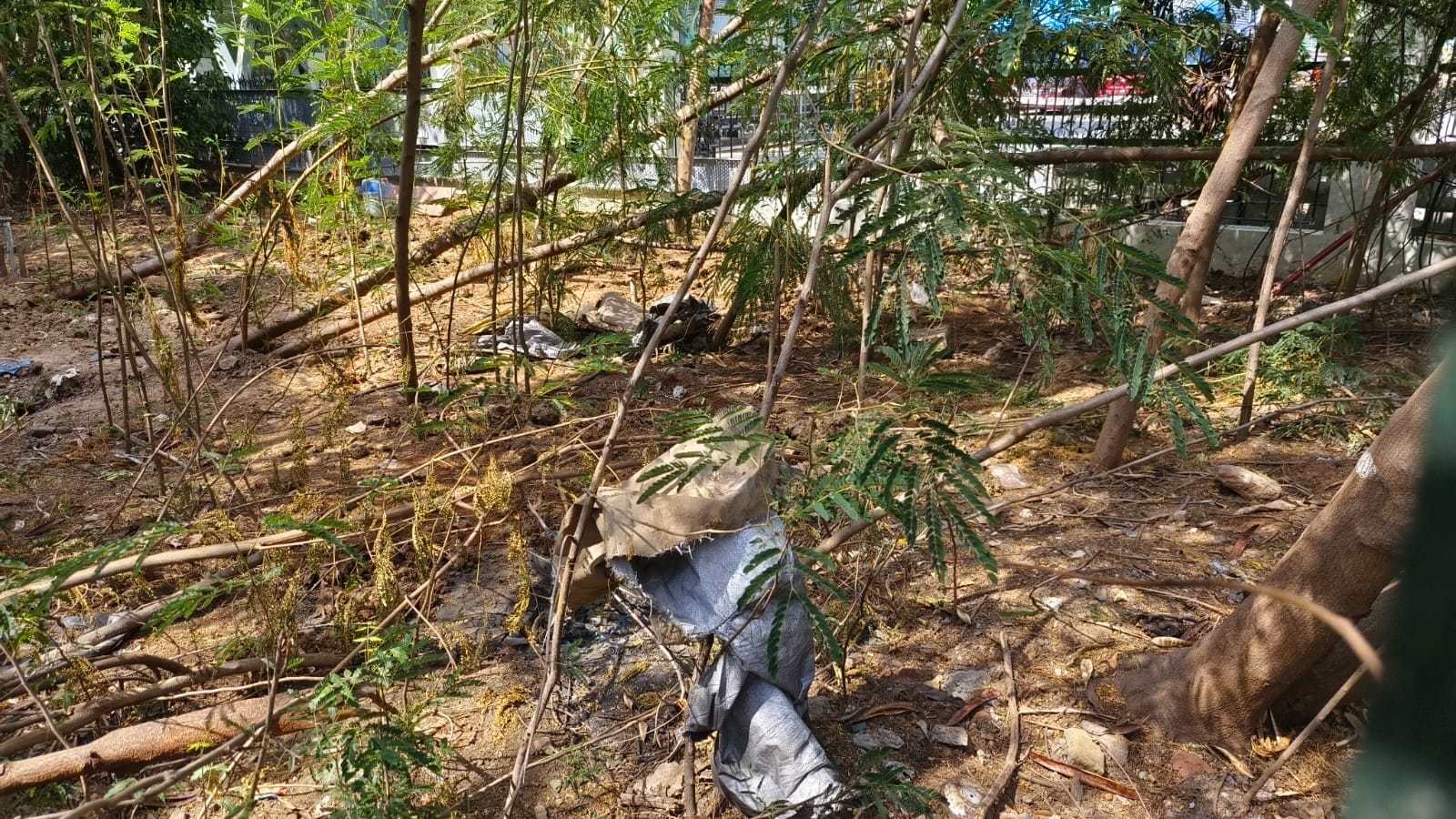
Increasing waste dumping along the Perungalathur reserve forest stretch near the Vandalur–Nedunkundram corridor is emerging as a serious urban ecological concern, with free-ranging spotted deer increasingly feeding on discarded garbage. The situation has raised alarms among environmental officials and residents, who warn that unchecked littering is turning one of Chennai’s fragile green buffers into a hazardous feeding ground for wildlife.
The forest patch, located on the rapidly urbanising southern edge of Chennai, has witnessed growing pressure from expanding residential activity, traffic movement and unmanaged waste disposal. Plastic packaging, food leftovers and household refuse dumped by motorists and passers-by are reportedly attracting deer from within the reserve forest towards roadside areas, exposing animals to injury, disease and long-term health complications. Wildlife experts monitoring the area say ingestion of plastics and mixed waste can severely affect grazing animals, leading to digestive blockages, malnutrition and declining survival rates. Urban forests situated near dense transport corridors are particularly vulnerable because food waste changes animal behaviour and increases dependence on human activity.
The Perungalathur reserve forest issue also reflects a wider challenge confronting Indian cities where urban expansion increasingly overlaps with ecological zones. Chennai’s southern suburban belt has seen rapid real estate growth and infrastructure development over the past decade, placing mounting pressure on wetlands, reserve forests and wildlife movement paths. Environmental planners argue that unless urban local bodies integrate ecological safeguards into waste management systems, biodiversity loss will intensify in peri-urban regions. Officials familiar with the matter indicated that the spotted deer population around the Perungalathur belt has expanded over the years, partly due to habitat fragmentation and changing land-use patterns. In several nearby residential neighbourhoods, deer sightings have become increasingly common, highlighting the shrinking separation between wildlife habitats and human settlements.
Conservation observers have also pointed to earlier ecological stress witnessed in other forested pockets around Chennai where unmanaged garbage dumping altered animal movement and feeding behaviour. They believe the Perungalathur reserve forest requires sustained monitoring, regulated roadside waste collection and coordinated intervention between civic agencies and forest authorities. Urban governance specialists note that the problem is not merely environmental but also civic and infrastructural. Inadequate waste disposal systems along busy mobility corridors often shift the burden onto ecologically sensitive zones. Without regular waste clearance, surveillance and citizen awareness measures, reserve forests become unintended dumping grounds that undermine urban climate resilience.
Residents in the Vandalur region have urged authorities to strengthen waste management enforcement and prevent further dumping along forest edges. Environmental experts say long-term solutions will require integrated urban planning that treats forests and biodiversity zones as essential city infrastructure rather than isolated green pockets. As Chennai continues to expand outward, the future of urban wildlife habitats such as the Perungalathur reserve forest may increasingly depend on how effectively the city balances growth, mobility and ecological stewardship.