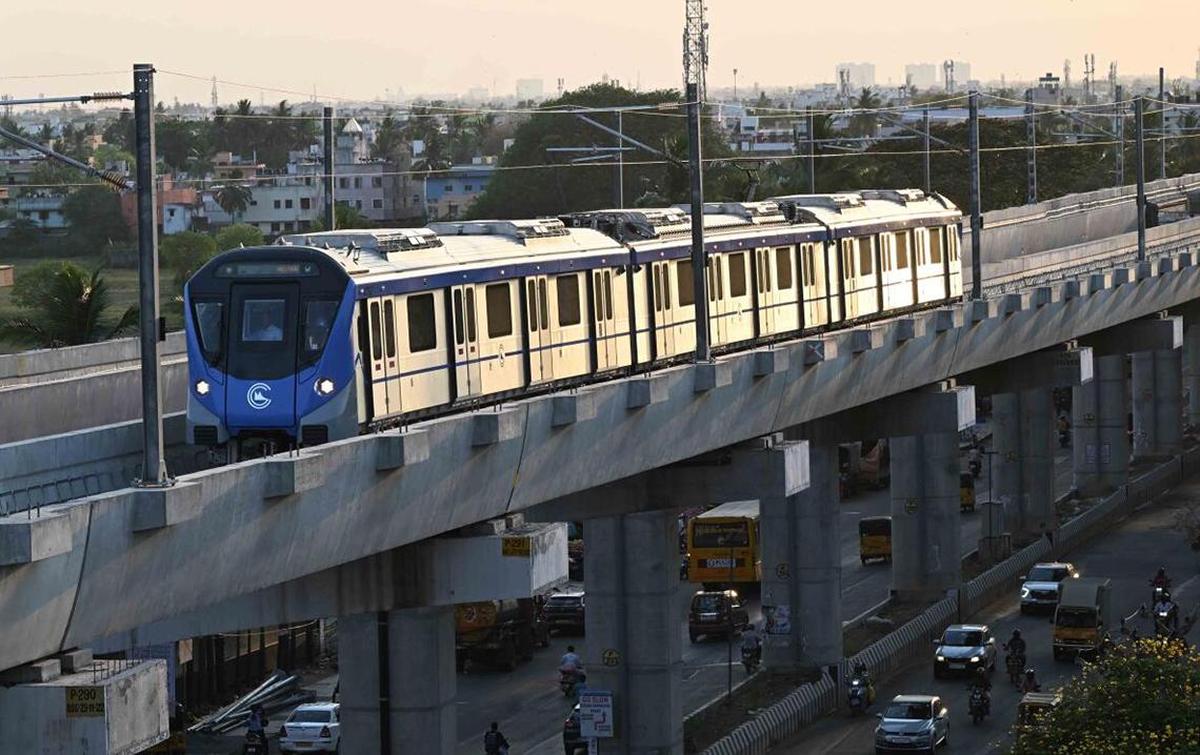
Chennai’s civic administration is moving ahead with plans to build two integrated transit hubs near key metro corridors in Chepauk-Marina and Washermenpet, signalling a wider shift towards improving first- and last-mile urban mobility in the city. The proposed facilities, expected to cost around ₹40 crore, are aimed at easing commuter movement between metro rail, suburban trains, buses, cycling routes and pedestrian networks in some of the city’s most crowded transport zones.
The initiative comes at a time when Chennai’s expanding metro network is facing growing pressure from fragmented access systems, congested roads and inadequate pedestrian infrastructure surrounding stations. Urban planners have long argued that without seamless connectivity outside metro premises, investments in rapid transit systems cannot fully deliver social or environmental benefits. According to civic officials, one of the planned mobility hubs will cover the Mint Street–Washermenpet stretch, a dense commercial and residential belt that records heavy daily commuter traffic linked to wholesale markets, transit interchanges and nearby neighbourhoods. The second project around Chepauk-Marina is expected to support large public movement generated by educational institutions, government offices, sports venues and the beachfront corridor.
The integrated transit hubs are expected to include redesigned pedestrian pathways, organised pick-up and drop-off areas, dedicated spaces for non-motorised transport and improved public realm infrastructure. Officials involved in the planning process indicated that the projects are intended to reduce chaotic roadside parking, improve commuter safety and streamline movement across different transport systems.Urban mobility experts say Chennai’s transport growth has historically prioritised road expansion over pedestrian comfort, creating accessibility challenges even around major transit investments. Narrow footpaths, unsafe crossings and unregulated vehicle movement continue to discourage many residents from shifting away from private vehicles despite rising public transport capacity.The proposed transit hubs also reflect a broader urban planning transition underway across Indian cities, where transport authorities are increasingly recognising the importance of integrated mobility ecosystems rather than standalone infrastructure projects.
Experts note that well-designed interchange zones can improve metro ridership, reduce emissions from short-distance vehicle trips and create safer public spaces for women, elderly residents and daily wage workers who rely heavily on walking and public transport.For Chennai, the success of the integrated transit hubs may depend not only on physical upgrades but also on long-term coordination between transport agencies, enforcement authorities and local bodies responsible for street management. Past mobility projects in the city have often struggled with fragmented execution and inconsistent maintenance after completion. As Chennai continues to expand its metro network and urban footprint, the planned transit-oriented improvements at Chepauk and Washermenpet could become an important test case for whether Indian cities can move towards people-first, climate-responsive mobility planning rather than vehicle-centric growth patterns.