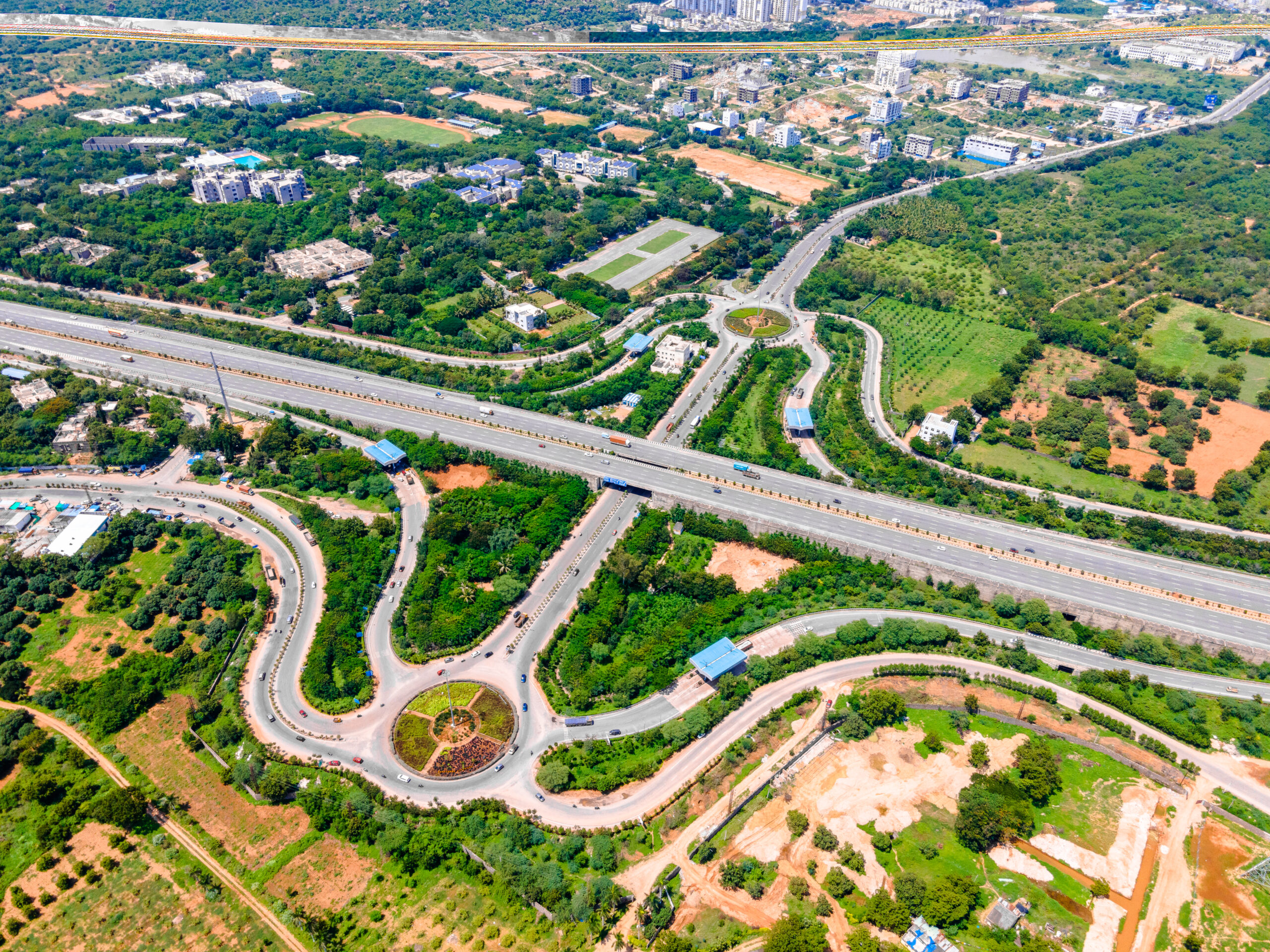
Hyderabad Vijayawada Ring Road Works Near Construction Stage
Construction activity on the proposed Hyderabad–Vijayawada Regional Ring Road corridor is expected to begin soon after the completion of the tendering process, marking a major step in Telangana’s broader push to expand regional transport infrastructure and reshape urban growth beyond Hyderabad’s existing metropolitan limits. Officials from the National Highways Authority of India confirmed that preparatory arrangements are underway for the project, which is expected to strengthen connectivity along one of southern India’s busiest economic corridors.
The Hyderabad–Vijayawada Regional Ring Road project forms part of Telangana’s wider infrastructure strategy aimed at reducing congestion within Hyderabad while improving freight movement, industrial access and regional mobility across surrounding districts. Transport planners say the corridor could significantly alter development patterns by linking emerging industrial clusters, logistics hubs and satellite townships to national highways and inter-state trade routes. The project is connected to the larger Hyderabad Regional Ring Road network, a proposed 340-kilometre access-controlled expressway designed to create a second mobility ring around the city beyond the existing Outer Ring Road. Once completed, the network is expected to connect key national highways leading towards Vijayawada, Bengaluru, Nagpur and Mumbai, improving long-distance connectivity and reducing freight bottlenecks through central Hyderabad. Officials also discussed the planned eight-lane expansion of the Hyderabad–Vijayawada highway, citing growing traffic pressure and recurring accidents along the corridor. According to transport analysts, traffic volumes on the route have risen sharply over the past decade due to increased passenger movement, industrial activity and freight transportation between Telangana and Andhra Pradesh. Alongside the highway works, the Telangana government has proposed a 7.1-kilometre double-decker elevated corridor between LB Nagar and Hayathnagar to ease congestion on eastern urban stretches. A detailed project report has reportedly been submitted to the Union government for approval. Urban mobility experts believe such infrastructure projects could improve travel efficiency but caution that road expansion alone may not fully solve long-term congestion challenges in rapidly growing cities.
Urban planners note that the Hyderabad–Vijayawada Regional Ring Road is likely to accelerate real estate activity and industrial investment in peri-urban districts surrounding Hyderabad. Similar ring road projects in Indian metropolitan regions have historically triggered rapid land-use changes, warehouse development and township expansion along transport corridors.However, infrastructure specialists also warn of potential environmental and social challenges. Large-scale highway construction often places pressure on agricultural land, water bodies and rural settlements if planning safeguards are not enforced. Previous discussions around the Regional Ring Road witnessed concerns from farming communities regarding land acquisition and livelihood disruption. Road safety remains another concern linked to Telangana’s highway expansion drive. Officials recently acknowledged rising accident fatalities across the state and urged faster completion of major road projects alongside stronger safety planning. Experts argue that future infrastructure must prioritise pedestrian protection, service roads, public transport integration and climate-resilient design rather than focusing solely on vehicle speed and corridor expansion. The Hyderabad–Vijayawada Regional Ring Road is also expected to influence the next phase of urban expansion around Hyderabad, where satellite growth centres are increasingly emerging along transport corridors. Urban economists say the long-term success of such projects will depend on whether infrastructure-led growth remains balanced with affordable housing, ecological preservation and inclusive regional planning.
As Telangana accelerates its large-scale road network ambitions, the challenge for policymakers may lie in ensuring that faster connectivity also translates into safer, more sustainable and more equitable urban development.