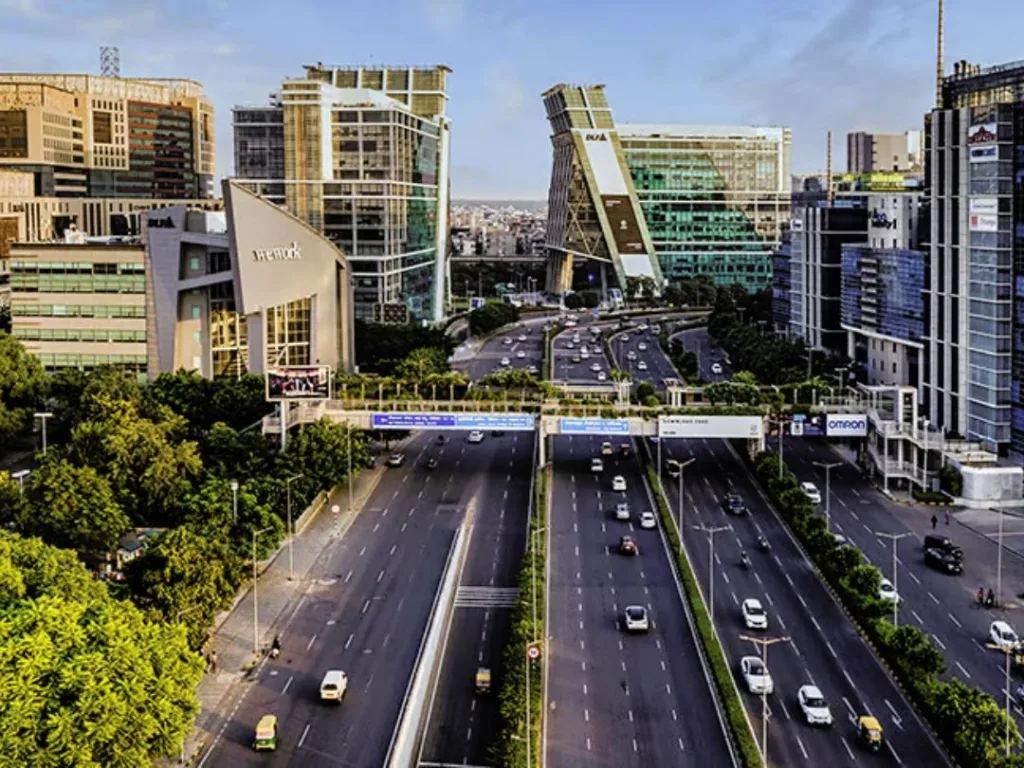
A week-long traffic diversion plan has come into effect across parts of Gurugram as authorities begin construction activity linked to a railway gate infrastructure upgrade, intensifying mobility challenges in one of the NCR’s fastest-growing urban corridors. The temporary rerouting is expected to affect thousands of daily commuters, freight vehicles and local businesses dependent on uninterrupted road access.
Officials overseeing the project said the diversion became necessary to facilitate structural work around a busy railway crossing that has long been associated with congestion, unsafe vehicle movement and delays during peak hours. The intervention is part of a broader push to modernise transport infrastructure in Gurugram, where rising population density and rapid real estate expansion continue to strain existing mobility systems. The latest Gurugram traffic diversion comes at a time when the city is already dealing with mounting pressure on arterial roads due to construction activity, mixed land-use growth and increasing private vehicle ownership. Urban mobility experts note that temporary disruptions often expose deeper planning gaps, particularly in rapidly urbanising districts where transport networks have not expanded at the same pace as residential and commercial development.
Commuters travelling between residential sectors and industrial zones are likely to experience extended travel times, especially during office hours. Public transport users and school routes may also face delays as vehicles are redirected through secondary roads with lower carrying capacity. Traffic personnel have been deployed at critical junctions to manage congestion and reduce bottlenecks during the construction period. According to civic officials, the railway gate project is aimed at improving long-term traffic flow and reducing accident risks around the crossing. Planners say such interventions are increasingly necessary in NCR cities where older transport nodes were not designed for present-day traffic volumes. However, urban policy analysts argue that infrastructure upgrades must also be accompanied by stronger pedestrian access, cycling connectivity and integrated public transport planning to ensure more sustainable mobility outcomes.
The Gurugram traffic diversion has also renewed discussion around the economic cost of congestion in high-growth urban regions. Delayed freight movement, fuel wastage and longer commute durations continue to impact productivity across the NCR. Environmental researchers further point out that stop-start traffic conditions contribute to higher vehicular emissions, underlining the importance of coordinated urban transport planning in climate-sensitive cities. Residents in nearby neighbourhoods have raised concerns over unclear signage and sudden route changes, prompting calls for better real-time commuter communication. Transport observers believe digital traffic alerts, adaptive signalling systems and advance route mapping could significantly reduce commuter stress during infrastructure transitions. Authorities are expected to review traffic conditions daily during the construction phase and make route adjustments if congestion intensifies. While the disruption is temporary, the project reflects the growing urgency for resilient and future-ready urban infrastructure in Gurugram as the city balances growth, mobility and liveability demands.