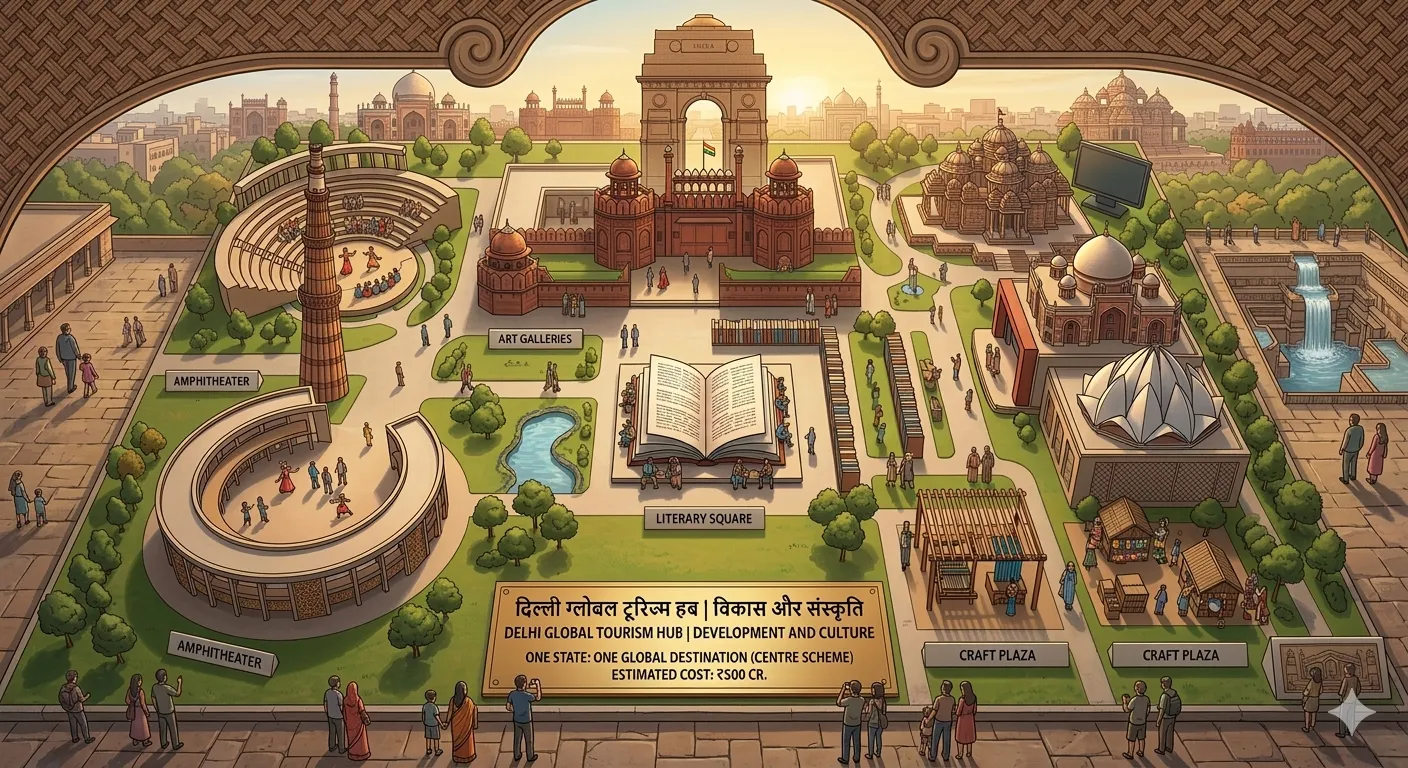
Delhi is preparing to develop a large-scale integrated tourism hub in Kanjhawla, marking a shift in how the capital approaches destination planning beyond its traditional urban core. The proposed project, with an estimated investment of ₹500 crore, aims to consolidate tourism, recreation, and cultural infrastructure within a single, planned zone in the city’s north-western periphery.
The initiative, framed as a “one state, one global destination” model, seeks to create a unified tourism ecosystem that can attract both domestic and international visitors. Unlike Delhi’s existing tourism assets—largely concentrated around historic monuments and central districts—the Delhi tourism hub in Kanjhawla is expected to offer a mix of leisure, cultural, and experiential facilities within a purpose-built environment. Urban development experts view the project as part of a broader attempt to decentralise economic activity and reduce pressure on overcrowded city centres. By directing tourism infrastructure towards peripheral areas, authorities aim to unlock underutilised land while distributing visitor flows more evenly across the capital. This could also stimulate local economies in outer districts that have traditionally seen limited investment in tourism. The location of the proposed Delhi tourism hub is significant. Kanjhawla, situated on the edge of the city, offers relatively large land parcels compared to central Delhi, making it suitable for integrated developments that require expansive layouts. Improved road connectivity and proximity to regional transport corridors further enhance its viability as a destination.
However, the project raises important planning and sustainability considerations. Large-scale tourism developments often require significant infrastructure inputs, including water supply, waste management, and energy systems. Ensuring that these are designed with low environmental impact will be critical, particularly in a region already facing resource constraints. There are also questions around accessibility and integration with public transport. For the hub to function as an inclusive urban space, it must be connected to metro and bus networks, enabling access for a wide range of visitors rather than relying predominantly on private vehicles. Without such integration, the project risks becoming isolated and underutilised. From an economic perspective, the Delhi tourism hub could generate employment across hospitality, retail, and cultural sectors, while boosting ancillary services such as transport and local commerce. If executed effectively, it may also strengthen Delhi’s positioning as a global tourism destination by offering a modern, curated experience alongside its historical attractions. Yet, urban planners caution that destination-led development must align with local community needs. Land use changes, increased footfall, and infrastructure expansion can have social and environmental impacts on surrounding areas. Engaging local stakeholders and ensuring equitable benefits will be key to the project’s long-term success.
The proposal is currently in the planning stage, with further details on design, timelines, and implementation expected to emerge in the coming months. As Delhi explores new models of tourism-led growth, the Kanjhawla project will test whether large-scale, integrated hubs can deliver both economic value and sustainable urban outcomes. Ultimately, the success of the Delhi tourism hub will depend on its ability to balance ambition with practicality—integrating infrastructure, accessibility, and environmental responsibility into a cohesive urban development strategy.