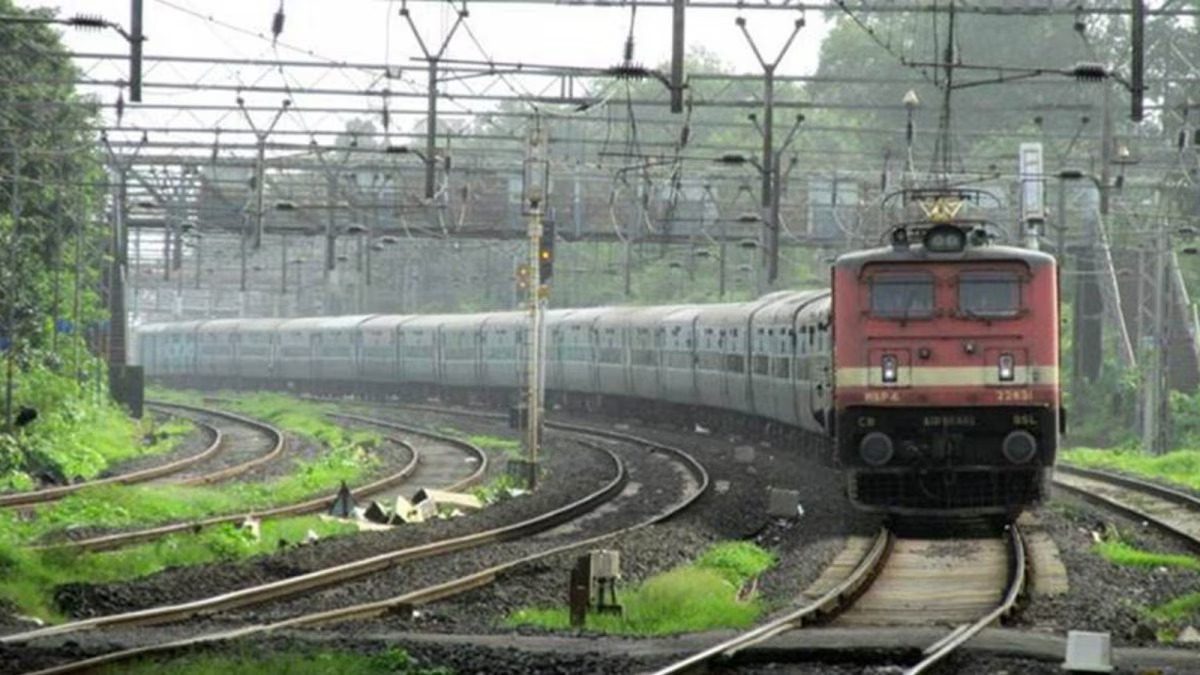
Trains on the Ahmedabad–Palanpur railway line will soon run at 130 kilometres per hour, as Western Railway undertakes track strengthening work to raise speeds on a corridor that currently sees a mix of passenger and freight traffic. The upgrade, involving geo-cell reinforcement and track blanketing near bridge number 867 between Karjoda and Palanpur, reflects a broader national push to make rail travel more time-competitive with road and air transport.
Geo-cell reinforcement is a ground-stabilisation technique that uses three-dimensional honeycomb-like structures to distribute loads and prevent track settlement. Track blanketing involves laying an additional layer of granular material beneath the ballast to improve drainage and reduce stress on the subgrade. Together, these methods allow the track structure to safely support higher speeds without compromising ride quality or safety. From an urban sustainability perspective, every kilometre-per-hour gained in rail speed matters. Faster trains mean shorter journey times, which makes rail more attractive relative to private vehicles or short-haul flights. The Ahmedabad–Palanpur line serves both passenger and freight traffic; higher speeds improve freight turnover and reduce the time that locomotives spend idling or moving slowly — both of which lower per-tonne carbon emissions.
A senior railway official confirmed that once the work is completed, trains operating on the route will be able to maintain higher speeds consistently, improving overall efficiency. But the upgrade comes with a short-term cost. Due to a traffic block required for the ongoing work, train number 14822 Sabarmati–Jodhpur Express will remain partially cancelled between Sabarmati and Abu Road on April 22. For regular commuters and freight operators, the temporary disruption is a familiar trade-off: short-term pain for long-term gain. But the deeper question is whether track upgrades alone are sufficient. Higher speeds also require better signalling, upgraded rolling stock, and enhanced maintenance protocols. A 130 kmph line operating with outdated signal systems or poorly maintained coaches is not a faster line — it is a riskier one.
The Ahmedabad–Palanpur corridor is strategically important, connecting Gujarat’s commercial capital to the Rajasthan border and onward to northern markets. Faster trains could shift cargo from trucks to rail, reducing the number of heavy vehicles on highways that pass through urban centres like Mehsana and Palanpur. For residents of these towns, fewer trucks mean lower particulate matter, less noise, and safer streets. The upgrade work is underway. The cancelled express will resume. But the real measure of success will be whether the promised 130 kmph translates into reliably faster, safer, and greener journeys — or merely a number on a signboard.
Ahmedabad Palanpur Rail Line Speed To Rise To 130 Kmph