


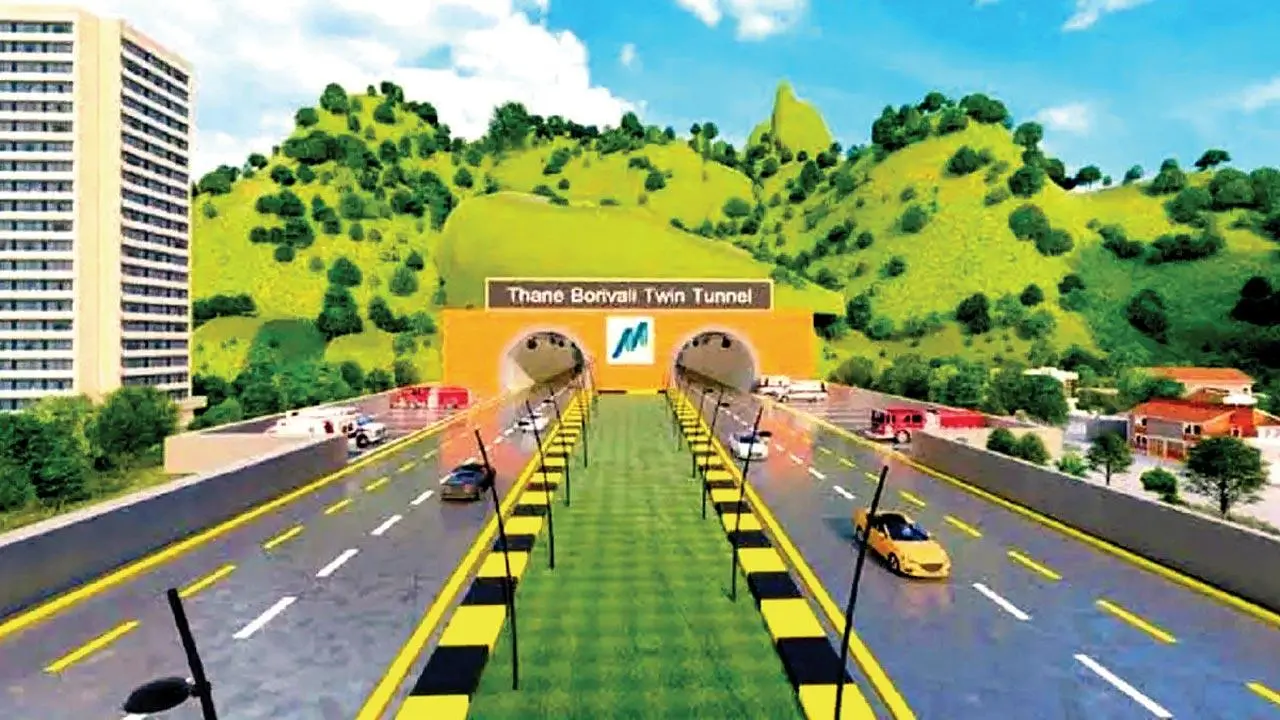
The Wildlife Institute of India (WII) is set to undertake a comprehensive study on the impact of the Thane-Borivli underground twin tunnels project beneath the Sanjay Gandhi National Park (SGNP). Approved by the National Board of Wildlife (NBWL), this initiative aims to assess the potential effects of construction on the park’s ground-dwelling wildlife, including leopards, spotted deer, and sambar deer.
The study involves radio-collaring 30 wild animals—10 leopards, 10 spotted deer, and 10 sambar deer—before and after the tunnel construction. Notably, this will mark the first instance of radio-collaring spotted and sambar deer within SGNP. The collars equipped with high-resolution activity sensors will provide real-time data on the animals’ movements and behaviors, offering insights into their responses to ground vibrations during and post-construction phases.
Senior scientists from The Wildlife Institute of India (WII) underscored the necessity of this study amidst concerns that underground vibrations could disrupt the animals’ natural habitat and behaviors. With the twin tunnels set to pass beneath SGNP, the study aims to gauge if and how these vibrations affect the wildlife’s movements and daily activities. The data gathered will inform conservation strategies crucial for mitigating potential adverse impacts on the park’s biodiversity.
Scheduled to commence post-monsoon, the radio-collaring process will span over a year, ensuring comprehensive data collection across all seasons. This initiative aligns with environmental mandates outlined by the Ministry of Environment, Forest and Climate Change, emphasizing the importance of safeguarding SGNP’s ecological balance amidst infrastructural developments.
The Thane-Borivli twin tunnel project, estimated at over ₹14,400 crore, seeks to enhance connectivity and reduce travel time between the two locations, offering significant economic and environmental benefits. Designed with sustainability in mind, the project includes measures to minimize disruption to flora and fauna, such as the use of tunnel boring machines and regular monitoring of air quality within the tunnels.
With an anticipated completion timeline of five and a half years, the project underscores Mumbai’s commitment to modernizing its transport infrastructure while preserving the ecological integrity of its green spaces. As stakeholders await further developments, the WII’s wildlife study is poised to provide crucial insights for sustainable development practices in urban expansion projects across India.
